The hidden cost of home technology usually appears after the easy moment has passed.
On a drawing, a route is just a line.
On site, before plaster and ceilings, it is a manageable change.
After the home is finished, that same route can mean chasing walls, cutting joinery, lifting paving, digging gardens, repainting, revisiting the DB, rebuilding a cabinet or accepting a compromise that should never have been necessary.
That is the real cost of leaving technology too late.
Late decisions become building work
When technology is discussed early, the electrician and builder can allow for the correct routes.
When it is discussed late, the AV team has to work around what already exists.
That may mean:
- no route from the head-end to a TV;
- no route to a Wi-Fi access point;
- no route to a camera;
- no spare conduit across a driveway;
- no space for a rack;
- no ventilation for equipment;
- no way to service hidden devices;
- no way to pull a replacement cable later.
The client does not experience that as a technical detail.
They experience it as extra cost, delay or visible compromise.
Finished walls make simple work expensive
Before plaster, adding conduit is normal site coordination.
After plaster, it becomes repair work.
Walls may need to be chased. Paint may need to be matched. Stone, wallpaper, timber panelling or specialist finishes may be affected. A small missing cable route can suddenly involve several trades.
This is why I would rather have the uncomfortable planning discussion early than pretend everything can be fixed cleanly later.
The cleanest AV work is often the work that was allowed for before anyone noticed it.
Gardens and driveways punish missed routes
External routes are easy to underestimate.
Gate cameras, intercoms, access readers, boundary cameras, driveway beams, garden Wi-Fi, outdoor audio, pool-area technology and future services all need routes.
If those routes are missed, the finished garden becomes part of the retrofit.
Paving may need to be lifted. Trenches may need to be dug. Irrigation can be damaged. Landscaping may need repair. Boundary walls may need surface conduit that nobody wanted.
Future conduits across driveways and gate areas are not glamorous, but they can save real money later.
This connects directly to CCTV for a new build: plan camera views before the landscaping is finished.
TV walls are expensive to change late
TV points are one of the most common late-stage problems.
The screen height changes. The joinery changes. The decorator wants a cleaner wall. The client decides to centralise sources. The HDMI route is too tight. The conduit does not accept the connector. The power and low-voltage exits do not line up with the bracket.
Each one sounds small.
Together, they create an avoidable mess.
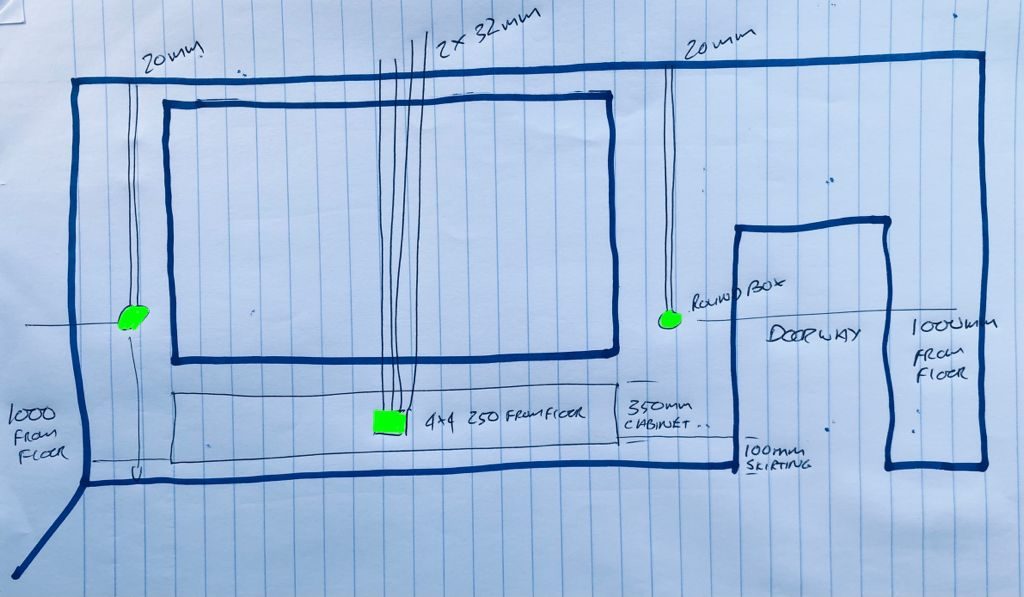
If the TV height, bracket, source location, wall box, conduit and joinery are agreed early, the final installation can be clean.
If not, the installer is trying to make a finished wall forgive an unfinished decision.
Read TV points in a new build: what the architect, electrician and AV team must agree on.
Poor Wi-Fi planning becomes daily irritation
Wi-Fi mistakes are often only felt after the family moves in.
The study is weak. The veranda drops out. The garage has no coverage. The smart TV buffers. The music system disappears. CCTV remote viewing is unreliable. Solar or inverter apps do not connect properly.
By then the ceiling is closed and the client is living with the problem.
A wired access point would have been simple during construction.
Afterwards, the options are usually less clean: surface cable, difficult ceiling work, repeaters, compromises or more labour.
That is why Wi-Fi access points should be wired from day one.
Cabinets become expensive when equipment was not considered
Beautiful cabinetry can be a problem if it was not designed for equipment.
AV and network equipment needs depth, shelves, ventilation, cable entry, service access and power. If the cabinet is too shallow or sealed, the system may overheat or become difficult to maintain.
The cost is not only the cabinet.
It is the frustration every time something needs to be changed.
The equipment location should be discussed before the joinery is manufactured.
Late planning creates quote pressure
When the technology discussion happens too late, the quote often looks worse than it should.
Not because the equipment is expensive.
Because the job is now harder.
The installer has to allow for unknown routes, extra labour, awkward access, damage risk, return visits, builder coordination and problem solving that should have happened on paper.
Early planning does not guarantee the cheapest quote.
It usually creates the most honest one.
The best saving is avoiding the retrofit
The real saving in a new build is not always buying cheaper equipment.
It is avoiding unnecessary rework.
A proper technology plan can protect the budget by making sure the home has:
- a defined head-end;
- usable conduits;
- wired access point routes;
- camera routes before landscaping;
- planned TV walls;
- speaker routes before ceilings close;
- access-control routes before paving;
- DB space for lighting control;
- service access for hidden equipment;
- documentation for future support.
DG Technologies can help review the technology layer before it becomes expensive to change.
That is where our work is most valuable: before the finished home starts forcing compromises.
Related reading: