Every new-build technology quote should make a clear distinction between infrastructure and equipment.
If those two things are mixed together, the client cannot see what is protecting the building and what is creating the final experience.
That matters because infrastructure and equipment behave differently over time.
Equipment changes.
Infrastructure is built into the home.
Infrastructure is the part that is hardest to fix later
Infrastructure includes the physical foundation:
- conduit;
- draw boxes;
- Cat6 cabling;
- speaker cabling;
- fibre routes;
- DStv/coax routes;
- TV routes;
- camera routes;
- access-control routes;
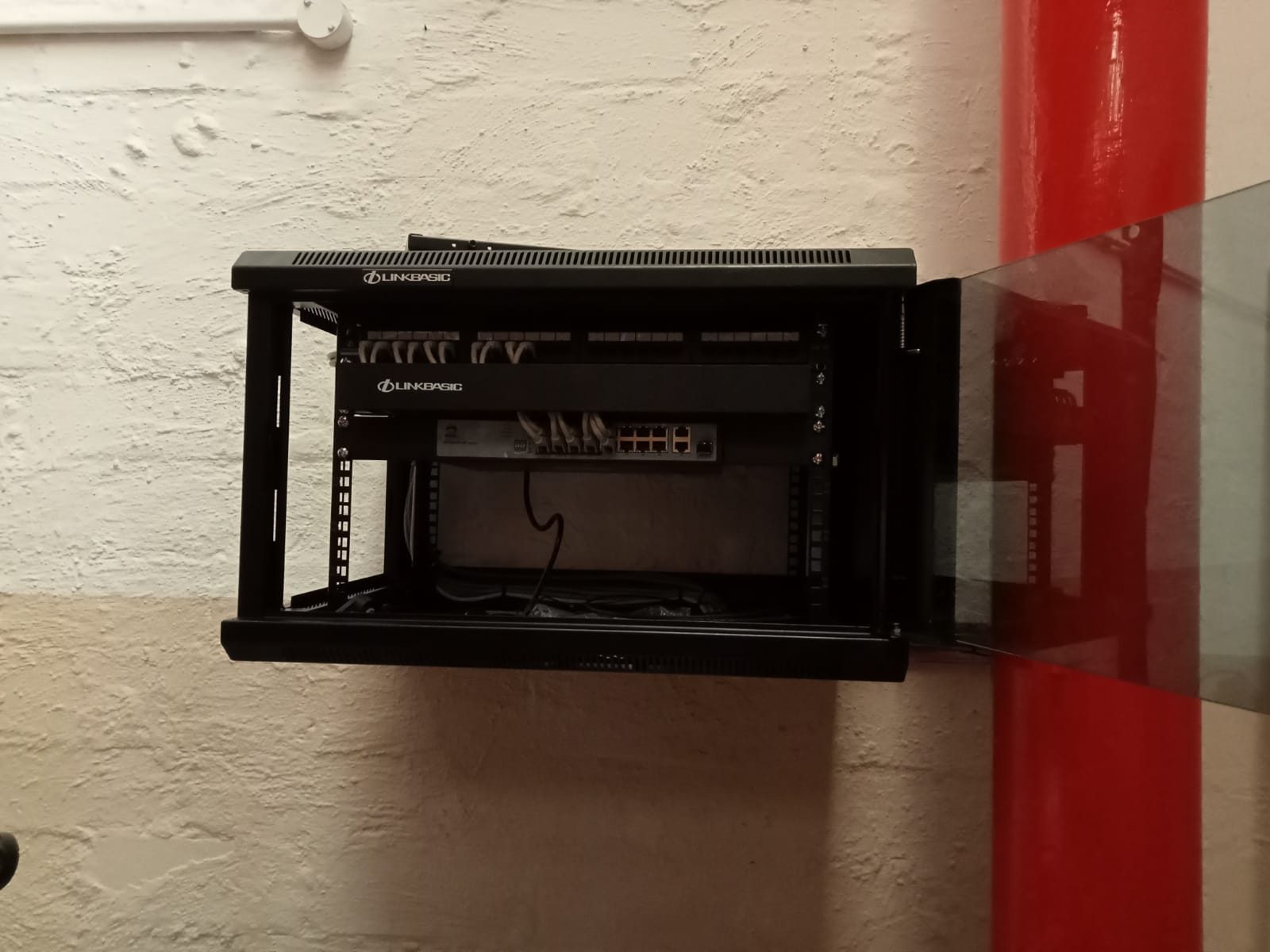
- rack or cabinet space;
- patch panels;
- power protection allowance;
- ventilation and service access.
This is the part that becomes painful after plaster, ceilings, joinery, paving and landscaping are finished.
If the client wants to reduce the quote, infrastructure should be reviewed carefully before it is cut.
Removing a future route may save money today and cost much more later.
Equipment is easier to stage
Equipment includes the active devices that can often be added, upgraded or changed later:
- access points;
- network switches;
- CCTV cameras and recorders;
- audio amplifiers;
- source devices;
- remotes and touch panels;
- projectors and screens;
- automation processors;
- lighting modules;
- intercom hardware.
Some equipment must be installed from day one.
But not all future equipment has to be purchased immediately if the infrastructure is already allowed for.
That is where staged planning becomes useful.
A client might wire for a future outdoor audio zone without buying the amplifier immediately. They might route for a future camera without installing it on day one. They might allow rack space and spare data while postponing certain devices.
The quote should make that visible.
Separating the two makes savings more intelligent
When the quote is separated properly, a budget conversation becomes more productive.
Instead of asking, “What can we remove?”, the client can ask:
- Which infrastructure must stay because it protects the building?
- Which equipment is essential on day one?
- Which equipment can be staged?
- Which zones can be combined?
- Which circuits do not need dimming?
- Which future routes are worth keeping?
- Which items are optional because they do not affect the backbone?
That is a better conversation than simply comparing totals.
It connects directly to where to save money in a new-build technology plan.
A quote should explain decisions
A technology quote should not be a mystery list of boxes.
For a new build, the quote should explain why the infrastructure exists. A 32 mm route to a TV point, a conduit to a dish, a fibre path to the head-end, a wired access point route, a camera route across a driveway or spare rack space may not look exciting.
But those lines protect the project.
If a client understands what each line prevents, they can make better decisions.
This is why a smart home quote should explain decisions, not just equipment.
Infrastructure should be coordinated with the trades
Infrastructure is not only an AV issue.
It affects the architect, electrician, builder, interior designer, landscaper and sometimes the security, gate, solar and air-conditioning teams.
If the quote separates infrastructure clearly, it becomes easier to coordinate:
- what the electrician must allow for;
- what the builder must protect;
- what the interior designer must accommodate;
- what the cabinet maker must ventilate;
- what the landscaper must avoid damaging;
- what the AV team must return to commission later.
That makes the quote a project document, not just a price.
The client should know what survives technology changes
Technology changes quickly.
The cable route to a TV may outlive several TVs. The speaker cable may outlive several amplifiers. The rack may outlive several processors. The access point route may serve multiple Wi-Fi generations.
That is why I treat infrastructure as long-term value.
It should be planned more carefully than whichever device happens to be current this year.
Equipment still matters
Separating infrastructure from equipment does not mean equipment is unimportant.
The active equipment still decides performance, reliability and user experience.
But the client should understand which part of the quote is the foundation and which part is the current system built on that foundation.
That makes future upgrades less emotional and more logical.
A cleaner quote creates a cleaner project
DG Technologies prefers quoting in a way that helps the client understand the system.
For a new build, that means separating the building layer from the equipment layer wherever practical.
The building layer protects the home.
The equipment layer creates the experience.
Both matter, but they should not be confused.
Related reading: