Most clients first experience lighting control at the keypad.
They press a button and the room changes. Downlights, pendants, lamps, feature lighting and exterior lighting settle into a scene. The result feels simple.
But good lighting control does not start at the keypad.
It starts with the circuits.
Before anyone decides what a button should say, the system has to understand what each circuit controls, what type of lighting load is connected, whether it should be switched or dimmed, how the room is used, and what will be reliable over time.
That is where the real design work sits.
A keypad hides a lot of engineering
A beautiful keypad can make a room feel calm and uncomplicated.
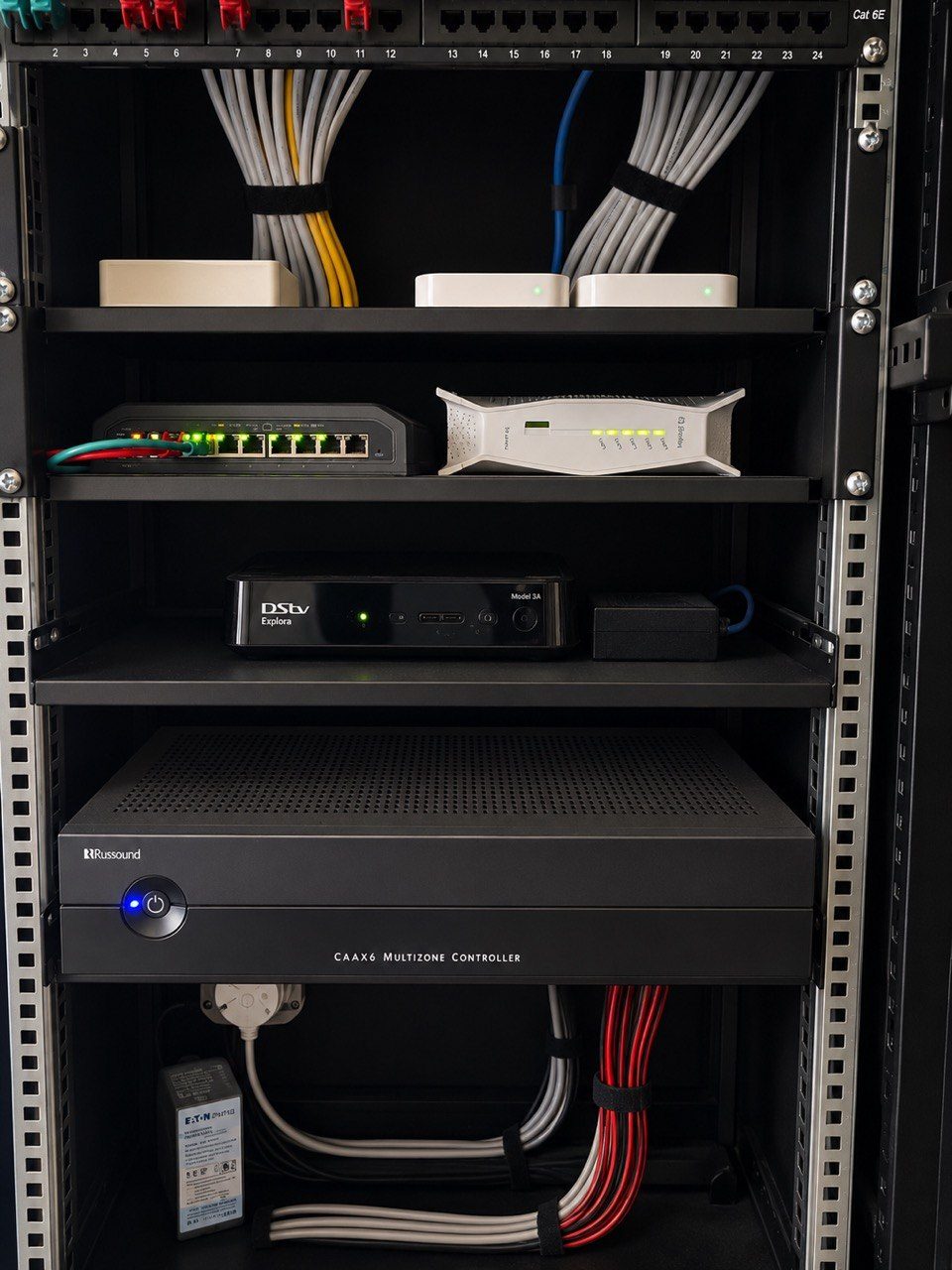
But behind that keypad there may be multiple lighting circuits, relay modules, dimmer modules, LED drivers, control processors, power supplies and electrical distribution decisions. If those parts are wrong, the keypad cannot save the experience.
The client may see flicker, lamps not dimming properly, scenes behaving inconsistently, circuits being grouped badly, or lights that should have been switched instead of dimmed.
Those are not keypad problems.
They are design problems.
Not every circuit should be dimmed
One of the most important decisions in lighting control is deciding when not to dim.
Some circuits benefit from dimming. Others do not. Some LED fittings behave badly on certain dimming methods. Some functional circuits are better controlled by reliable relays. Some exterior, utility, passage or service lighting does not need dimming at all.
Adding dimming everywhere may look premium on a quote, but it is not always the best engineering decision.
DG Technologies has written about this directly in why not every light in a smart home should be dimmed. The point is simple: the control method should suit the circuit and the fitting, not the assumption that more expensive control is automatically better.
LED lighting changed the conversation
Older incandescent lighting behaved differently from modern LED lighting.
Today, lighting-control design has to consider LED drivers, compatibility, minimum loads, flicker, dimming curves and replacement lamps. A system that was acceptable years ago may not behave well once modern LED fittings are introduced.
This is common in legacy homes.
A client may think the automation system is failing when the real issue is that the lighting loads and control method no longer suit each other. Replacing everything blindly can be wasteful. Assessing the circuits first gives a much better answer.
This is one reason a legacy Crestron system should be assessed before it is replaced.
Scenes depend on sensible grouping
Lighting scenes are only useful when the circuits make sense.
If one circuit controls too much, the scene may lack subtlety. If circuits are split badly, the room may be awkward to use. If architectural lighting, task lighting and general lighting are not considered separately, the final result may feel either too flat or too busy.
Good lighting control asks how the room is actually used.
Is this a dining scene? A cooking scene? A late-night path? A cinema scene? A cleaning scene? An arrival scene? An exterior security scene?
The answers influence circuits, not only button labels.
Electrical planning and automation must talk early
Lighting control cannot be treated as an afterthought after electrical work is already complete.
The electrician, builder, lighting designer and automation team need to coordinate early enough to understand DB locations, circuit groupings, load types, keypad positions and cable routes.
If that conversation happens too late, the system may have to work around decisions that are expensive to undo.
This connects to our article on why builders need the AV team before electrical first fix.
Good lighting control feels simple because the design was not
The best lighting-control systems are not the ones that shout about complexity.
They are the ones that make the home easier to live in.
The client presses one button and the room feels right. Guests can use the space. Staff can turn on what they need. Exterior lights behave logically. The owner does not need to understand every circuit because the engineering has already made the decisions.
DG Technologies designs lighting control and home automation for homes across Durban and KZN with the hidden circuit logic taken seriously.
Because a good keypad is only as good as the decisions behind it.