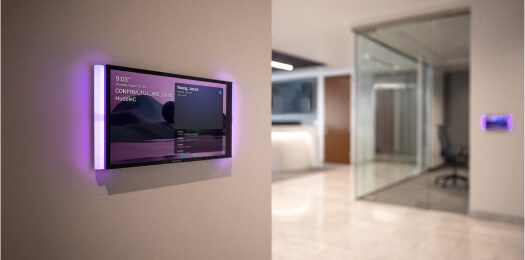
One-touch control is one of the most attractive parts of a professional smart home.
Press one button and the cinema starts. Press another and the evening lighting scene comes on. Tap a room and music plays. Open the app and the house feels simple.
That is the experience clients want.
But one-touch control is only valuable when the system underneath is reliable.
The button is the visible part. The engineering behind it is what makes it trustworthy.
The app is not the whole system
Homeowners naturally judge a smart home by the app, keypad or touch panel.
Those interfaces matter. They should be clean, logical and easy to understand.
But behind one button may be a control processor, lighting modules, network switches, Wi-Fi access points, audio amplifiers, source devices, TVs, projectors, cameras, power supplies and programmed logic.
If one layer is weak, the button becomes unreliable.
That is why a nice interface cannot rescue poor infrastructure.
A cinema scene depends on several systems
Take a cinema scene.
One button may need to turn on the projector, select the right source, set the amplifier input, lower the screen, adjust volume and bring the lighting down to the correct level.
If the HDMI path is unstable, the scene feels unreliable.
If the projector takes longer to start than expected, the client thinks the button failed.
If the network drops the processor or source device, the app gets blamed.
The user sees one button. The installer has to design the chain behind that button.
Lighting scenes need correct lighting design
Lighting scenes are another good example.
A scene called Entertain, Dinner, Movie or Night should feel natural. That depends on more than programming.
The right circuits need to be controlled. The right fittings need to dim properly. Some lights should be switched through relays rather than dimmed. Outdoor and feature lighting should behave differently from task lighting.
If the electrical and lighting design is wrong, the scene may technically work but still feel poor.
Good control starts with good lighting decisions.
Networks make or break modern control
Modern smart homes are networked homes.
Crestron Home, mobile apps, touch panels, streaming audio, CCTV, smart TVs, intercoms and remote support all depend on the network.
If the network is unstable, the smart home becomes unstable.
This is why DG Technologies treats network infrastructure and Wi-Fi as part of the automation system, not as a separate afterthought.
In a large home, signal bars are not enough. The home needs structured cabling, managed switching, access point planning and supportable equipment.
Simple controls require careful decisions
The best controls feel obvious.
Room names should make sense. Scenes should do what the homeowner expects. Guest controls should be limited but useful. Staff access should be practical without exposing private controls. Critical functions should not be hidden in confusing menus.
That simplicity comes from careful decisions.
It is not about adding every possible button.
It is about giving the homeowner the controls they actually need.
The DG Technologies approach
DG Technologies designs Crestron Home and smart-home systems for private homes across Durban, Umhlanga, Mount Edgecombe, Zimbali, Simbithi and the KZN coast.
We like simple control. But simple control has to be earned through proper planning.
The app, keypad or touch panel should feel calm because the network, lighting, audio, cabling and equipment have been designed properly underneath.
That is the difference between a smart home that looks impressive in a demo and one that stays pleasant to live with.