When a legacy Crestron system starts giving trouble, the homeowner is often told the same thing: the whole system is old, unsupported and needs to be replaced.
Sometimes that is true.
But not always.
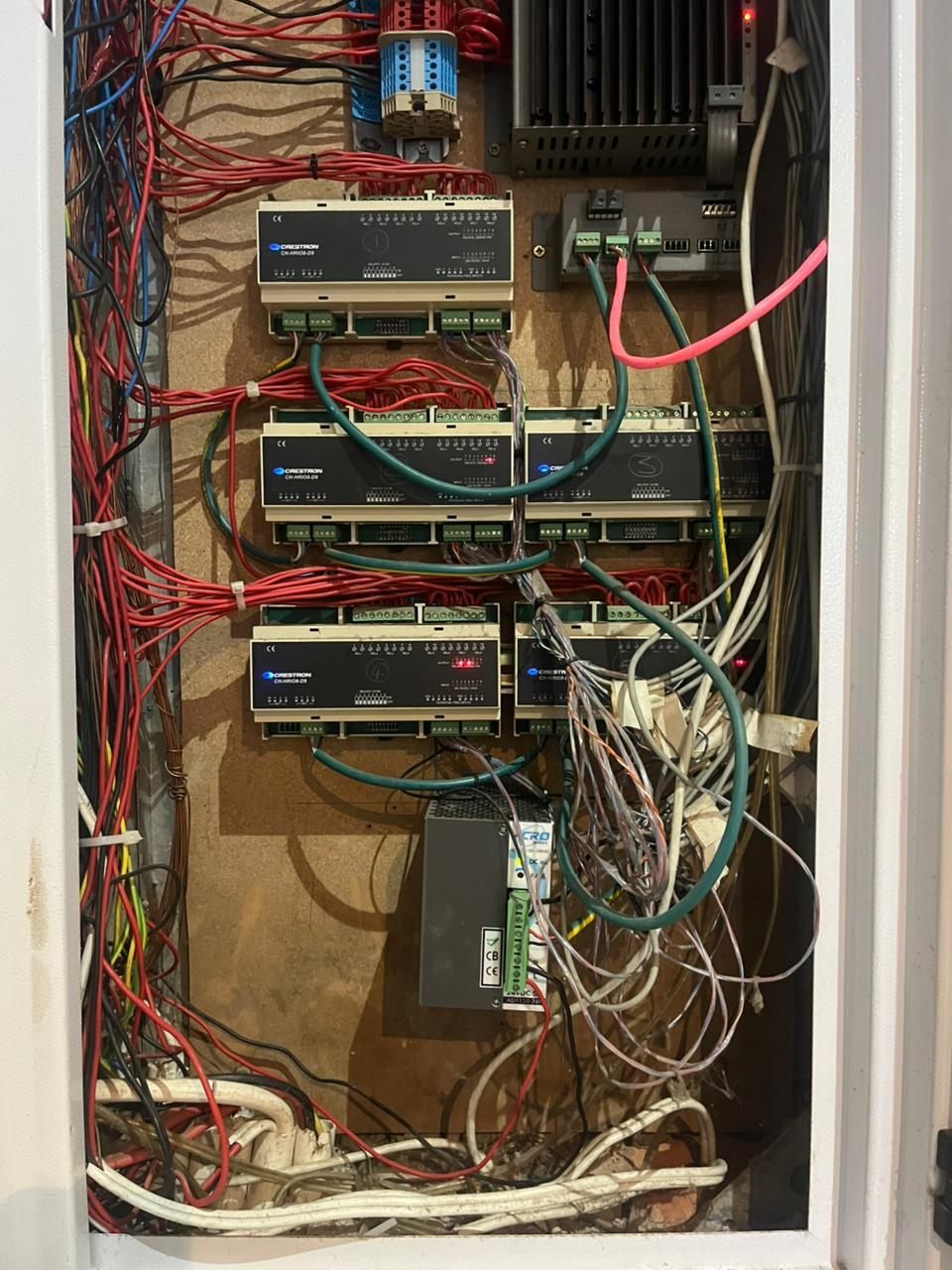
In many Durban and KZN homes, the Crestron equipment is not the only problem. The real issue may be the wiring around it, the lighting loads connected to it, the network it depends on, the way the rack was built, or the fact that nobody has proper documentation anymore.
That is why DG Technologies believes an old Crestron system should be assessed properly before a client commits to a full replacement. A professional assessment can separate three very different things:
- what is still reliable and worth keeping
- what can be repaired or recommissioned
- what has genuinely reached the end of its practical life
That distinction matters. It can save a homeowner a lot of money, but more importantly, it can prevent the wrong problem from being solved.
Crestron is often blamed for installation problems
Crestron is a serious control platform. It has been used in large homes, boardrooms, hotels, yachts and high-end residences around the world because it can control complex systems reliably when it is designed and installed properly.
But even a premium system can feel terrible if the installation around it is poor.
If the rack is messy, the cable routes are undocumented, the Cresnet network is unstable, the power supplies are overloaded, the lighting modules are mismatched to modern LED loads, or the home network has been changed without considering the automation system, the client experiences the whole thing as “the Crestron is not working”.
That is not always a fair diagnosis.
Sometimes the product is still good. Sometimes the design around it needs to be repaired. Sometimes the old hardware is no longer the right tool for the job. The value is knowing which one you are dealing with.
A proper assessment starts with the whole system
Legacy Crestron systems are rarely one box. They are usually a connected set of processors, lighting modules, keypads, touch panels, audio equipment, AV distribution, network switches, power supplies and control wiring.
Changing one part without understanding the rest can create more problems.
Before recommending a replacement, DG Technologies looks at the system as a whole:
- Which processor is running the home?
- Is the program available and backed up?
- Which keypads and touch panels are still in use?
- Are the Cresnet devices communicating reliably?
- Are the 24V power supplies stable?
- What lighting modules are installed?
- Are modern LED lamps and drivers compatible with the existing dimmers?
- Is the rack labelled and serviceable?
- Has the home network changed since the system was commissioned?
- Which rooms and features does the family actually still use?
This is not about being slow. It is about not guessing.
If the homeowner is about to spend serious money, the recommendation should be based on evidence, not fear.
The program matters
One of the most important questions in an older Crestron home is whether the client has access to the program that runs the house.
Without the program, even small changes can become difficult. A new keypad, a changed lighting circuit, a repaired touch panel, a new amplifier or a room name change may require work that is much harder if the original source files are missing.
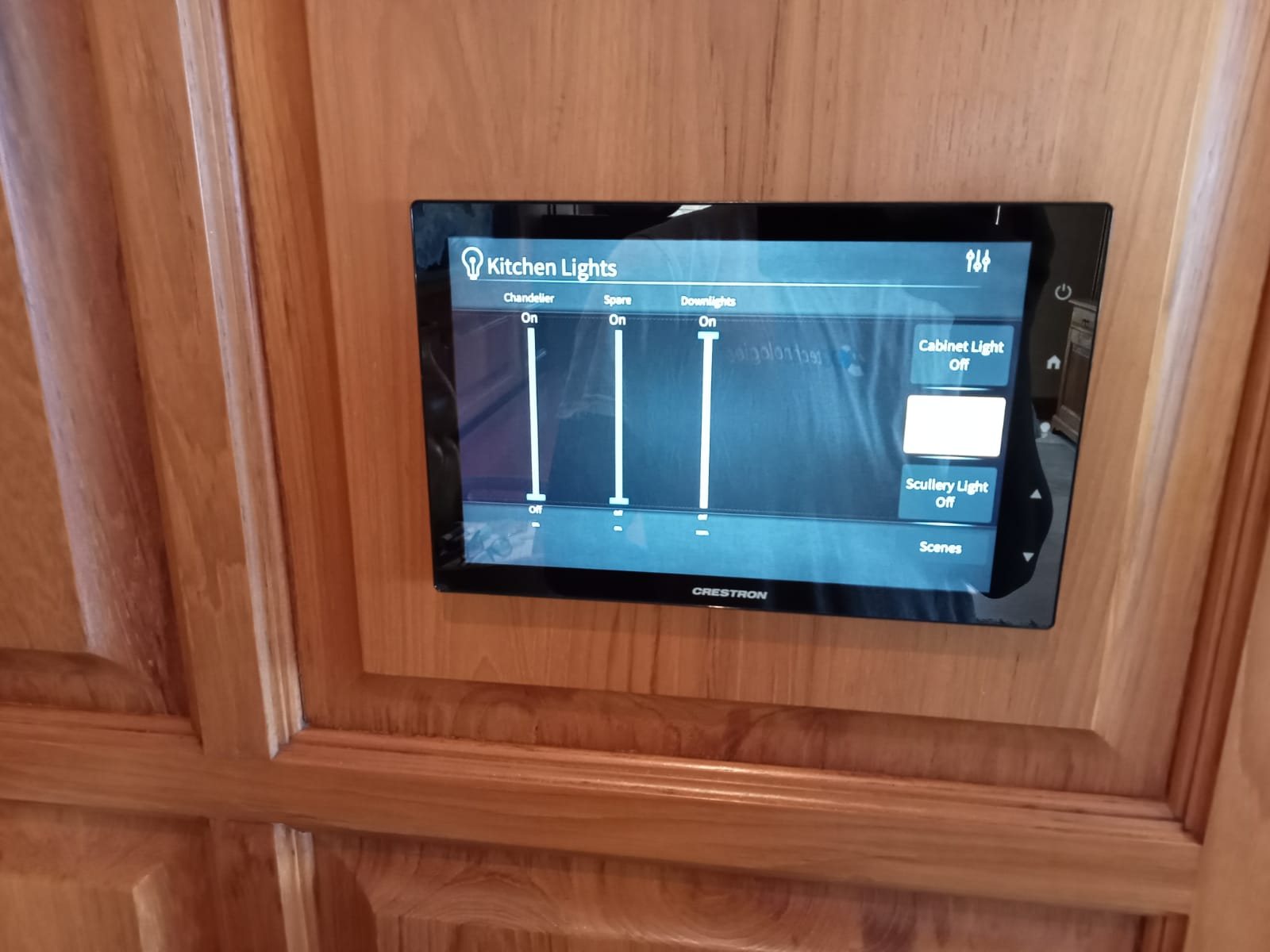
Older Crestron touch panels and interfaces should be assessed before they are written off. Sometimes the right answer is repair, sometimes replacement, and sometimes the fault sits elsewhere in the system.
That is why program ownership and documentation matter. A homeowner should not be trapped because the original installer disappeared, stopped supporting the site or refused to leave enough information for future service.
DG Technologies has always taken a practical view on this: long-term support is built on trust, not lock-in. If a system is documented properly and the client understands what they own, the relationship becomes stronger, not weaker.
Old hardware may still have value
Not every old Crestron component is rubbish because it is old.
Some older amplifiers, audio distribution units, keypads, cable infrastructure and control hardware may still be stable. If those components are working, documented and suitable for the client’s current needs, replacing them immediately may be wasteful.
At the same time, some older equipment creates real support risk. Discontinued touch panels, ageing processors, unsupported gateways, damaged power supplies and incompatible dimming modules may need to be replaced if they are causing instability or cannot be supported properly.
The correct answer is rarely “keep everything” or “replace everything”.
The correct answer is usually a phased plan.
Lighting control is where many old systems struggle
Lighting is one of the first places an old automation system shows its age.
Many older homes were originally designed around incandescent or halogen lighting. Today, those circuits may have been changed to LED lamps or LED drivers without checking whether the old dimming hardware is suitable.
That can lead to:
- flickering lights
- lamps that do not dim properly
- buzzing transformers or drivers
- lights that fail early
- scenes that no longer behave consistently
- dimmer modules running outside their ideal load range
In some cases, the best fix is not another expensive touch panel or a new processor. It may be replacing unsuitable dimmers with the correct relay or LED-compatible control modules.
That is a good example of why assessment matters. The problem the client sees is “my Crestron lighting is unreliable”. The real engineering answer may be “the lighting load and control method are wrong for the lamps now installed.”
DG Technologies handles smart lighting and Crestron control with that kind of compatibility in mind.
Network changes can break automation
A lot of old smart homes were installed before everything depended so heavily on the network. Since then, many homes have had routers replaced, fibre installed, Wi-Fi upgraded, switches changed and access points added by different people over several years.
To the homeowner, the result is simple: the app stops working, some rooms disappear, touch panels behave strangely or remote access becomes unreliable.
But the fault may not be in the Crestron system at all. It may be IP addressing, VLANs, switch configuration, poor Wi-Fi coverage, failed network hardware or a missing link between the automation system and the rest of the home.
This is why DG Technologies treats network infrastructure as part of the smart-home system, not a separate afterthought. If the network is unstable, the automation will feel unstable.
When replacement is the right answer
Assessment before replacement does not mean avoiding replacement at all costs.
Sometimes the honest recommendation is to modernise the system. If the processor is obsolete, the user interfaces are unsupported, the source program is unavailable, the lighting hardware is no longer suitable and the client wants modern app control, then moving to a newer platform may be the correct long-term decision.
For many homes, Crestron Home is a strong upgrade path because it gives the client a modern interface, reliable control and a more maintainable residential platform without unnecessary custom complexity.
But even then, the assessment still has value. It tells us what can be reused, what must be replaced, what cabling is available, what circuits need correction and how the upgrade should be phased.
That is how a major upgrade becomes controlled instead of chaotic.
The most expensive quote is not automatically the safest quote
In high-end homes, there is a temptation to solve uncertainty by replacing everything. It feels safe. It looks comprehensive. It gives the client a big number and a clean promise.
But engineering is not about spending the most money. It is about making the right decisions.
If existing keypads still make sense, keep them. If a reliable amplifier can be reused, use it. If a lighting circuit should be changed from dimming to relay control, do that. If an expensive touch panel does not improve the client’s daily use, do not add it just because it looks impressive on a quote.
Good judgement removes waste without removing useful features.
That approach is part of what it is like working with DG Technologies. The client is not only buying hardware. They are buying decisions about what to keep, what to replace, where to spend money and where not to.
A practical checklist before replacing an old Crestron system
Before accepting a full replacement quote, ask these questions:
- Has the existing system been documented?
- Has anyone tested the processor, network, power supplies and Cresnet wiring?
- Are the lighting faults caused by old dimmers, modern LED loads or failed modules?
- Is the Crestron program available?
- Which parts of the system are still working reliably?
- Which features does the family actually use every day?
- Can the upgrade be phased?
- Will the new system be easier to support in five years?
- Are you replacing failed equipment, or replacing uncertainty?
Those questions usually reveal whether the quote is solving the real problem.
Start with an assessment, not an assumption
If your Crestron system is not working properly, the first step should be calm, structured fault finding.
DG Technologies can assess legacy Crestron, lighting, audio, AV, Wi-Fi and smart-home systems across Durban, Mount Edgecombe, Umhlanga, La Lucia, Ballito, Zimbali, Simbithi and wider KwaZulu-Natal.
For a broader service overview, see legacy Crestron and smart home system rescue in KZN. If your home is in Mount Edgecombe Estate, we also have a dedicated page for Crestron repair in Mount Edgecombe Estate.
The aim is simple: understand the system first, then make the right decision.