Judgement before equipment
The equipment list is not the product. The important work is knowing what to keep, what to replace, where to spend money and where not to.
How we work
What clients are really buying is judgement, not a box list
The real product
Clients come to DG Technologies for technology. Its long-term value depends on the decisions behind it. A smart home, cinema, CCTV system, Wi-Fi network or Crestron installation is only as good as the judgement used to design it.
We judge a project by whether the system still makes sense after the home is occupied, used, serviced, changed and lived in.
That means asking practical questions: what should be reused, what should be replaced, what will fail later, what will be difficult for another technician to understand, and what will actually make the homeowner's life easier.
In the room
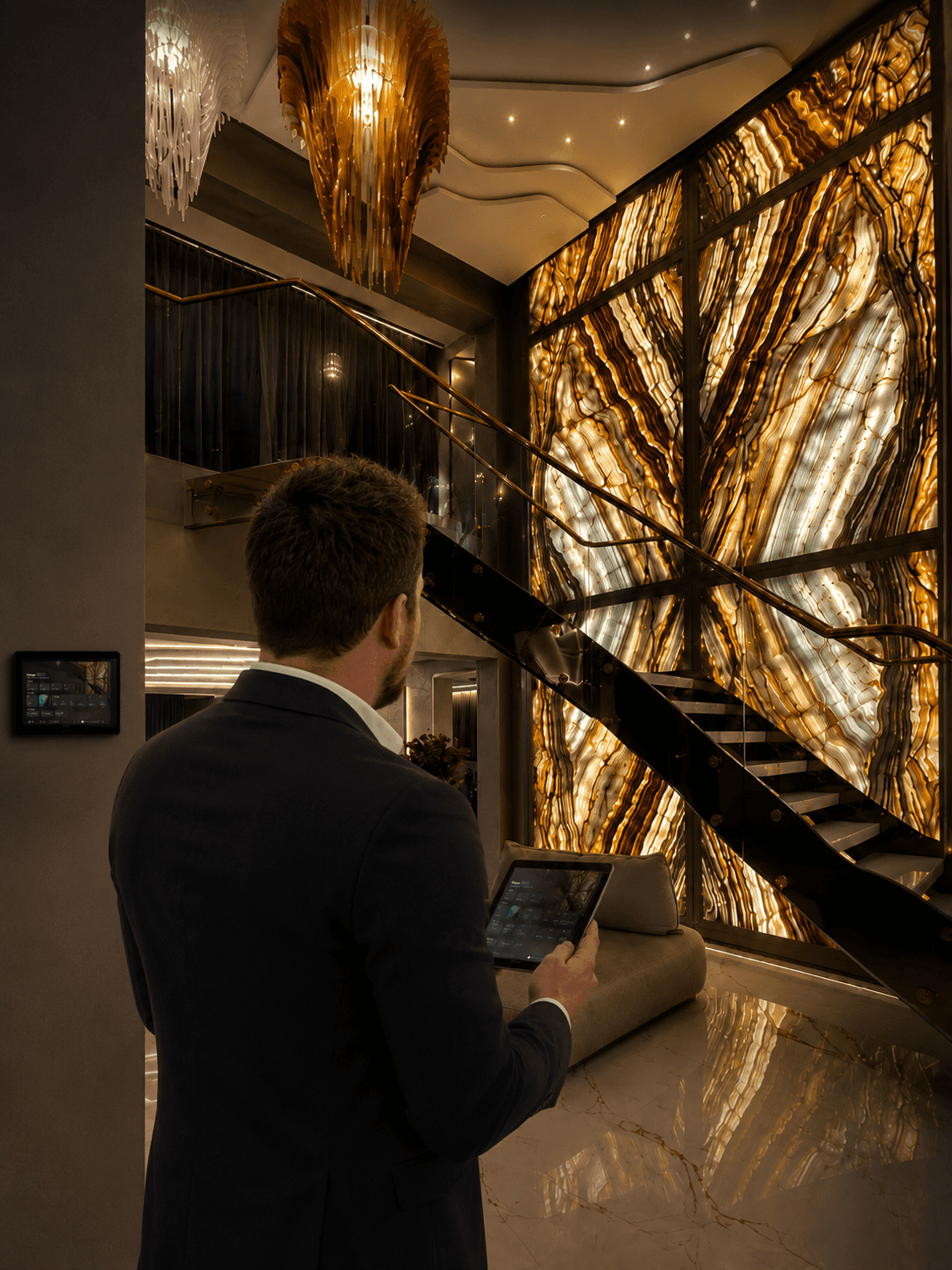
Lighting, control and automation cannot be judged properly from a spreadsheet alone. The room, finishes, family routines, sightlines, control points and long-term service access all affect the right decision.
That is why DG Technologies treats site understanding as part of the design. The technology should serve the space quietly, without making the homeowner feel like they are managing a technical installation every day.
What guides the work
The equipment list is not the product. The important work is knowing what to keep, what to replace, where to spend money and where not to.
Construction and renovation budgets are real. Recommendations are made with the same care we would apply if it was our own home.
More automation does not automatically make a better home. The right controls should simplify daily life, not add technical clutter.
We think about future servicing, future contractors, future upgrades, future renovations and whether the system will still make sense years later.
A system is not finished until the client can use it confidently. The best interface is the one that feels obvious.
Drawings, labels, cable schedules, rack notes and equipment records are part of the product because they protect the system after handover.
Honest engineering
Sometimes the correct recommendation is more equipment. Sometimes it is less. The difference is whether the spend improves reliability, usability, supportability or the client's everyday experience.
Where judgement shows
The homeowner feels simplicity. The technical work behind that simplicity is what keeps the home reliable.
After handover
Years after installation, someone may open the rack, replace a router, renovate a room, move a TV, add cameras or upgrade lighting. If the system was not documented, every future decision becomes slower and more expensive.
DG Technologies treats drawings, labels, equipment records, cable schedules, network notes and rack information as part of the finished product. A well-documented home gives future technicians a fair chance and gives the homeowner more control over the property.
"A good system should leave behind more than working technology. It should leave behind knowledge."
Trade coordination
A large part of DG Technologies' working discipline was shaped over more than a decade of working side by side with Rowan Goss and the Goss Electrical team on demanding KZN residential and commercial projects.
That shared project history includes Moosa's home, Alan Thornton's home, a Zimbali property, Richard from City Couriers' properties and large commercial work such as 88 Field Street. Those jobs reinforced a practical truth: AV and automation only work properly when electrical planning, DB locations, lighting loads, cable routes, access points, rack positions and site timing are coordinated early.
It is one of the reasons DG Technologies pays close attention to builders, electricians, architects and interior designers before finishes close. The system the client touches at the end depends on decisions made by every trade long before handover.
Client fit
DG Technologies focuses on judgement, system design, documentation and long-term support rather than only selling equipment. The aim is to make the home easier to live with and easier to support years after installation.
No. DG Technologies recommends the system that fits the home, the client and the long-term support requirement. Sometimes that means more equipment, and sometimes it means deliberately avoiding unnecessary hardware.
Good documentation helps future servicing, renovations, fault finding and upgrades. It protects the homeowner from being dependent on memory or guesswork years later.
The system is tested with the client, not only for the client. Controls, app layouts, keypads and scenes should be understandable enough for the homeowner to use confidently.
No. DG Technologies automates what improves the home. If a feature adds cost or complexity without improving daily use, it may be better left out.
Send us the plans, the existing equipment list or the problem you are trying to solve. We will help you decide what actually makes sense.