One of the most common misunderstandings with home automation is the phrase:
“Can we just add it to Crestron?”
Sometimes the answer is yes.
Sometimes it is not that simple.
Crestron is extremely flexible, which is one of the reasons DG Technologies trusts it for serious residential systems. But flexibility does not mean every new request can be solved only by changing a button label in the app.
Behind every simple control may be real hardware capacity.
The app is not the system
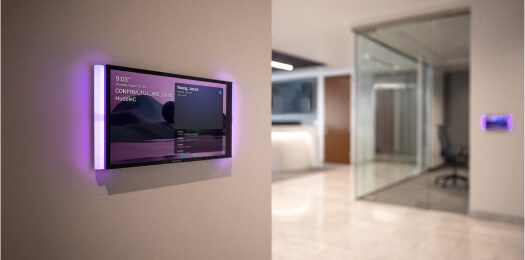
The app, touch panel or iPad interface is the visible part of the system.
The homeowner presses a button and expects something to happen.
But behind that button may be:
- a Crestron processor,
- relay modules,
- dimmer modules,
- lighting circuits,
- Cresnet or network communication,
- power supplies,
- control wiring,
- contact closures,
- third-party interfaces,
- DB wiring,
- and programming logic.
If the hardware path does not exist, the app cannot magically create it.
That is why a request that sounds small can involve physical work.
Spare capacity matters
When a Crestron system is designed, the panel or rack should allow for current requirements and sensible future expansion.
But spare capacity is not infinite.
If every relay output is already used, adding another controlled light, fan, gate, feature, pump, blind or switched load may require more hardware. If there is no spare wiring to the load, the cable route also matters. If the DB is full, the panel layout becomes part of the conversation. If the module location is difficult to access, the job becomes more invasive.
This is why DG Technologies pays attention to capacity during design and documentation.
The question is not only:
“Can Crestron control this?”
The better question is:
“Does the installed system have the physical capacity and wiring path to control this properly?”
Extra control can require extra relays
Relay modules are a simple example.
A relay is often used when a load only needs on/off control. It may be the correct choice for many LED circuits, utility lights, certain outdoor loads, fans or other switched functions where dimming is unnecessary or unsuitable.
If a client later wants additional iPad or app control over more items, the system needs somewhere to land those loads.
That may mean:
- adding relay hardware,
- wiring new circuits into the control panel,
- confirming load type,
- updating the Crestron programming,
- testing manual and app control,
- labelling the new circuits,
- and documenting the change.
None of that is difficult when planned properly.
But it is not “just programming.”
Wiring must exist before programming can help
Automation programming is powerful, but it cannot overcome missing infrastructure.
If a light was wired only as a conventional local switch with no route back to a control module, the Crestron programmer cannot simply add reliable centralised control from a laptop. The circuit, wiring method, load type and physical control path must support the feature.
This is why early electrical coordination matters.
For new builds, the smart-home team should be involved before the electrical design is final. For existing homes, the first step is often assessment: what is wired where, what hardware exists, what spare capacity remains and which upgrades are practical without damaging finished work.
Adding control should not create a messy panel
There is a right way and a wrong way to expand a Crestron system.
The wrong way is to squeeze new modules wherever they fit, leave loose power supplies, forget labels, patch into circuits without proper records and hope the next person can understand it.
That creates future support problems.
The right way is to treat the expansion as part of the system:
- confirm the requirement,
- check the existing panel,
- confirm spare relay or dimmer capacity,
- check cable routes,
- add hardware neatly if required,
- update programming,
- label the change,
- photograph or record the panel,
- and update the client documentation.
That is the difference between a quick fix and a supportable upgrade.
The best time to allow for future control is during design
Future expansion does not mean buying every possible module on day one.
It means thinking ahead.
During design, DG Technologies may allow panel space, spare conduit, spare data routes, spare relay capacity or a logical structure that makes future work cleaner. Sometimes the client will never use those options. Sometimes they become valuable years later when the home changes.
The important point is that future capacity should be deliberate.
If there is no spare anything in the system, every future request becomes a hardware discussion.
That may still be acceptable, but the client should understand it.
Crestron is flexible because it respects real engineering
The strength of Crestron is not that it pretends hardware does not matter.
The strength is that it allows a properly designed system to be controlled, expanded, integrated and supported at a serious level.
But serious control still depends on serious infrastructure.
A touch panel can only show what the system can control.
The processor can only execute what has been wired, interfaced and programmed.
The app can only simplify the experience if the physical system underneath has been built correctly.
For homeowners in Durban, Umhlanga, Mount Edgecombe, Zimbali, Simbithi, Ballito and wider KZN, DG Technologies can assess existing Crestron systems, check spare hardware capacity and advise whether a requested feature is programming-only or requires proper panel work.
Related reading: what to check when Crestron lighting stops working, why lighting control design starts with circuits, not keypads and when to repair, recommission or replace a Crestron system.