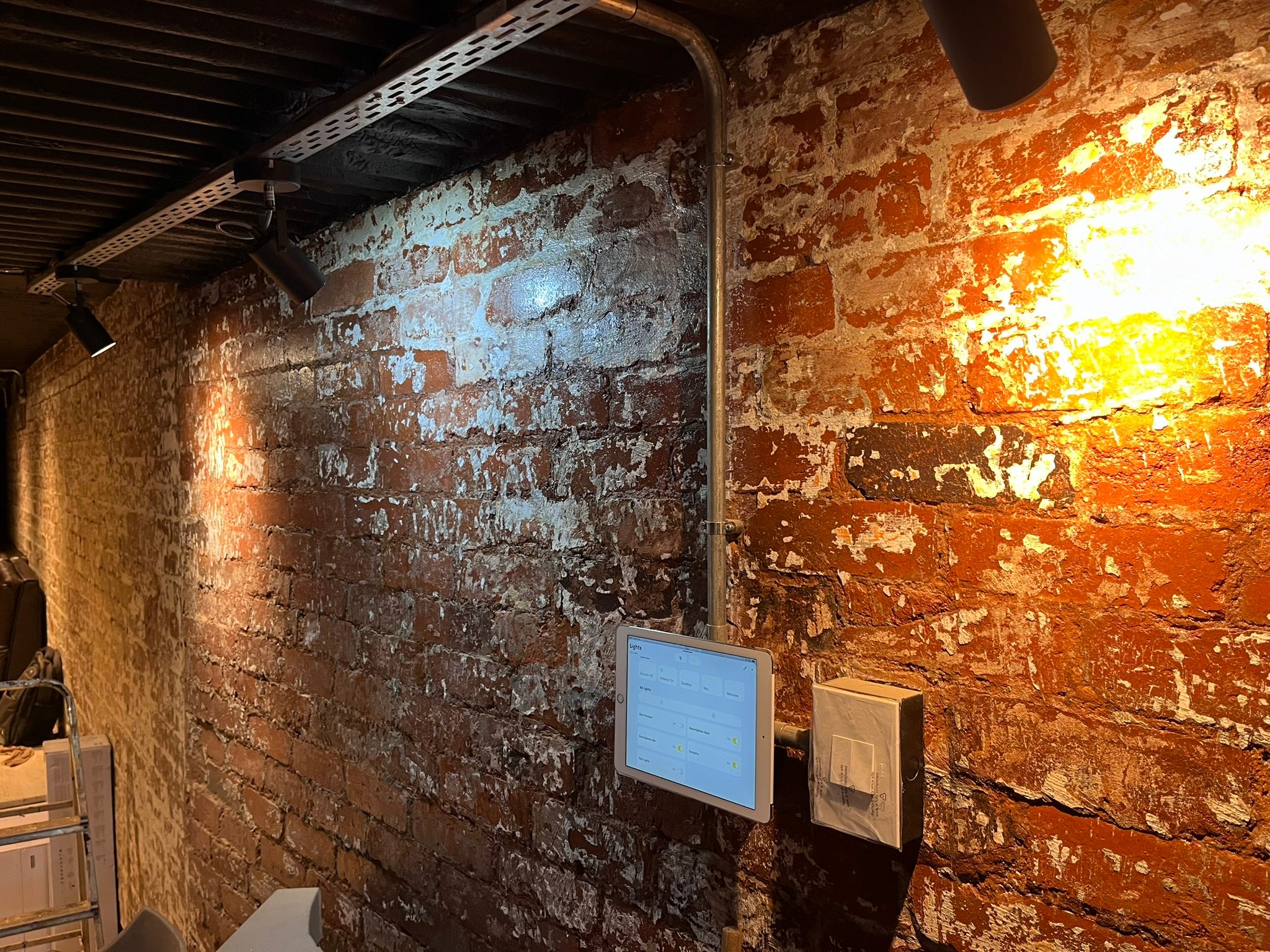
A smart home should not make the homeowner feel trapped.
If a scene does not behave as expected, there should be a sensible way to take control. If a guest cannot understand a room, the room should still function. If an app is not nearby, the important controls should not disappear.
Automation is powerful, but manual fallback is part of good design.
A button still matters
Touchscreens and phone apps are useful.
But a physical button is still one of the simplest interfaces in a home. Walk into a room, press a button, get light. That basic expectation should not be sacrificed just because the system can do more.
The best automation often feels simple because the complex work is hidden behind clear controls.
This is central to how we think about Crestron Home systems and lighting control in lived-in homes.
Scenes should be reversible
A lighting scene may set several circuits at once.
That is helpful, but the client must still understand how to change the environment. If the room is too bright, too dark or not right for the moment, the user should not need to phone the installer to recover control.
Scene design should include the normal human behaviour that happens after the scene is triggered.
People adjust things.
The system should allow for that.
Important functions need clear fallbacks
Certain functions matter more than others.
Gates, garage doors, security lighting, basic room lighting, selected TV controls and critical audio areas should have fallback thinking. That does not always mean a separate switch or remote, but it does mean the design should consider what happens if the preferred control method is not available.
The client should not be left feeling that the home is clever but helpless.
Guests and staff use homes differently
Homeowners often learn their systems over time.
Guests, house managers, staff and family members may not. A system that makes perfect sense to the owner can still confuse someone else. Manual fallback helps keep the house usable for different people without compromising the owner’s preferred experience.
This is especially important in larger homes and holiday properties.
The same thinking appears in why private home technology should be discreet by design and what makes Crestron Home a professional choice in South Africa.
DG Technologies’ view
DG Technologies believes automation should reduce friction.
That means we design the clever parts carefully, but we also respect the ordinary moments: walking into a room, turning on a light, playing music, opening a gate or switching off the house at night.
A good smart home is not one where everything is automated.
It is one where the homeowner always feels in control.