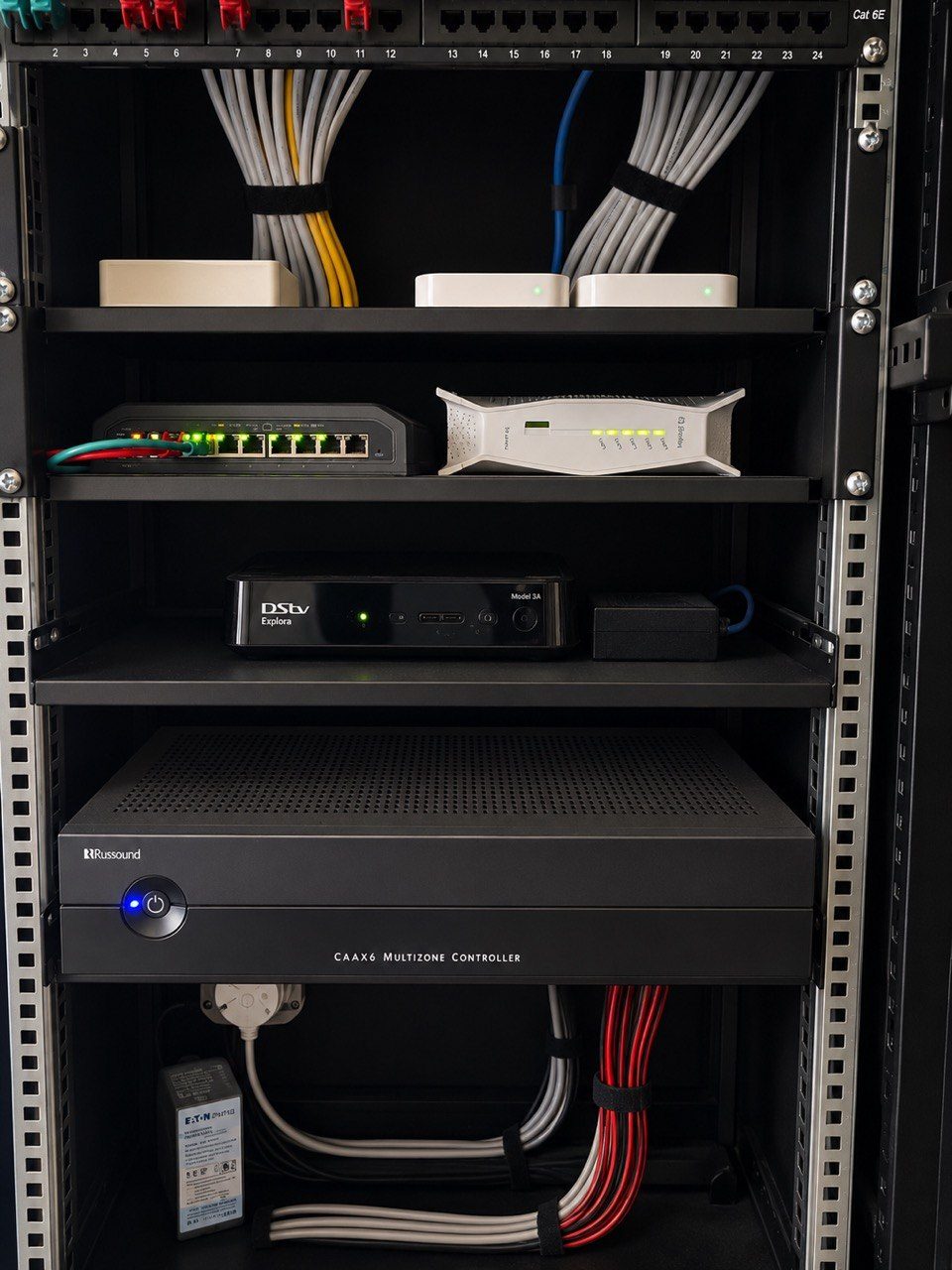
Structured control and AV rack prepared for a residential installation

Zimbali Estate home automation

Home automation for Zimbali Estate homes

DG Technologies designs Crestron Home, lighting, audio, cinema, climate and networked control systems for new builds, renovations and established Zimbali Estate homes.

A good automation system is planned as part of the home, not added after the rooms are finished.

Zimbali's Architectural Code has a documented history of revision, and the estate's governance documents treat telecommunications and television cabling as part of the services environment. For a new build or renovation, that makes early coordination important for cable routes, visible equipment, service access and future changes.

DG Technologies designs the control layer around how the property will be used. Crestron Home can bring lighting, audio, cinema, climate and selected interfaces into a consistent experience, while the underlying network, power and cabling are designed to remain serviceable.

The technology brief belongs beside the architectural brief

The most useful time to decide on automation is before ceilings, joinery, stonework and electrical positions become fixed. Zimbali's public record shows that architectural controls and completion processes have been actively documented over time, so the current requirements need to be checked for each project.

Define the rooms and scenes

Identify the daily lighting, audio, cinema, climate and access-control actions before selecting processors, keypads or touch panels.
Coordinate the routes

Allow for structured network cabling, control wiring, speaker cables, display points, motorised shading and accessible equipment locations.

Use the platform where it solves a real control problem

Crestron Home is useful when several room systems need consistent control and the property needs a supportable platform. It should not be specified simply because a large equipment list looks impressive.

Lighting and shading

Scenes can coordinate lighting and selected shading actions around normal routines, arrival, entertaining and evening use.

Audio and cinema

Sources, zones, displays and cinema control can be presented through a consistent interface when the equipment and network are designed to work together.

See DG multiroom audio services

Network dependency

Processors, apps, touch panels and connected equipment still depend on stable routing, switching, Wi-Fi, power and documented addressing.

Plan the Zimbali network layer

Assess before replacing inherited equipment

An established Zimbali home may contain useful cabling, speakers, amplifiers, keypads or control hardware from an earlier project. The correct upgrade path follows inspection, testing and the owner's current requirements.

Map what is installed

Identify processors, lighting modules, interfaces, network equipment, power supplies, control points and major cable routes.

Separate faults from obsolescence

A failed network, power supply or termination should not automatically lead to replacing every working part of the system.

Plan the next stage

The outcome may be repair, recommissioning, a phased Crestron Home migration or a new system designed around the current home.

Repair, recommission or replace

Zimbali automation work since 2012

DG's Zimbali records cover six homes across new builds, renovations and long service relationships. The examples below are anonymised and limited to what the underlying project, invoice and correspondence records establish.

One house, three owners, thirteen years

DG's records for a single Zimbali home run from its construction in 2013 to a phased scope of work in 2026, across three successive owners: the original automation and audio installation, a repair to that same system a decade later, and the current owner's staged processor upgrade.

What an estate renovation brief contains

A 2018 Zimbali renovation brief on file specifies eight audio zones under in-wall keypad control, veranda speakers on a separate power amplifier, a touch panel for the main entertainment area, twelve dimmable and twenty-four relay lighting circuits, air-conditioning control, and named scenes, one of which sets outside speakers, feature and pool lighting, blinds, air-conditioning, pool jets and driveway lights together.

Technology goes through the same review as every other trade

On one architect-led Zimbali build, DG's decisions were minuted alongside every other trade through the estate's formal design review. TV room layout and cabling routes were agreed in numbered design meetings before installation began.

Zimbali history and infrastructure

Delivered in stages

One documented Zimbali build was delivered in phases against an agreed payment plan, with a dedicated cinema room added later as its own stage.

Client identities, addresses and current system layouts are deliberately excluded. The records support the work described, but no unrecorded performance or permanent-outcome claim is being made.

A Zimbali network changes as the home changes

The oldest Zimbali network records in this review begin with a new-build AV brief that divided the property into numbered entertainment areas, a cinema room and an outdoor area. Later records show the same kind of home being altered, supported and reconfigured as ownership, equipment and the way the rooms were used changed.

That is why we do not treat an estate-home Wi-Fi complaint as a request for one more radio. The network may be carrying years of decisions made at different stages, and each layer has to be understood before the next change is made.

New-build AV creates the first network decisions

A Zimbali build-stage scope required the room layout, television positions, inputs and entertainment areas to be discussed before equipment was selected. The useful network question starts early: where will the sources, displays, access points and service routes live?

A renovation can change more than the décor

One documented renovation later required internet and data points to be separated between retained and sold sections, with access-point cabling moved away from a cinema room into a ceiling void. Changes to rooms and ownership can therefore require a review of the network and AV paths together.

Remote monitoring finds a different class of fault

DG records also include regular remote bandwidth checks for a Zimbali property whose owners were away for periods. That makes it possible to establish whether the connection is alive before the next visit, then investigate the internal path if the service is present but the rooms remain unreliable.

Service history is part of the design information

A long-running Zimbali relationship passed through construction, installation, later repairs and a further staged upgrade under a new owner. Previous work, known faults and existing cable routes can save time when they are recorded and tested rather than assumed.

Why the technology timeline matters

Phased work keeps the brief visible

One Zimbali project was managed through a staged completion plan, with completed work, changes and outstanding decisions tracked as the installation progressed. That discipline is useful when a new home grows into a larger automation system, because the network, control and AV decisions remain traceable as each phase is completed.

These examples are anonymised and drawn from reviewed DG records. They describe the type of work and decision-making involved, without publishing residence details or security-sensitive layouts.

How DG approaches a Zimbali automation project

The process connects the owner's routines to the property, infrastructure and long-term support requirements.

01

Understand the brief

Discuss the rooms, people, routines, entertainment, lighting, climate, security interfaces and level of control required.

02

Coordinate the infrastructure

Review drawings, cable routes, rack space, power, network, speaker positions, displays and finish-sensitive work.

03

Select the platform

Choose Crestron Home and connected equipment where they solve the brief and can be supported properly.

04

Commission and document

Program, test, label, demonstrate and record the system so the home remains understandable after handover.

Zimbali Estate home automation questions

Does DG Technologies install Crestron Home in Zimbali Estate?

Yes. DG designs, installs, programs and supports Crestron Home for suitable new builds, renovations and established-home upgrades in Zimbali.

Can automation be planned for a new Zimbali home?

Yes. Early planning allows the technology team to coordinate cable routes, racks, power, network, speakers, displays, shading and control positions with the project team.

Do I need to replace an existing automation system?

Not automatically. Existing equipment and cabling should be inspected and tested before a repair, recommissioning, phased upgrade or replacement path is recommended.

Does Crestron depend on the home network?

Many connected control functions depend on stable routing, switching, Wi-Fi, power and device addressing. Network design is therefore part of the automation assessment.

Planning a new Zimbali home or upgrading an existing system?

Send us the drawings or describe the rooms and systems you want to control. DG Technologies will establish the right infrastructure, platform and commissioning path for the property.

Chat on WhatsApp
Get a quoteWhatsApp