In a luxury home, the smartest automation choice is not always the most complicated one.
That can sound strange in a market where people often associate premium homes with fully custom everything. Custom joinery, custom lighting design, custom cinema rooms, custom interiors and custom architecture all have their place. So it is natural for a homeowner to assume that the control system should also be custom-programmed from the ground up.
Sometimes it should be.
But often, for a residential home, Crestron Home is the more sensible choice.
Not because it is a shortcut. Not because it is a cheaper imitation of a serious Crestron system. And not because traditional custom Crestron programming has lost its value. Crestron Home makes sense because many luxury homes need reliable control, polished user interfaces, fast setup, consistent mobile and touch panel operation, and a system that can be supported properly after handover.
Those are residential priorities. They matter more than building complexity for its own sake.
At DG Technologies, our view is straightforward: the system should fit the home. A large home in Umhlanga, Ballito, Zimbali, Simbithi, Mount Edgecombe or elsewhere in KZN needs serious engineering judgement, but that does not mean every project needs to be engineered as if it were a hotel, command centre or unusual commercial facility. If Crestron Home can do the job properly, the home should not be over-engineered just to make the equipment list or programming approach look more impressive.
That same thinking sits behind our broader approach to home automation in Durban and KZN. The goal is not to sell the most complicated system. The goal is to design a home that works reliably and feels natural to live in.
Crestron Home is built around how homes are used
A residential control system has a different job from a corporate boardroom or specialist commercial installation.
In a home, the system is used by the owner, family, guests, domestic staff, children, visitors and sometimes rental or holiday-home guests. Not everyone wants to understand the rack. Not everyone should need training to turn on music, switch off an area, start a movie or select an evening lighting scene.
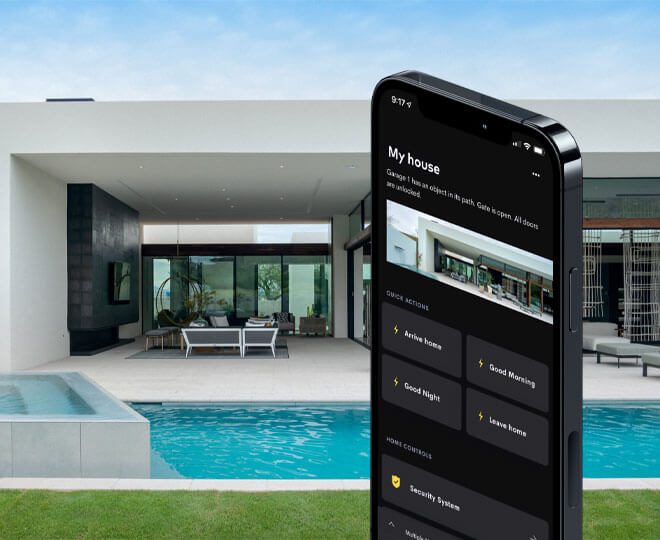
Crestron Home is designed around those everyday residential interactions. Rooms are organised in a way that makes sense. Lighting scenes can be named in plain language. Audio zones can be grouped logically. Touch panels and the mobile app share a consistent control experience. Keypads can be set up so the important actions are available without needing a phone.
That consistency matters.
In a proper luxury home, control should feel calm. The owner should not be wondering whether the lounge uses one interface, the patio uses another, the cinema uses another, and the bedrooms need a different app. A well-designed Crestron Home system brings the main functions together so the home feels joined up.
That does not remove the need for good design. It actually makes the design decisions more visible. The room names, scene names, keypad layouts, audio zones, lighting loads, network setup and handover process still need care. But Crestron Home gives the installer a strong residential framework instead of starting every normal home requirement from a blank page.
Faster setup can be a real benefit
Speed is sometimes misunderstood in automation.
Faster does not mean rushed. Faster does not mean less professional. Faster can mean fewer unnecessary custom steps, clearer configuration, more predictable commissioning and less time spent rebuilding functions that the platform already handles well.
On a residential project, that matters because the automation system is only one part of the build. There are architects, builders, electricians, interior designers, lighting suppliers, cabinet makers, network requirements, security installers, gate systems, glazing teams and many other moving parts. If the control system can be configured efficiently and still deliver the required result, that is an advantage.
Crestron Home allows many common residential functions to be set up in a structured way: rooms, lights, scenes, keypads, touch panels, remotes, audio sources, streaming zones, climate, shading and supported third-party devices. The installer still needs to know what they are doing, but the platform reduces the need to custom-build every standard interaction.
That can help a project move more cleanly from design to commissioning. It can also make changes easier when the client only understands the home properly after living with it for a few weeks. A scene may need renaming. A keypad button may need changing. A bedroom may need a simpler layout. An outdoor entertainment area may need a different audio grouping. These are normal residential adjustments, not signs that the original design failed.
When the platform makes those adjustments more manageable, the client benefits.
Maintainability is not a small detail
Luxury homes are long-term systems. They are not a once-off gadget installation.
The home will change. TVs will be replaced. Wi-Fi will be upgraded. Streaming services will change. Lighting drivers may fail. New phones will be added. The client may renovate a room, add a patio, change staff accommodation, upgrade a cinema processor or sell the property.
For that reason, maintainability is a serious design requirement.
A Crestron Home installation can be easier to support because the platform has a defined residential structure. A qualified integrator can understand the project more quickly than a fully bespoke system where every decision depends on how the original programmer chose to write and organise the code. That does not make custom programming wrong. It simply means that custom work carries a different support responsibility.
If a home has ordinary residential needs, there is value in using a platform that keeps those needs understandable. The homeowner should not be locked into complexity they did not need. The next service call should not become a detective exercise because basic room control was made unnecessarily bespoke.
This is especially important in KZN, where many premium homes are used as family homes, coastal homes or holiday properties. Owners may not always be on site. Support needs to be practical. Remote troubleshooting, clear documentation and a system that another competent Crestron Home installer can understand all have real value.
Our dedicated Crestron installer Durban and KZN work is built around that thinking: design the system properly, document it properly, and leave the home in a state that can be supported.
The app and touch panels should feel consistent
One of the strengths of Crestron Home is the consistency between the mobile app, touch panels and room controls.
That is not just a cosmetic point. In daily use, consistency reduces friction. If the owner learns how the lounge works on a touch panel, the phone should not feel like a completely different system. If the family uses the app to control audio, the bedroom touch panel should follow the same basic logic. If guests are shown a few simple controls, those controls should be easy to recognise across the home.
Good residential automation is partly about reducing the number of small decisions people have to make.
Pressing “Goodnight” should not require checking five rooms afterwards. Starting music outside should not require opening three separate apps. Putting the cinema into movie mode should not involve turning on the display, selecting an input, adjusting the amplifier and then dimming the lights separately.
Crestron Home is strong when those normal residential patterns are designed properly. The owner gets a consistent app and touch panel experience, while the technical equipment behind the scenes can still be serious: lighting modules, processors, network switches, amplifiers, remotes, displays, streaming sources and supported integrations.
The best result is usually invisible. The home feels simple because the decisions behind it were not simple.
Lighting control is often where the value is felt first
In many luxury homes, lighting control is where automation stops feeling like a technology feature and starts feeling like part of the architecture.
A good lighting system is not only about turning lights on from a phone. It is about setting the mood of the home correctly. Arrival scenes, evening scenes, pathway lighting, security lighting, entertaining scenes, low night lighting and whole-area off commands all change how a home feels.
Crestron Home can be a strong fit for lighting control because scenes and keypads can be built around the way the household actually uses the property. The entrance may need one kind of control. The kitchen and open-plan living area may need another. The cinema, patio, bedrooms and passages each need their own logic.
The important part is not to automate every circuit just because it exists.
Some lights should be dimmed. Some should be switched. Some should remain simple. Some may need careful load compatibility because modern LED fittings and drivers can behave badly on the wrong dimming equipment. A sensible Crestron Home design still requires load assessment and coordination with the electrician and lighting supplier.
This is where right-sized engineering matters. A system can be premium without being excessive.
Right-sized cost is not the same as cheap
Crestron Home is not a budget gadget platform. It is still a professional automation system, and it still needs proper hardware, cabling, networking, programming, commissioning and support.
But it can help keep cost aligned with the actual needs of the home.
That matters because luxury projects can easily drift into over-specification. A touch panel in every room may look impressive on a quote, but it may not be used. Every possible lighting circuit may be added to the control system, even where a simple local switch would have been more sensible. Audio zones may be split too finely, creating more cost and more confusion. Equipment may be replaced even when it is still suitable.
Good engineering is not about removing value. It is about removing waste.
That is why a smart-home quote should explain the decisions behind the equipment list. We have written more about that in why a smart home quote should explain decisions, not just equipment. The client should understand what is included, what is left out, what is being reused, what should be replaced, and why.
Crestron Home often supports that approach because it gives the installer a capable residential platform without forcing unnecessary custom development where it does not add value.
Custom Crestron still has its place
None of this is an argument against custom Crestron programming.
There are projects where custom programming is absolutely justified. Some homes have unusual requirements. Some clients want highly bespoke interfaces. Some properties include specialist systems, hospitality-style workflows, complex estate integration, unusual AV routing, non-standard controls or commercial-grade requirements that do not fit neatly into a residential configuration platform.
In those cases, custom programming can be the right tool.
The point is that it should be chosen for the right reasons. A home should not be pushed into a custom route simply because custom sounds more premium. The premium decision is the correct decision for the brief, the budget, the maintenance plan and the people who will live with the system every day.
We cover that choice in more detail in Crestron Home vs custom Crestron programming for South African homes. The short version is simple: both approaches can be professional. The skill is knowing which one fits the project.
Support after handover is part of the design
The day the client moves in is not the end of the automation project. It is the beginning of the system’s working life.
After handover, the owner may ask for scene changes, app setup on new devices, Wi-Fi adjustments, gate or CCTV integration changes, remote access support, or help after a power event. In South Africa, we also have to think practically about load shedding, surge protection, UPS runtime and network recovery. A luxury control system that is difficult to support becomes frustrating quickly, no matter how impressive it looked at installation.
Crestron Home can make support cleaner because the platform is structured and familiar to trained residential integrators. That helps with troubleshooting, changes and long-term service. But again, the platform does not do the whole job by itself.
The installer still has to label the rack, document the system, commission the network, set up remote support responsibly, explain the app, test scenes and make sure the client knows what the system is meant to do. Good handover is part of good design.
That is why our process is not only about hardware supply. It is also about how the project is run and how decisions are explained. For a better sense of that approach, see working with DG Technologies.
The sensible choice is the one that serves the home
Crestron Home is often the sensible choice for luxury homes because it matches what many residential projects actually need: reliable control, a polished app, consistent touch panel operation, maintainable configuration, faster setup, easier support and cost that is right-sized to the brief.
It is powerful enough for serious homes, but structured enough to avoid unnecessary custom complexity where that complexity does not improve the final experience.
That balance is important.
A homeowner should not be under-sold a system that cannot carry the home properly. But they should also not be over-sold a system that turns normal residential requirements into an expensive technical exercise. The job of the integrator is to stand between those two mistakes and make the right call.
For many luxury homes in Durban, the North Coast and across KZN, Crestron Home is that right call. Not always. Not automatically. But often enough that it deserves to be considered seriously at the design stage, before the project becomes more complicated than it needs to be.