A smart home is not finished just because the lights switch on, the music plays and the cameras appear on the phone.
That is installation.
Support is what happens afterwards.
It is what happens when the family has lived with the system for a few weeks and real habits start showing. It is what happens when the internet provider changes a router. It is what happens when a builder comes back for an alteration. It is what happens when a TV is replaced, a phone is upgraded, a gate motor is serviced, a keypad label no longer makes sense or a new room is added to the house.
This is where the difference between a basic installation and a professionally designed system becomes obvious.
At DG Technologies, we see support as part of the system itself. It should not be treated as an afterthought, because a home with lighting control, multiroom audio, CCTV, Wi-Fi, cinema, access control and Crestron Home is not one product. It is a connected environment.
If you are still separating the terms, our smart home terminology guide explains how these systems fit together before support becomes part of the conversation.
If that environment is difficult to understand later, the client eventually pays for that confusion.
Support starts before the system is installed
Good support does not begin when something breaks.
It begins during design.
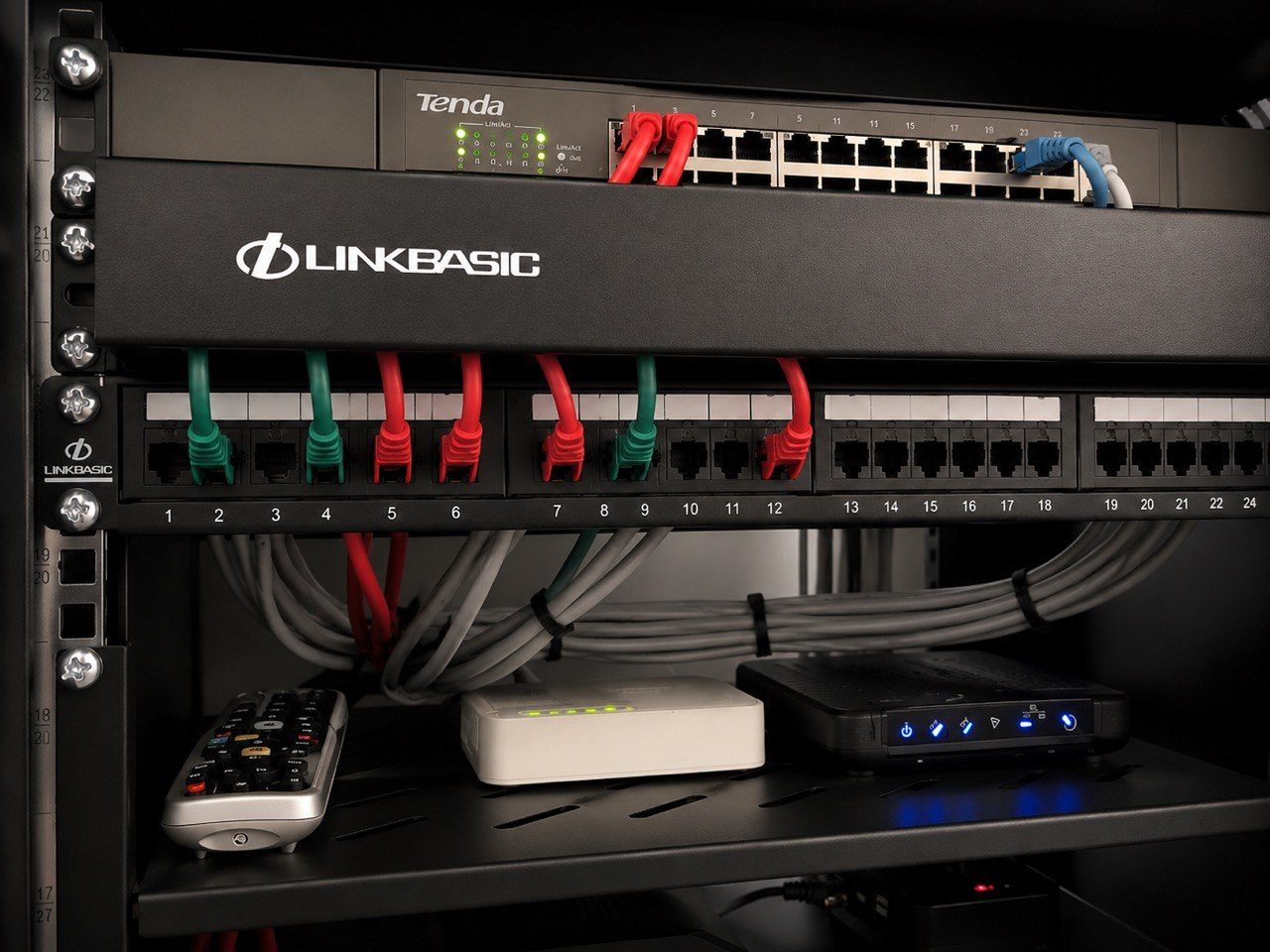
If a rack is built neatly, it is easier to service. If cables are labelled, fault-finding is faster. If the network is designed properly, cameras, touch panels, wireless access points and control processors behave more consistently. If the system is documented, the next technician is not forced to guess.
That is why we often say that smart-home documentation matters years later.
Documentation is not paperwork for the sake of looking professional. It becomes the map of the home. It helps the client, the installer, the electrician, the builder and any future contractor understand what was done and why.
In a larger home, the value of that map grows every year.
One small example is a cable route. During construction, it may seem obvious where a cable goes. Five years later, after ceilings are closed, cupboards are fitted and a second contractor has worked in the same space, that knowledge can disappear completely.
If there is no drawing, no label and no record, a simple change can become expensive.
Proper support avoids that where possible.
A reliable network is not optional
Many smart-home problems are blamed on the wrong thing.
A client may say the camera system is unreliable. The camera may be fine.
Someone may say the Crestron app is slow. The processor may be fine.
A touch panel may drop offline. The panel may not be the root problem.
In many homes, the network is the backbone of the entire system. If the network is weak, badly segmented, overloaded or built from consumer hardware in a large property, the rest of the technology suffers.
This is why network infrastructure matters so much in modern homes.
Wi-Fi is not just for phones and laptops anymore. It affects cameras, streaming, automation apps, access control, intercoms, tablets, smart TVs, voice systems and sometimes even lighting or climate control interfaces.
In high-end homes, especially large KZN properties and coastal homes with thick walls, multiple floors, long distances and outdoor entertainment areas, support starts with a stable network design.
If that foundation is poor, support becomes reactive. Someone keeps returning to fix symptoms. If the foundation is strong, support becomes more predictable.
That is the difference.
The client should not be dependent on memory
A common weakness in older smart-home installations is that too much knowledge lives only in the installer’s head.
The client may know who installed the system, but not what was installed. They may have a rack full of equipment but no drawings. They may have dimming modules, relays, processors, amplifiers, network switches and power supplies, but no clear record of what controls what.
That is dangerous for long-term support.
If the original installer disappears, becomes unavailable or simply forgets the detail, the homeowner is left with a system that may be expensive but hard to maintain.
Good support reduces that dependency.
It should be possible to open the rack, read the labels, check the drawings, understand the network, identify the processor, trace important cabling and make an informed decision.
That does not mean every future issue is simple. It means the next step is based on evidence rather than guessing.
For DG Technologies, this is part of responsible engineering.
We care about the next person who has to work on the system, even if that person is us years later.
Support also means knowing what not to change
There is a temptation in this industry to replace too much.
Sometimes replacement is correct. Old unsupported equipment, unsafe wiring, failed power supplies, outdated network hardware, damaged cable routes or badly planned racks may genuinely need proper correction.
But replacing everything is not automatically better engineering.
A good amplifier may still be a good amplifier. Existing speakers may still perform well. Certain cable routes may still be usable. Some keypads may still make sense. Some rooms may not need additional touch panels if the mobile app gives the client the control they actually use.
Support is partly about judgement.
Before recommending a major change, we ask what the client actually gains from it. Will it make the system more reliable? Will it make daily use easier? Will it reduce future maintenance? Will it solve the real fault, or only replace equipment around the fault?
This connects directly to the way we assess older systems in legacy Crestron and smart-home rescue work.
The right answer is not always the biggest quotation. The right answer is the design that makes sense for the home, the client and the long-term support requirement.
Handover is part of support
Support does not only mean returning later.
It also means finishing the job properly.
The handover should prove that the client can use the system confidently. The app layout should make sense. Keypad buttons should be understandable. Scenes should be named in normal language. Important actions should not be buried behind installer thinking.
As we wrote in our article on smart-home handover, the real test is what happens when the installer leaves.
If the client cannot use the system without feeling nervous, support calls will follow.
Sometimes that is not because something is broken. It is because the system was not translated properly into the way the family lives.
Good support includes listening to that.
If the client uses a room differently from the original plan, the app or keypad logic may need small changes. If a scene name is confusing, change it. If a camera view is hard to find, reorganise it. If an audio zone grouping does not match the way the home is used, adjust it.
Those small decisions can make a large system feel calm.
Maintenance should be calm, not dramatic
The best support is often quiet.
It is the firmware update done at the right time, not during a busy weekend. It is the network health check before a small issue becomes a family frustration. It is replacing a failing power supply before it causes intermittent faults. It is keeping notes after a service visit so the next visit starts with context.
For smart home and AV support, the goal is not to create dependency.
The goal is to keep the home reliable.
That may include:
- Checking network stability and wireless coverage
- Reviewing camera recording and remote viewing
- Testing lighting control and keypads
- Confirming app access for the correct users
- Checking UPS, power supplies and rack ventilation
- Updating documentation after changes
- Reviewing whether the system still matches how the home is used
This is not glamorous work, but it is the work that keeps technology useful.
Why this matters for premium homes
In a high-end home, technology should not constantly announce itself.
It should work in the background.
The family should not need to understand every processor, switch, amplifier, recorder and module in the rack. Guests should not need a lesson before turning on lights. Security footage should be available when needed. Music should play where expected. The cinema should start without frustration. The network should be stable enough that nobody thinks about it.
That feeling does not happen by accident.
It comes from design, installation, handover, documentation and support working together.
When one of those parts is missing, the client may still have expensive equipment, but the experience becomes weaker.
Proper support protects the investment.
It also protects the client’s time.
The real product is confidence
Clients often think they are buying equipment.
In reality, they are buying decisions.
They are buying the decision to label the rack properly. The decision to use reliable network hardware. The decision to document the cable routes. The decision to reuse equipment that still has value. The decision to replace what is genuinely wrong. The decision to simplify control instead of showing off complexity.
They are also buying the confidence that, years later, someone can understand the system and support it properly.
That is what proper smart-home support should look like.
Not panic. Not guesswork. Not endless replacement for the sake of replacement.
Just calm, practical engineering that keeps the home working.