The day a smart home is handed over is not the end of the system.
It is the beginning of its real life.
From that point onward, the home has to deal with normal use: family routines, guests, staff, power interruptions, fibre changes, new phones, new streaming services, updated apps, camera changes, lighting changes, renovations and the occasional fault.
That is why supportability is not an afterthought.
It is part of the product.
A system that cannot be supported is not finished
A smart home can look impressive in a demonstration and still be difficult to support later.
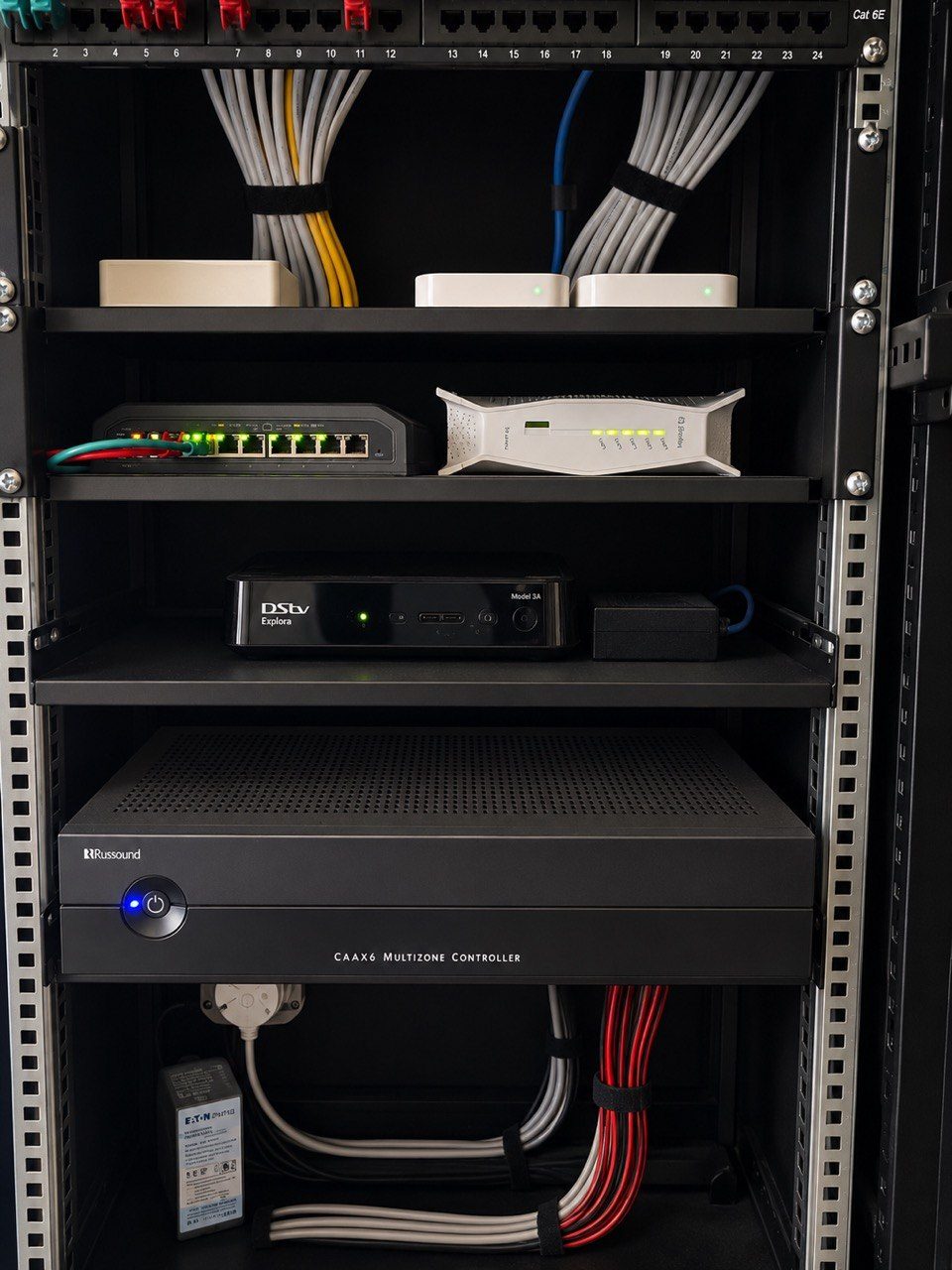
The app may look clean. The lights may respond. The audio may play. The cameras may load. But behind that, the rack may be confusing, cables may not be labelled, the network may be undocumented, and nobody may know which device controls which part of the home.
That kind of system is not truly complete.
It works until something changes.
Then every small fault becomes an investigation.
Supportability starts before installation
Supportability is designed early.
It starts with decisions like:
- where the equipment rack will be
- whether there is enough ventilation
- how cables will be labelled
- whether access points can be reached later
- how lighting circuits will be documented
- how passwords and admin access will be handed over
- whether the network can be managed properly
- how future expansion will be handled
These details may not be as exciting as touch panels, speakers or cameras, but they affect the homeowner for years.
A system that is easy to support usually costs less to own over time.
Documentation protects the homeowner
Documentation is often misunderstood.
It is not paperwork for the installer. It is protection for the homeowner.
If the original installer is unavailable one day, a documented system gives the next competent technician a way to understand the installation without starting from zero.
Useful documentation may include equipment lists, cable labels, rack photos, network notes, lighting circuit schedules, room naming, access details and drawings where appropriate.
The goal is not to create a thick file nobody reads.
The goal is to leave behind enough knowledge that the home is not trapped inside one person’s memory.
Supportable does not mean complicated
In fact, supportable systems are often simpler.
They avoid unnecessary equipment. They use sensible naming. They group rooms logically. They keep access to the rack practical. They do not hide critical devices in random cupboards. They avoid clever workarounds that nobody will understand later.
That kind of simplicity is not laziness.
It is engineering discipline.
The best smart-home systems are often quiet. They do not need the homeowner to think about the technology every day.
What this means for the client
When reviewing a home automation quote, clients should ask about supportability directly.
Good questions include:
- What happens if this system needs support in three years?
- Will the rack be labelled?
- Will I know where the main equipment is?
- Who keeps admin access?
- Can the network be remotely checked?
- Which equipment can be serviced locally?
- What documentation will be handed over?
- What happens if we renovate later?
These questions reveal how the installer thinks.
If the answer is vague, the system may be easy to sell but hard to live with.
The DG Technologies approach
DG Technologies provides smart home support and maintenance across Durban, Umhlanga, Mount Edgecombe, Zimbali, Simbithi and the wider KZN coast.
Our view is simple: a smart home should not only work on day one. It should be understandable, maintainable and supportable years later.
That is why we care about racks, labels, documentation, network design, access, ventilation and clear handover.
The hidden work is often what protects the client most.