Some commercial projects are remembered because of their size.
Others are remembered because of the pressure.
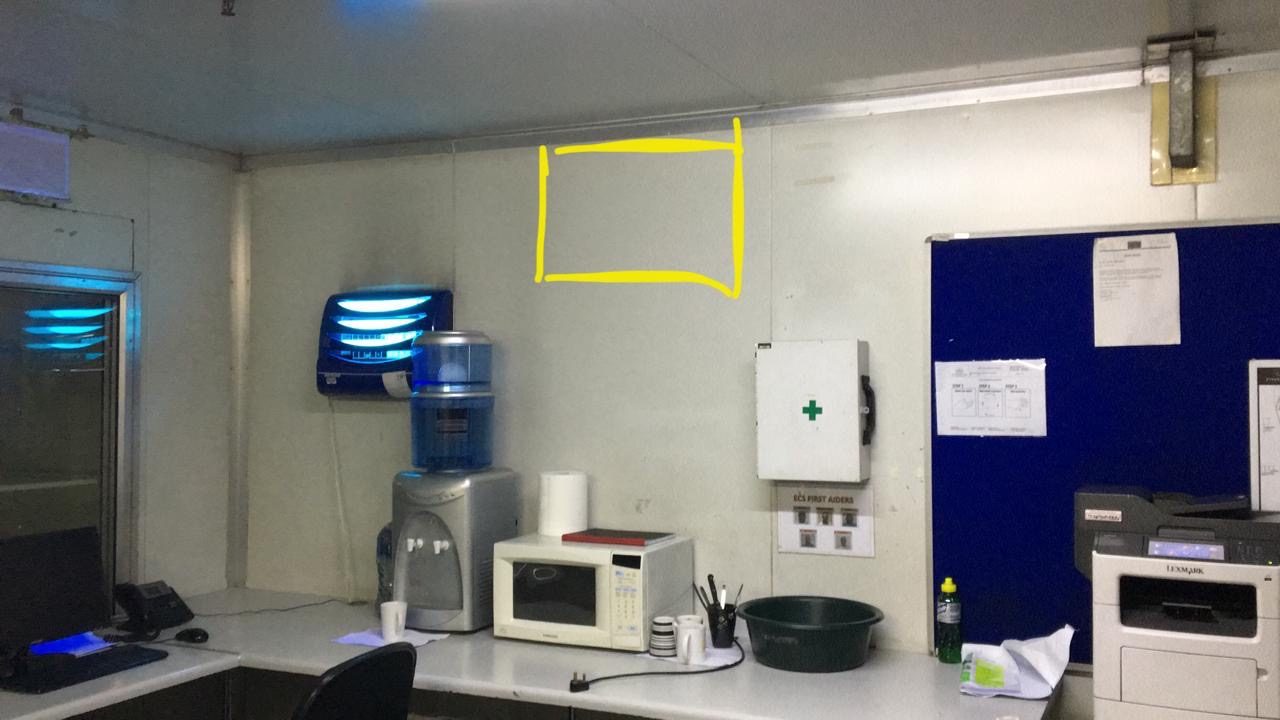
ECS2, the Cornubia second-site expansion for Ethekwini Cold Stores, was both. Internally and with the client team, the site was referred to simply as ECS2. It was a major commercial rollout that required more than a camera installation. It needed CCTV, network infrastructure, Wi-Fi access points, extra data points, cabinet work, fibre planning and a PA and announcement system, all inside a working industrial environment.
For security reasons, this article does not publish sensitive layouts, camera positions, passwords, access procedures or operational weak points. It is a redacted technical overview of the work and the lessons behind it.
A second site is not a copy-and-paste project
When a business expands into a second warehouse or cold-chain facility, it is tempting to think the technology can simply be repeated.
Same cameras.
Same Wi-Fi.
Same network.
Same cabinet.
That is rarely true.
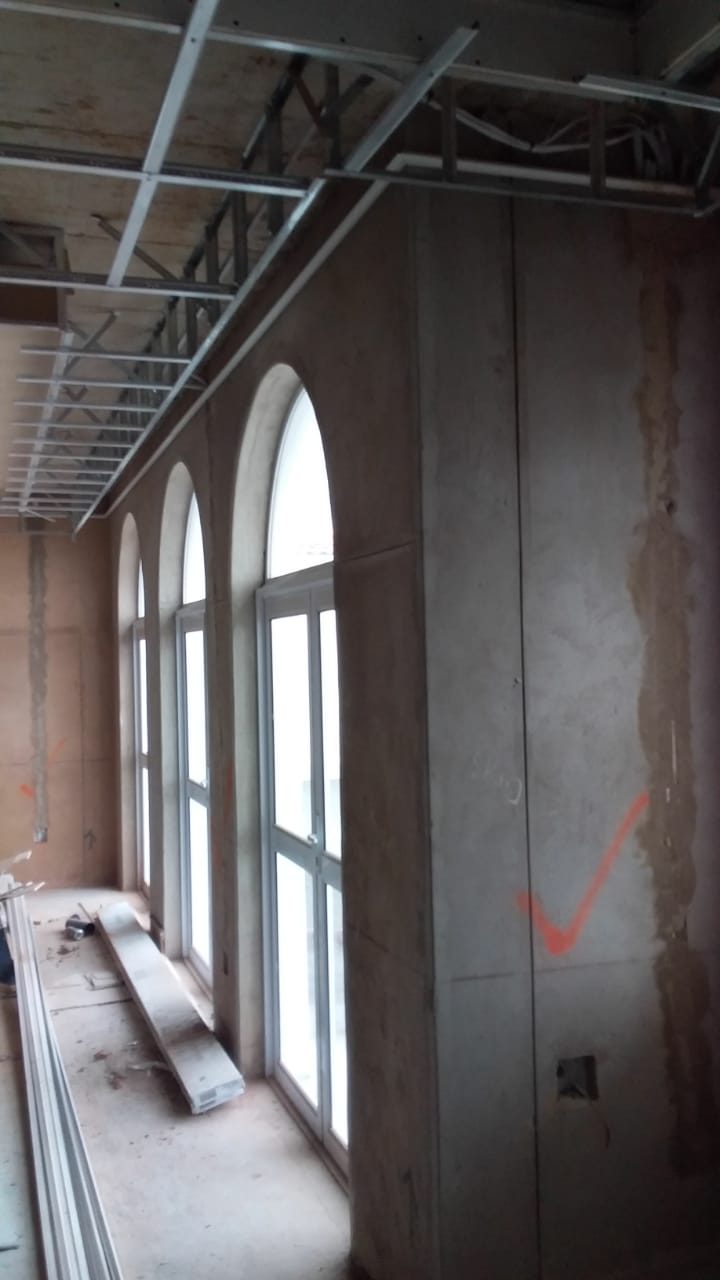
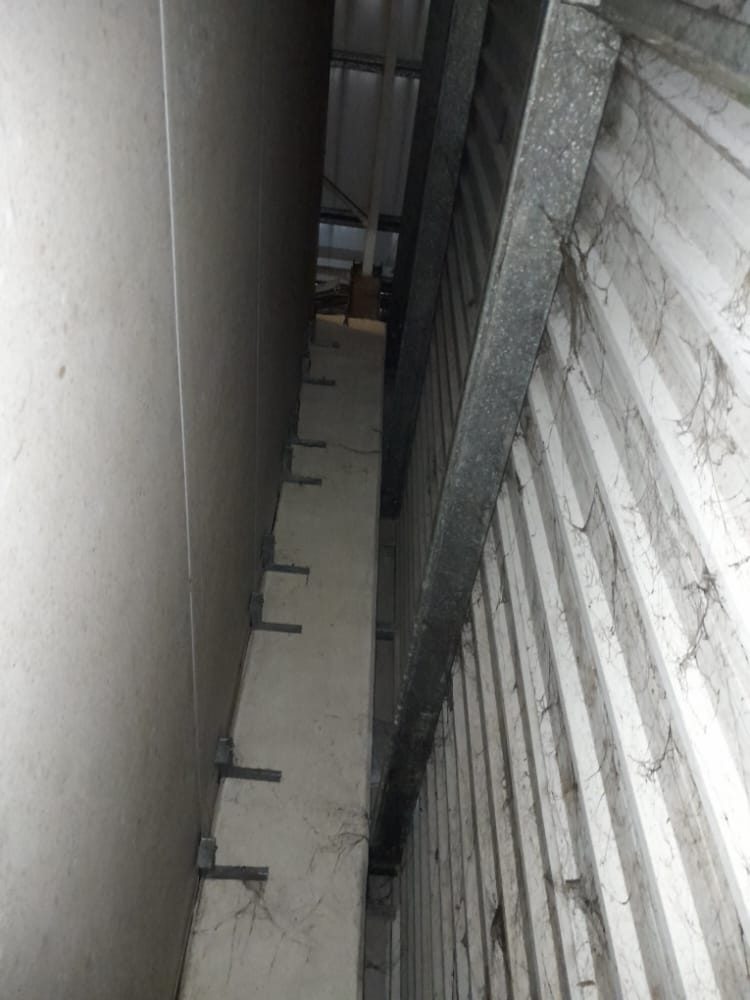
ECS2 had its own building layout, wall construction, cold-room conditions, intake areas, offices, warehouse movement, staff requirements, scanner coverage needs and operational pressure. The system had to suit that specific building, not just the equipment list from another site.
That is why a turnkey commercial rollout has to start with the building.
Before the final installation can be trusted, the integrator has to understand:
- where the equipment head-end and cabinets should sit,
- how far the cable runs will be,
- which areas need CCTV identification rather than general overview,
- where Wi-Fi must work for actual warehouse devices,
- where staff announcements need to be heard,
- which routes can be accessed later,
- where downtime would hurt the business,
- how future support will be handled.
The design is not only about technology. It is about keeping the operation moving.
CCTV was only one part of the scope
ECS2 needed professional CCTV, but the project could not be treated as a standalone camera job.
The same site also required a stable network, working Wi-Fi, extra network points and a PA and announcement system. Those systems share infrastructure decisions. Cabinet placement affects CCTV. Fibre planning affects network stability. Network switching affects cameras and access points. Power and UPS planning affect recovery. Labelling affects future support. PA cabling affects ceiling routes and site coordination.
If those systems are designed separately, the site becomes difficult to support.
If they are designed together, the building becomes easier to manage.
That is the difference between installing products and delivering infrastructure.
Warehouse Wi-Fi must be tested with real devices
One of the clearest ECS2 lessons was Wi-Fi coverage.
In a normal office, a phone showing two or three bars may look acceptable. In a warehouse or cold-store environment, that is not enough. Staff may rely on scanners, handheld devices, office terminals and operational systems that need stable connectivity in very specific places.
Cold-room construction, thick walls, high racking, metal, roof spaces and intake areas can all change the result.
At ECS2, Wi-Fi access-point placement could not be guessed from a neat plan. Some roof-mounted positions did not give the required strength inside key operational zones. Access points had to be repositioned, coverage had to be tested, and the warehouse devices themselves became part of the test process.
That is an important point for any industrial Wi-Fi project in Durban, Cornubia or greater KZN.
The question is not, “Does my phone show Wi-Fi?”
The question is, “Does the actual device used by the business work reliably where the business needs it?”
Downtime planning matters
Commercial sites often ask for the same thing:
“Please do the work, but do not stop the business.”
That sounds simple until a cable route has to move, a cabinet has to be changed, an access point has to be relocated or a network section has to be corrected.
The professional way to handle this is preparation. Get the equipment ready first. Label what can be labelled. Understand the affected area. Keep the change window tight. Have the right people on site. Test immediately after the change. Do not pull a working system apart and then start thinking.
On ECS2, some Wi-Fi repositioning work was planned around keeping downtime as short as possible. That is exactly how large operational sites should be handled.
The night the new cabling was cut
The most difficult part of ECS2 was not the original installation.
It was what happened during decommissioning of inherited equipment from the previous site occupants.
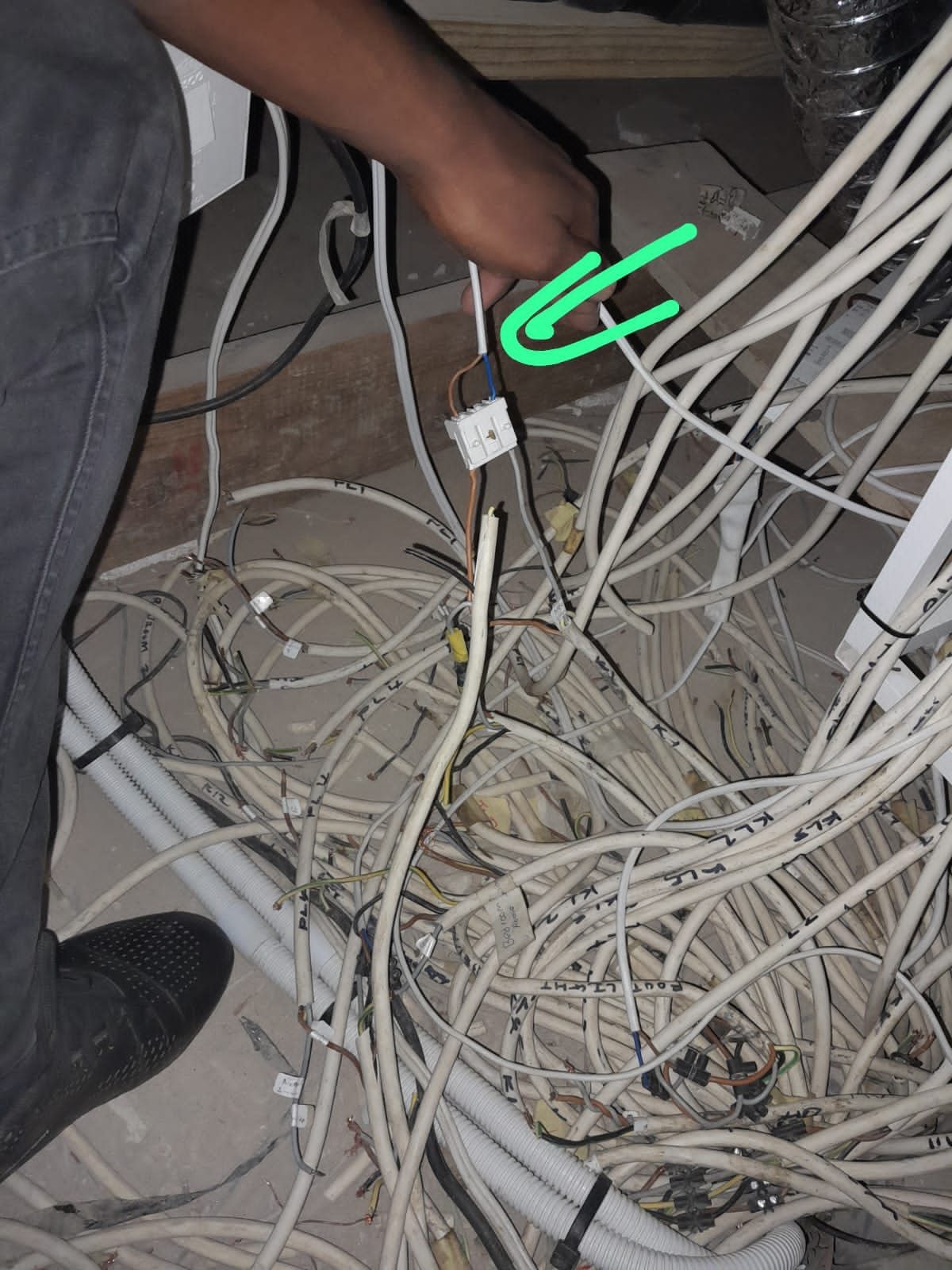
While old camera and cabinet equipment was being removed, newly installed cabling and network infrastructure were disturbed. The site network dropped late at night. Only part of the wireless system remained visible. The client still needed the building to operate, and the priority became immediate recovery.
This is where the value of a committed installation team becomes obvious.
DG Technologies worked with the client team after hours, used photos and patching information to understand what had been affected, traced cabling, restored critical links and had intake Wi-Fi back before the next working day.
That sort of recovery is not glamorous.
It is not a showroom photo.
But it is exactly the difference between a supplier and a technology partner.
When a live site is under pressure, the client does not need excuses. They need people who can think clearly, stay on site, trace the fault and get the business moving again.
PA and announcement systems are operational tools
The PA system at a warehouse or cold-store facility should not be treated as an afterthought.
In a commercial environment, announcements support daily movement, dispatch, staff coordination, visitors, safety instructions and urgent communication. It is part of the operational layer of the building.
That means the cabling has to be planned properly. Speaker positions need to suit the building. The system must be usable by the people who need to make announcements. It must be serviceable later.
At ECS2, PA cabling and related work formed part of the broader expansion. It sat alongside CCTV, Wi-Fi and network points because the building needed a complete operational technology package, not isolated systems.
Why cabinet work and labelling matter later
Industrial sites change.
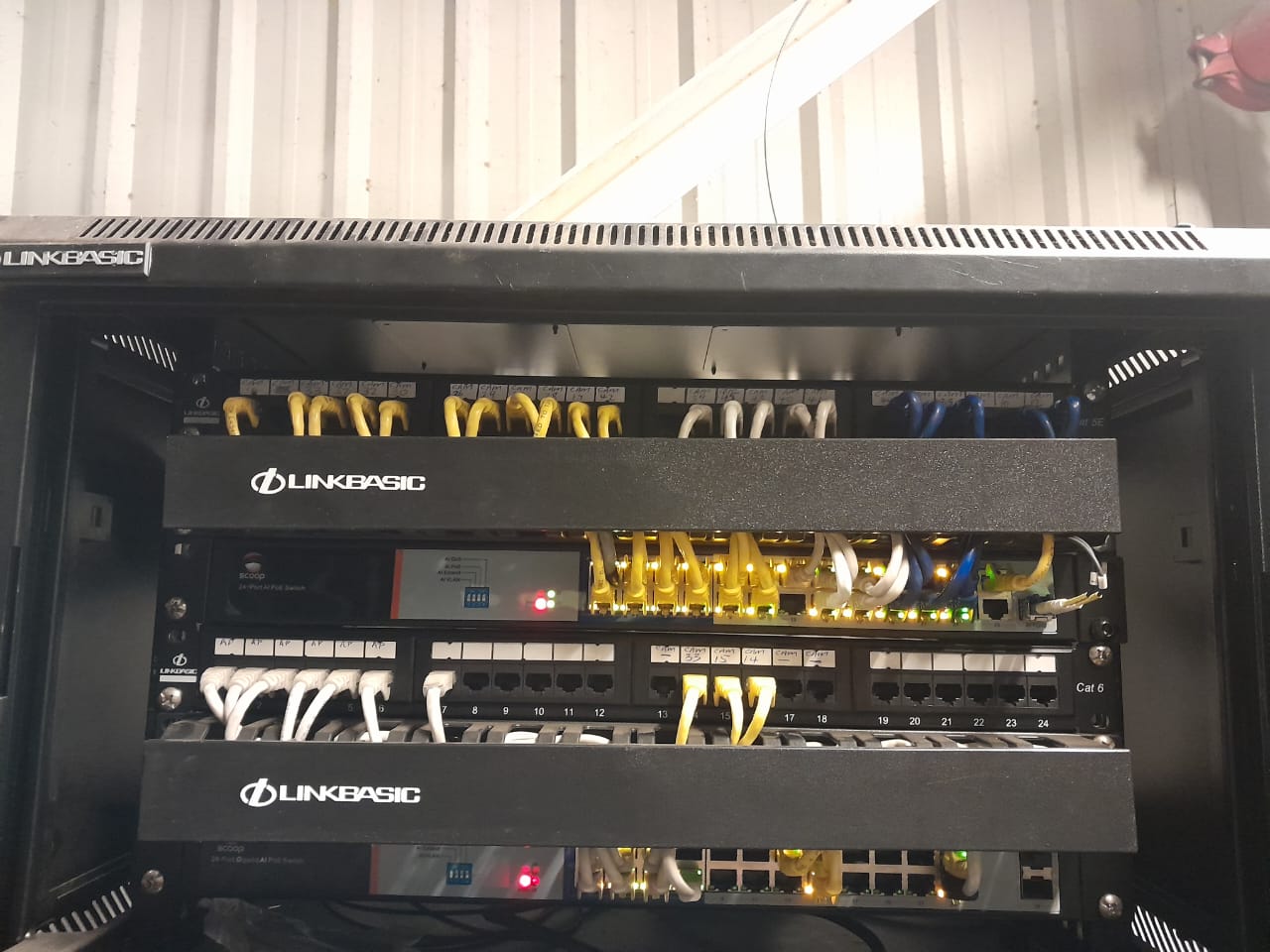
More cameras get added. Network points move. Staff offices shift. Fibre routes need attention. Time-and-attendance devices get added or reconfigured. A camera goes offline and someone needs to know which cable, switch and patch-panel port to inspect.
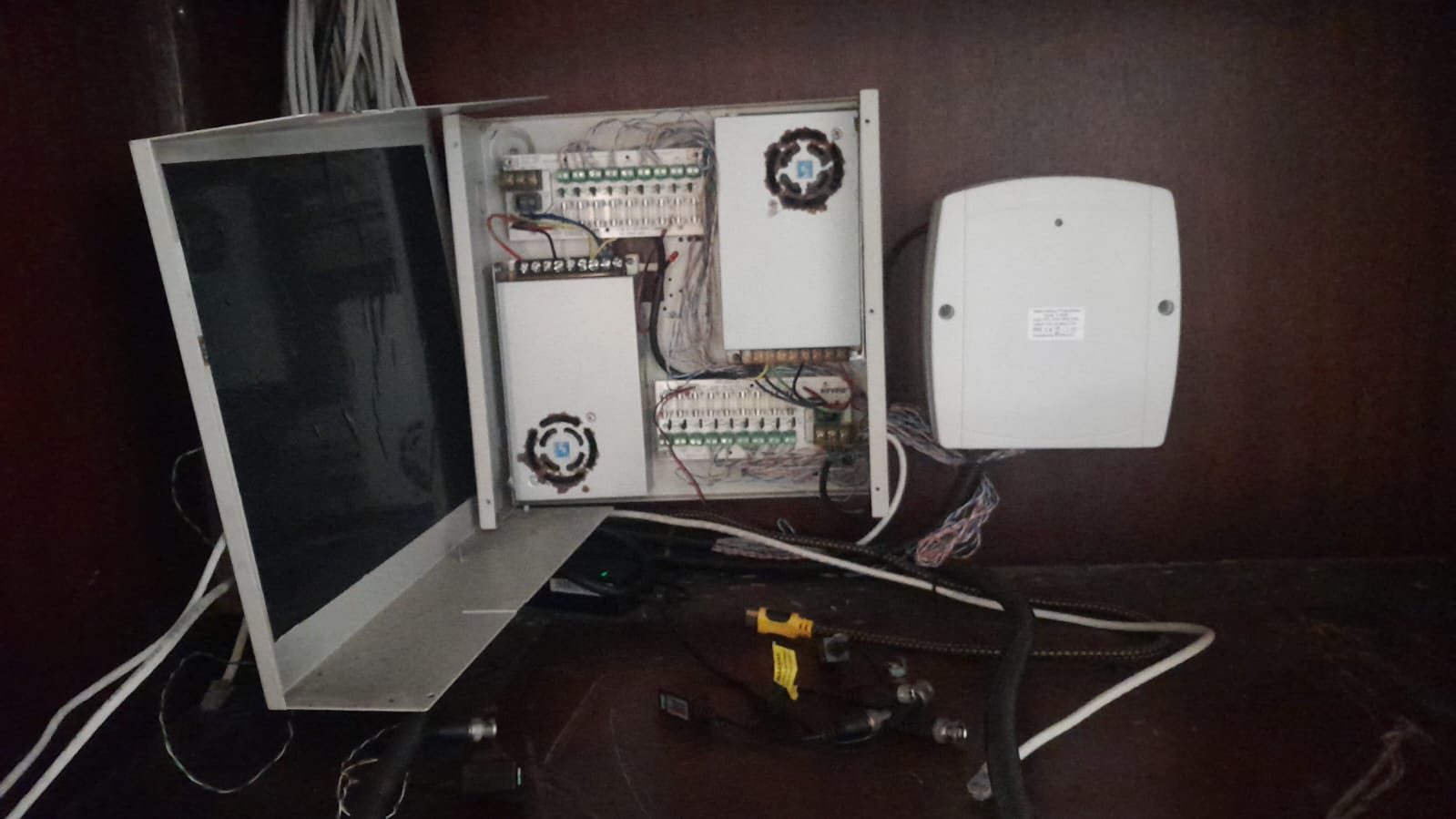
That is why cabinet clean-up, patch-panel labelling, switch labelling, fibre-panel labelling and camera-to-port documentation matter.
They do not always look exciting on a quote.
But years later, when a site needs fast support with minimal downtime, those details are priceless.
ECS2 continued beyond the first delivery push with further support work, camera adjustments, network points, generator-related cabling, HikCentral and time-and-attendance assistance, and cabinet documentation. That support history is part of the real project.
What ECS2 says about DG Technologies
ECS2 shows a side of DG Technologies that is easy to miss if you only look at residential smart homes and Crestron automation.
The same thinking applies in commercial work:
- design the infrastructure before selling the devices,
- test Wi-Fi with the equipment the client actually uses,
- plan downtime before touching live systems,
- keep cabinet work serviceable,
- document what was installed,
- respond when something goes wrong,
- protect client security by not publishing sensitive operational detail.
The visible product may be a camera, access point, speaker or network point.
The real product is a building that can keep working.
For a working warehouse, cold store or industrial site, that matters more than almost anything else.
You can view the public project overview here: Ethekwini Cold Stores Industrial CCTV.
Related technical reading:
- Why large CCTV sites often need fibre between cabinets
- Commercial CCTV for cold stores and warehouses in KZN
- Why CCTV for operational disputes needs different camera thinking
- CCTV installation in Durban and KZN
- Networking infrastructure
Field images from DG site work