Some projects should not be published in full detail.
Industrial CCTV is one of them.
When a system protects a working cold-chain facility, it would be irresponsible to publish exact camera layouts, blind spots, access-control rules, network topology, staff movement routes or security procedures. That information belongs to the client, not the internet.
But that does not mean the work should be invisible.
The Ethekwini Cold Stores project, often referred to by DG Technologies as ECS, is one of the clearest examples of the kind of commercial infrastructure work we are capable of. It was not a small camera job. It was a large industrial CCTV, network and access-control undertaking that had to work inside a busy operational environment.
This article is a redacted technical overview of what a project like that involves.
The later ECS2 Cornubia expansion is covered separately because it had its own story: a compressed second-site rollout across CCTV, Wi-Fi, network points and PA announcements, followed by an after-hours recovery when inherited equipment was removed and newly installed cabling was disturbed. Read that here: ECS2 Cornubia turnkey CCTV, Wi-Fi, network and PA case study.
A cold store is not a normal building
CCTV in a normal home is usually about perimeter awareness, gate visibility, driveway movement and remote viewing.
CCTV in a cold store or warehouse has a broader purpose.
It may support:
- security review
- dispatch and receiving disputes
- loading-bay incidents
- staff access events
- vehicle movement
- stock movement
- restricted-area visibility
- after-hours monitoring
- health and safety review
- management investigations
The camera must do more than show that something moved. It should help the business understand what happened.
That changes the design completely.
The project began with technical debt
When DG Technologies became involved at Ethekwini Cold Stores, the challenge was not only camera selection.
The site had inherited technical debt: old CCTV infrastructure, cabling problems, ageing routes, inconsistent camera reliability and a system that had grown in pieces over time.
That is common on industrial sites.
Someone adds a camera. Someone extends a cable. A cabinet becomes crowded. A route corrodes. A power supply fails. A camera is replaced but the old cabling remains. A recorder is expected to carry more than it was originally designed for. Years later, the business depends on a system nobody fully understands.
At that point, the professional answer is not simply “add more cameras”.
The professional answer is to audit, trace, redesign and rebuild the foundation where necessary.
Camera count is only one part of the design
The Ethekwini Cold Stores design required a proper IP CCTV architecture.
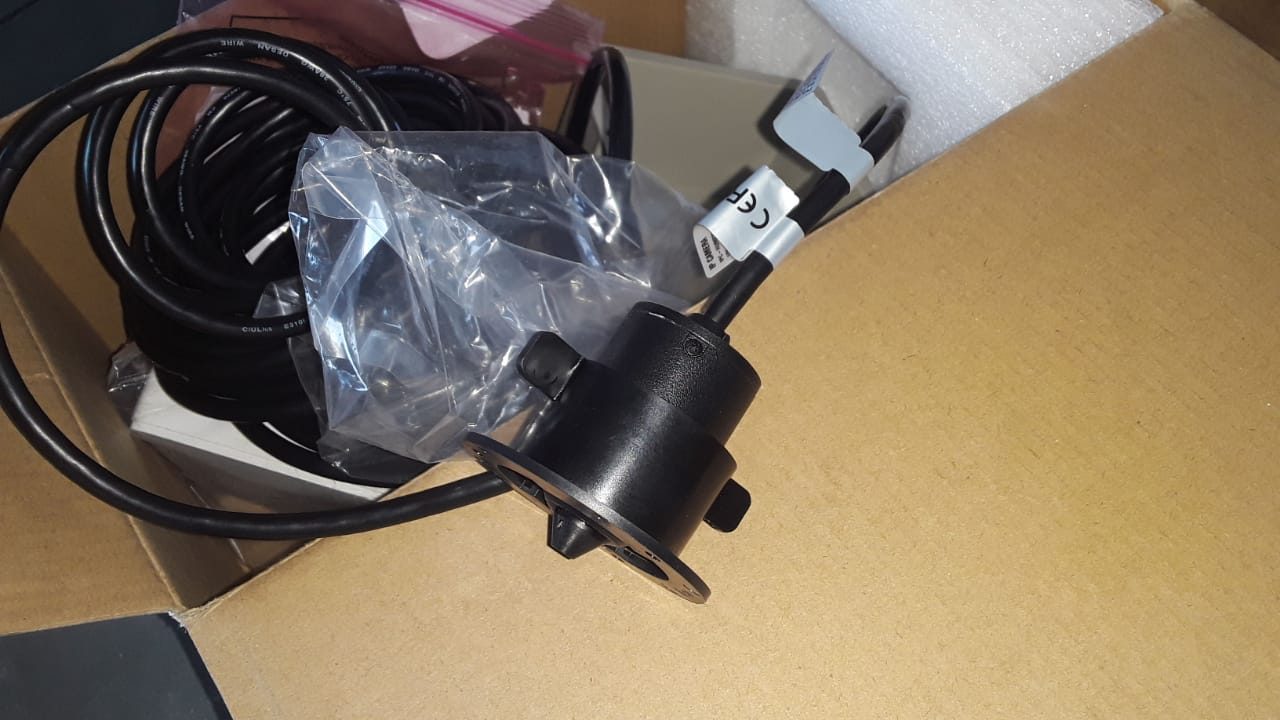
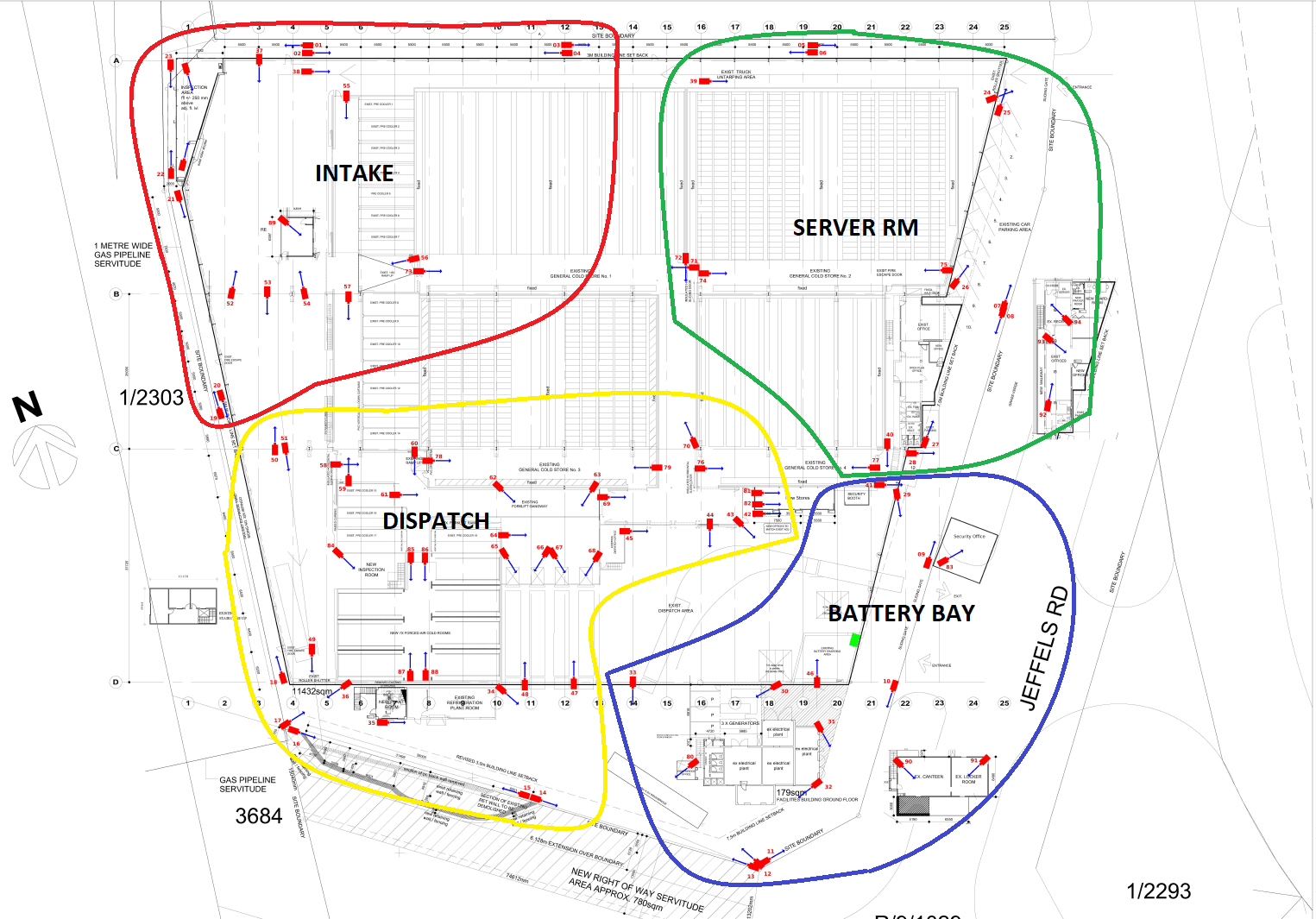
The design had to cover practical requirements such as 4MP camera planning, low-light performance, IP67-rated camera selection for exposed or cold-store areas where appropriate, PoE switching, a 128-channel NVR architecture, recording strategy, cabinet zoning and fibre links between cabinets.
Those decisions matter.
If a camera is too low in resolution, it may not identify the detail needed later. If it cannot cope with low light, night-time footage becomes weak. If the wrong enclosure is used in a harsh area, reliability suffers. If too many cameras are forced through the wrong switch, the network becomes unstable. If every cable is dragged back to one distant point on copper, distance limits become a problem.
The visible camera is the endpoint.
The system behind it is the real design.
Fibre was part of the answer
Large sites quickly become distance problems.
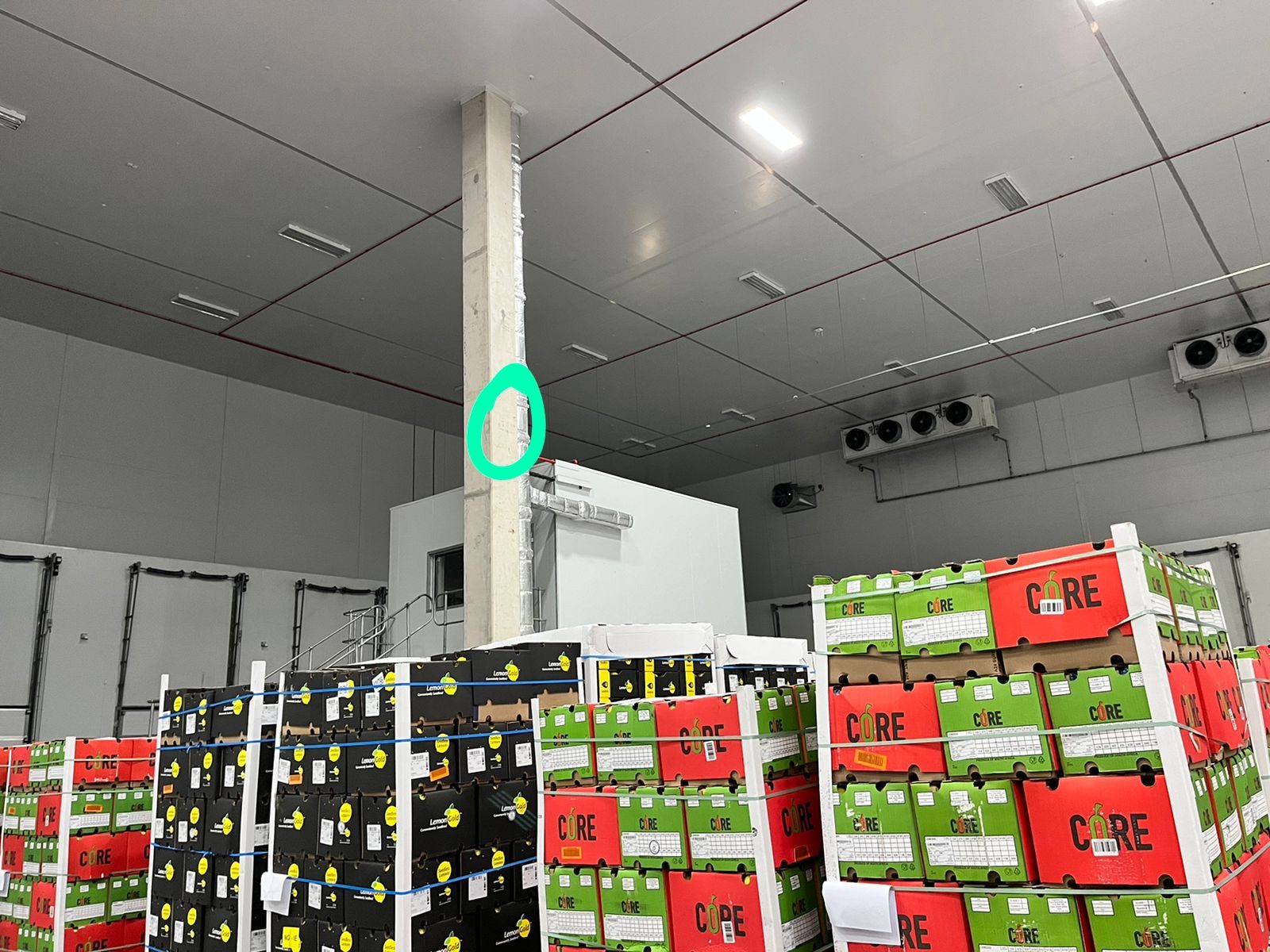
A cold store may include offices, dispatch, receiving, cold rooms, staff areas, yards, gates, battery bays, loading areas and remote structures. Trying to force every camera back to one location on copper can create distance, PoE and support problems.
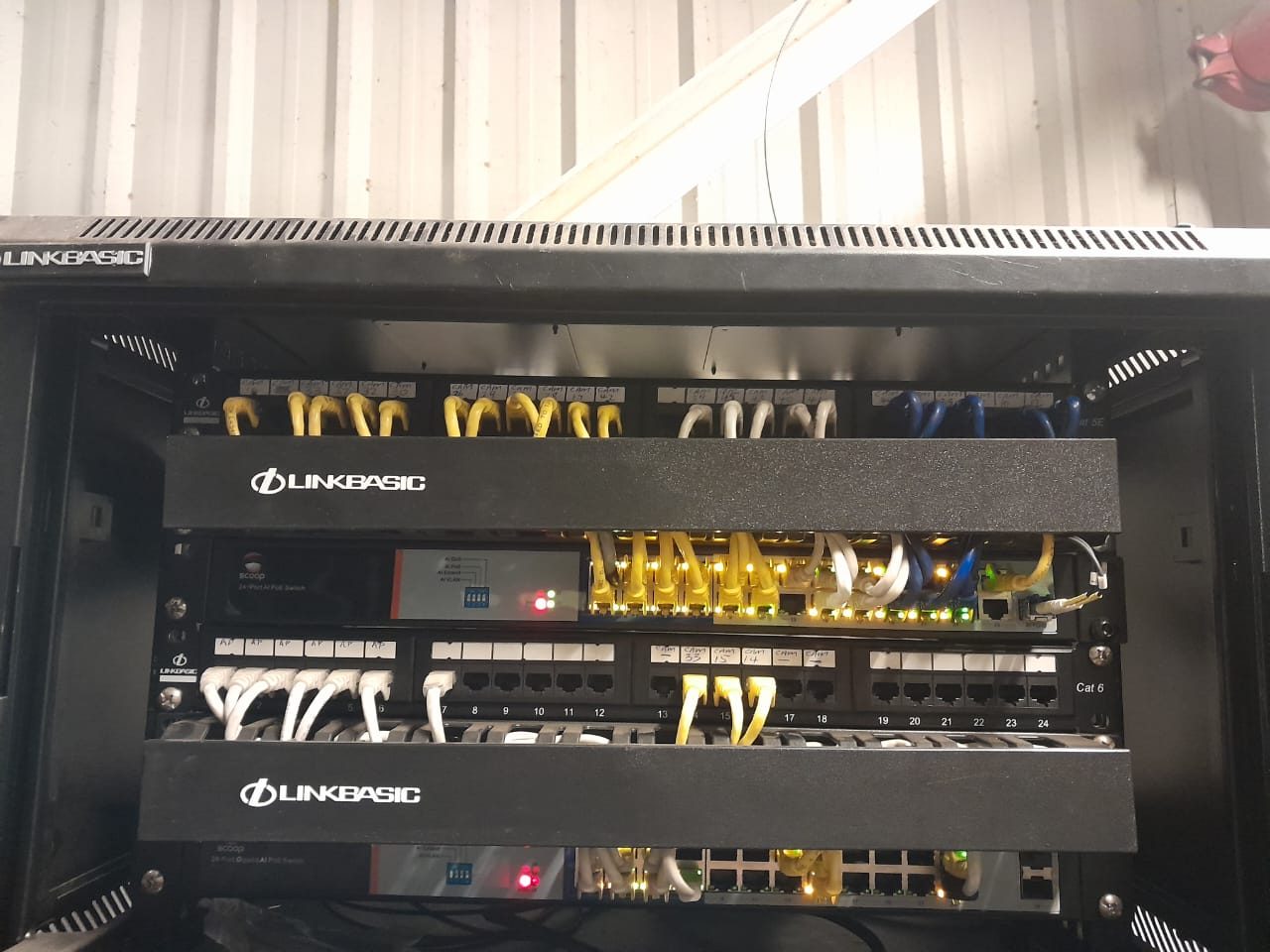
On Ethekwini Cold Stores, the design moved toward multiple cabinet zones linked back to the server room by fibre optic cable.
That gave the system a cleaner structure.
Instead of treating the site as one long bundle of cable, the system could be broken into cabinet areas. Cameras could report to local PoE switching, and those cabinets could link back through fibre. Fibre also reduces some of the risks associated with long copper runs across industrial environments.
This is why DG Technologies often says that professional CCTV is also network infrastructure.
Containment and labelling are not cosmetic
Industrial CCTV has to be serviceable.
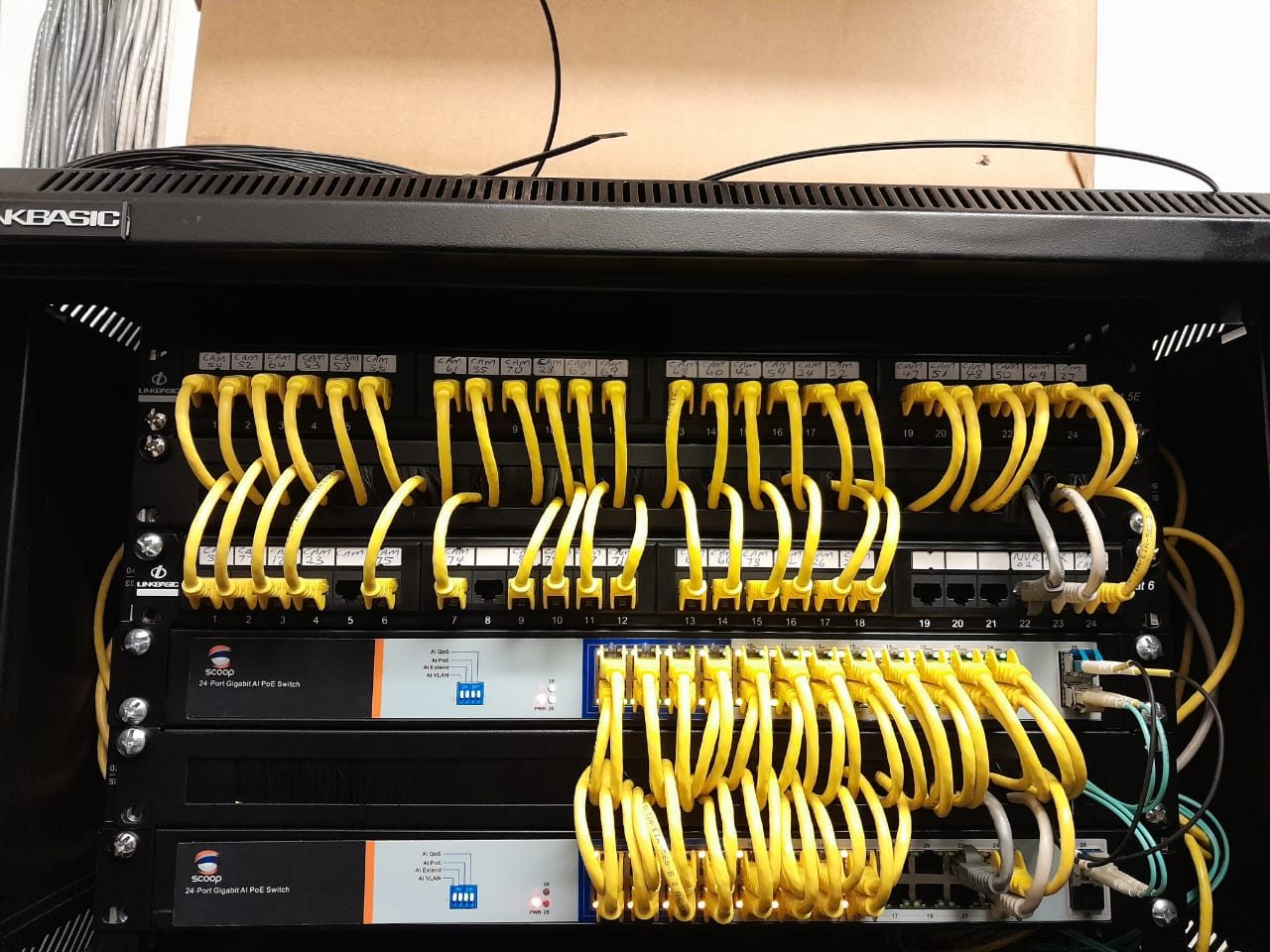
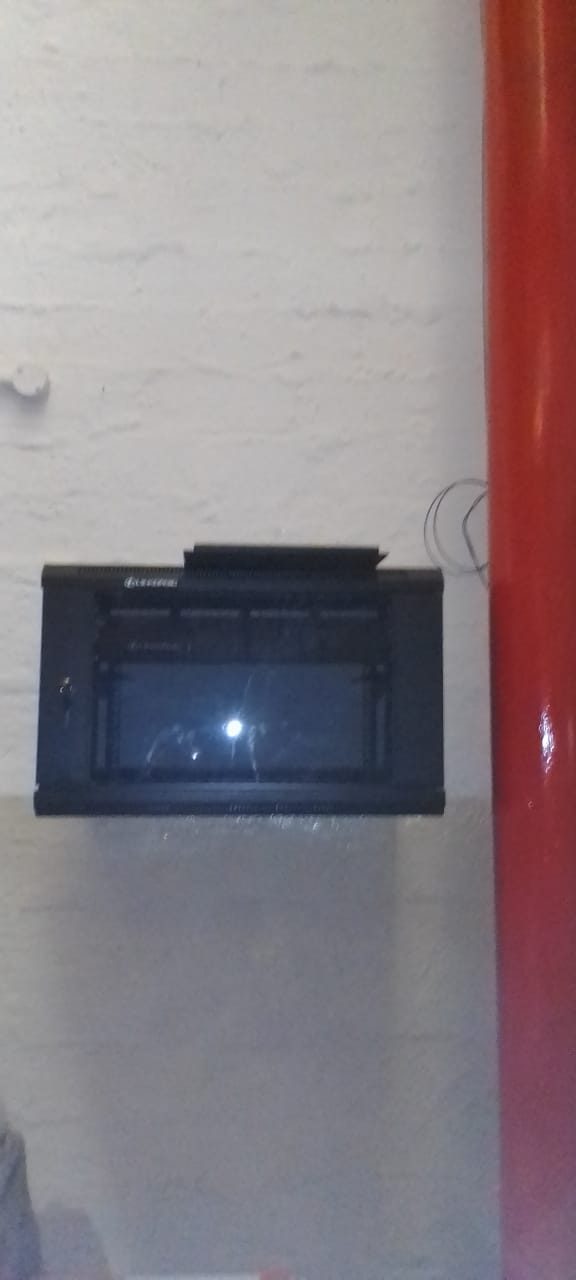
Cable trays, trunking, conduit and cabinet routes are not only there to make the work look neat. They protect cables, make routes inspectable, reduce future confusion and help the next technician understand the site.
On ECS, CCTV cabling needed to be installed in cable trays or dedicated trunking where appropriate, and trunking and cables in trays needed to be clearly labelled.
That sounds simple.
It is one of the reasons a large system can still be supported years later.
When a camera fault occurs, the support team should not have to guess which cable serves which area. When a new camera is added, the route should be understandable. When a cabinet is opened, the system should tell its own story.
The work happened in a live industrial environment
One of the hardest parts of commercial CCTV is that the building does not stop operating because the installer has arrived.
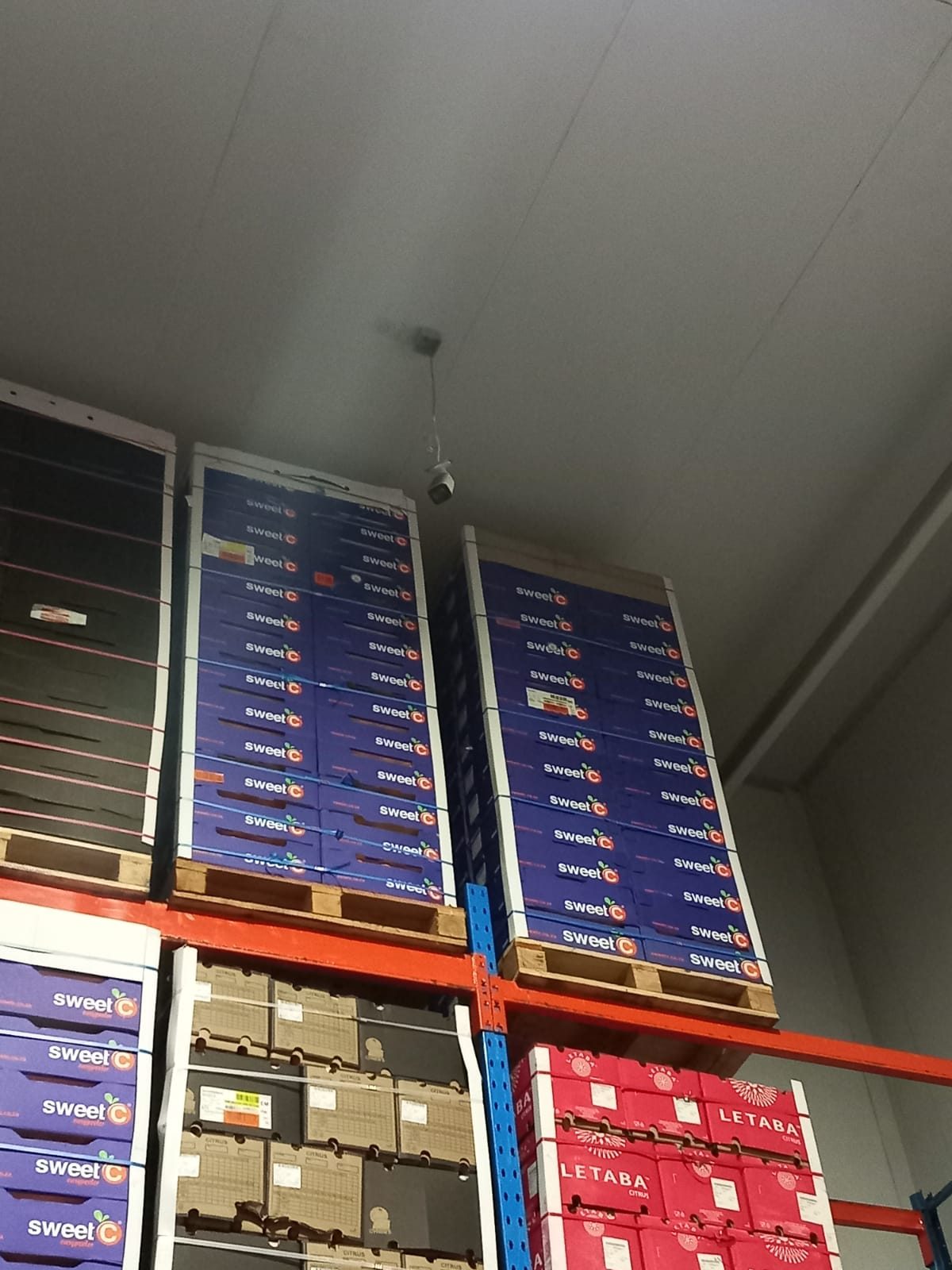
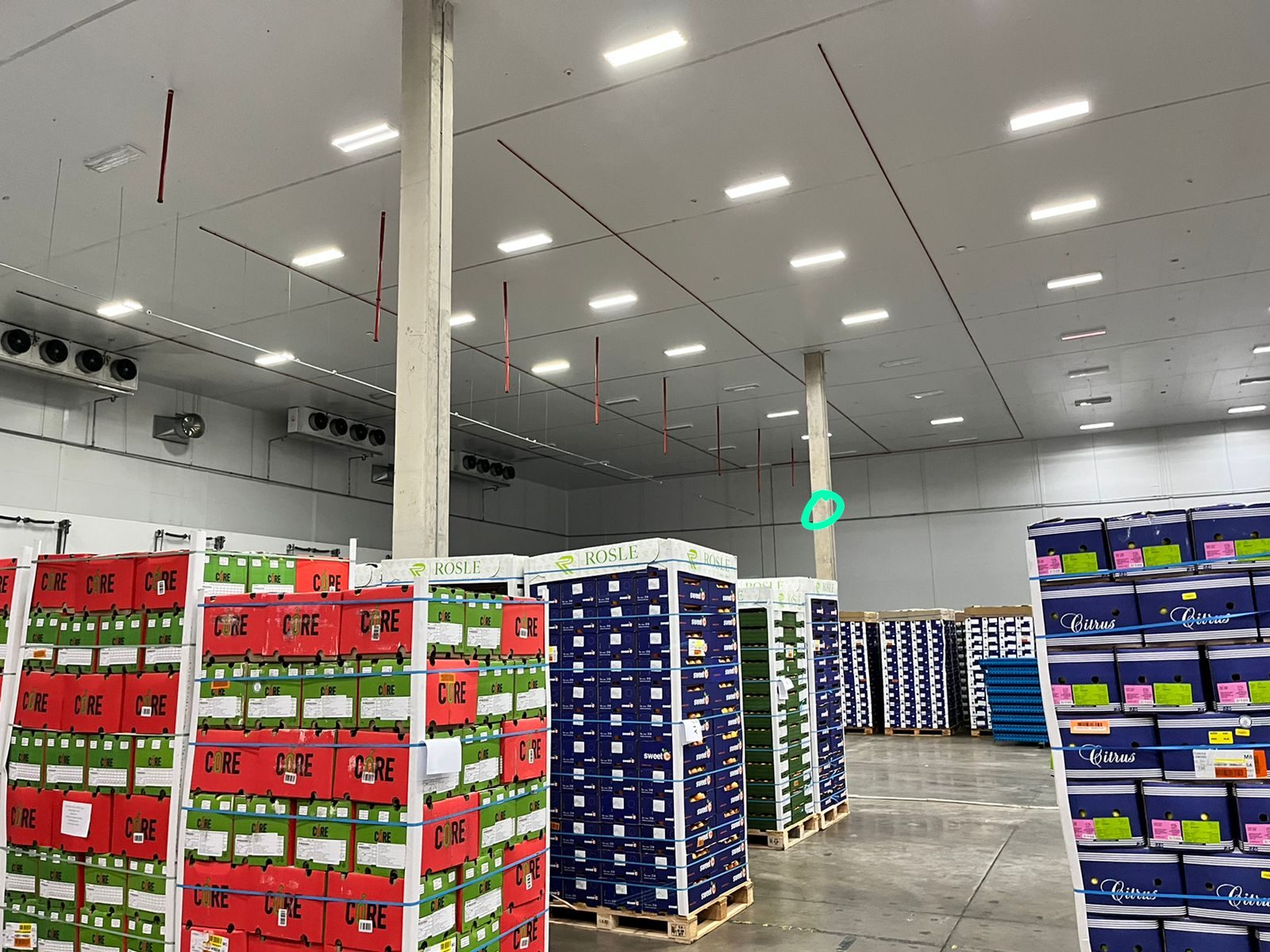
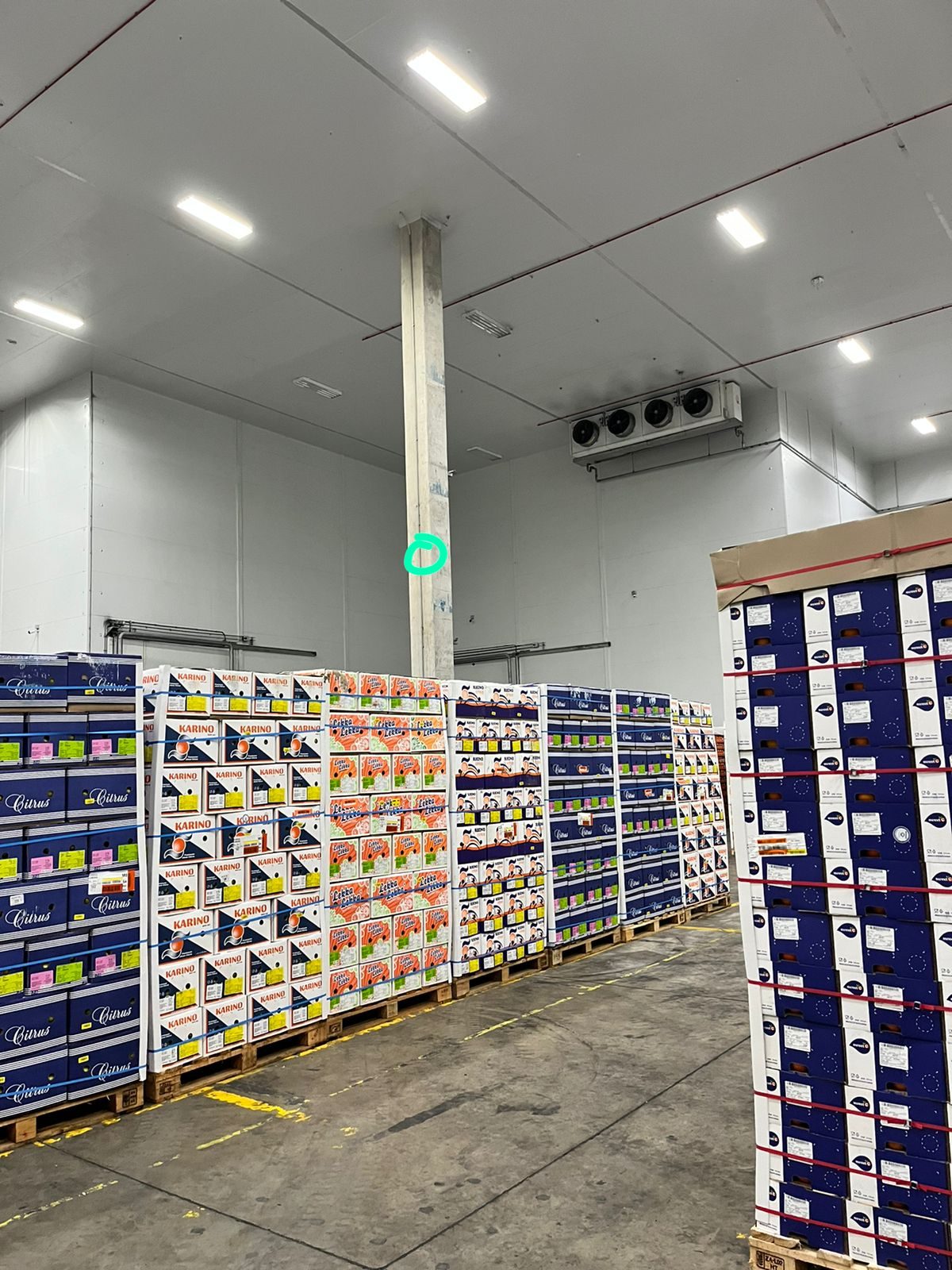
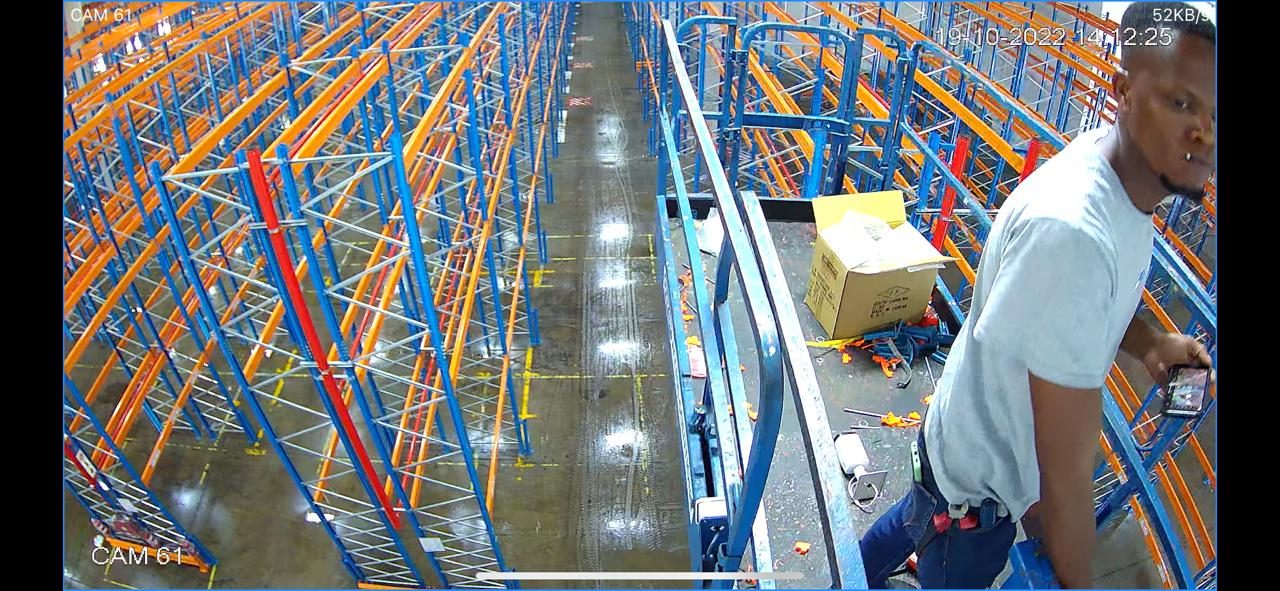
At Ethekwini Cold Stores, the installation had to be planned around trucks, forklifts, operating areas, heights, weather, cutting routes, cabinet access, permissions and safety. Some cable routes were too long and had to be reconsidered. Some areas required careful timing because work could affect vehicle movement. Some routes needed protection and containment decisions that balanced practicality with long-term serviceability.
This is the part of CCTV that most people never see.
A camera point on a drawing may look simple. Getting that camera connected professionally inside a working industrial site is where the real work lives.
HikCentral and Jarrison mattered
The project was not only about video.
Ethekwini Cold Stores also required access-control and time-and-attendance thinking. DG Technologies worked with HikCentral visibility and Jarrison Systems context so the client could consider video and access events together.
That matters in a warehouse or cold-chain environment.
If management needs to review an event, they may need to know not only what the camera saw, but also which access event, staff movement or time-and-attendance record sits near that moment.
Disconnected systems create friction.
Integrated systems create context.
Support continued after the main project
Large CCTV systems keep evolving.
Cameras fail. Passwords change. Devices need resetting. Access-control devices go offline. Licences need review. Viewing monitors are added. UPS requirements change. A camera is moved. A route is damaged. A warehouse process changes. A staff member needs different access. Management asks for a different view.
That long-term support history is part of the Ethekwini Cold Stores story.
DG Technologies has continued supporting ECS through later camera replacements, access-control and time-and-attendance issues, network adjustments, viewing monitor work, UPS requirements and related infrastructure tasks.
This is why the original design must be supportable.
If the first installation is undocumented, every future support call becomes an investigation. If the first installation is labelled, structured and documented, future work becomes more controlled.
What this says about DG Technologies
Ethekwini Cold Stores is important because it shows DG Technologies outside the normal residential smart-home conversation.
The same principles apply:
- understand the site before selling equipment
- design the network properly
- respect cable distance and power limits
- use fibre where the scale demands it
- protect and label cable routes
- document cabinets and camera allocation
- think about the person who must support the system later
- avoid exposing sensitive client security information online
That thinking applies to CCTV installation, network infrastructure, access control, commercial AV and high-end residential automation.
The difference is scale.
In a private home, poor planning creates frustration.
In a cold store, warehouse or industrial site, poor planning can affect operations.
That is why professional CCTV is not a camera shopping exercise. It is an infrastructure discipline.
You can view the public project overview here: Ethekwini Cold Stores Industrial CCTV.
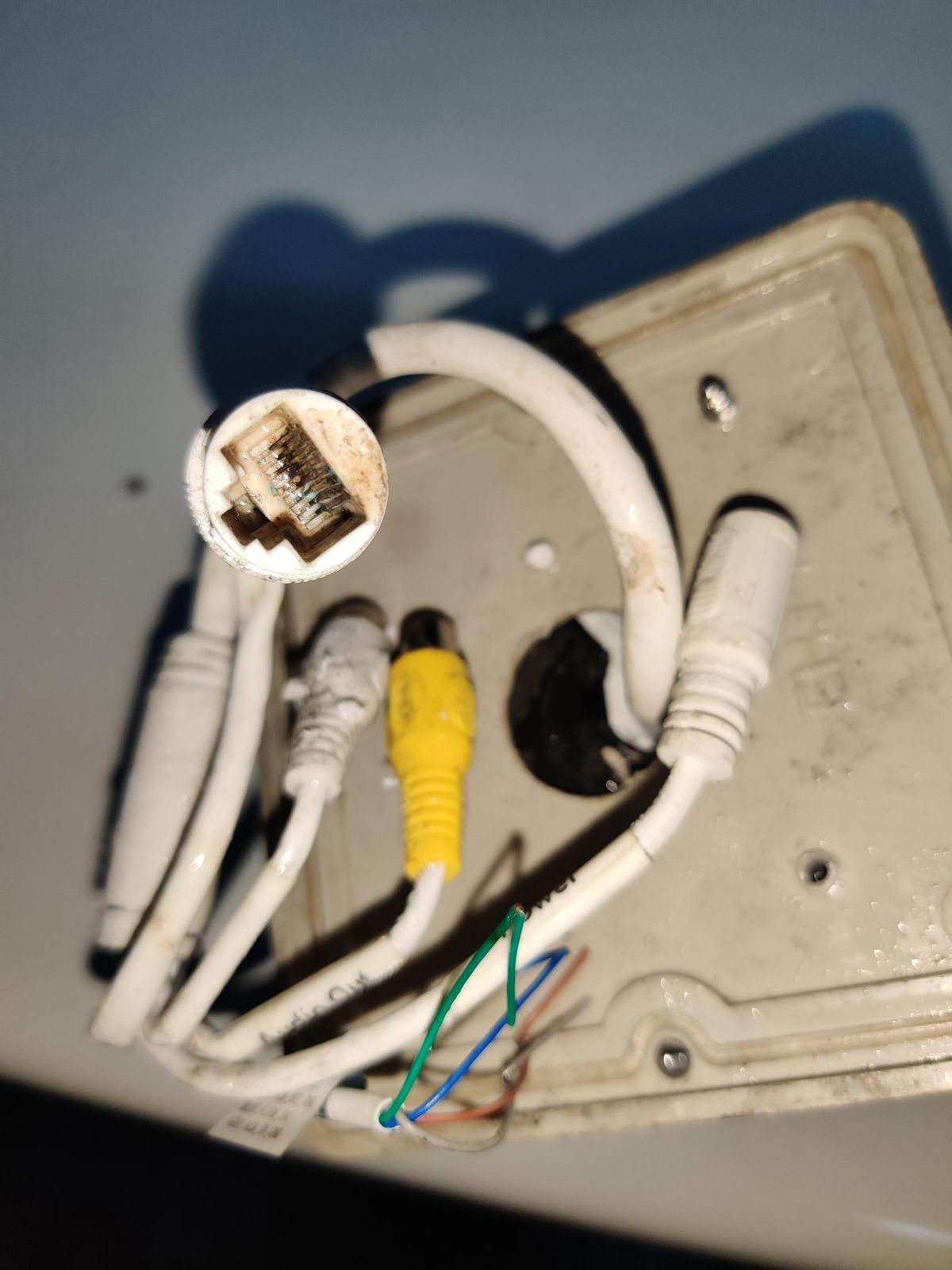
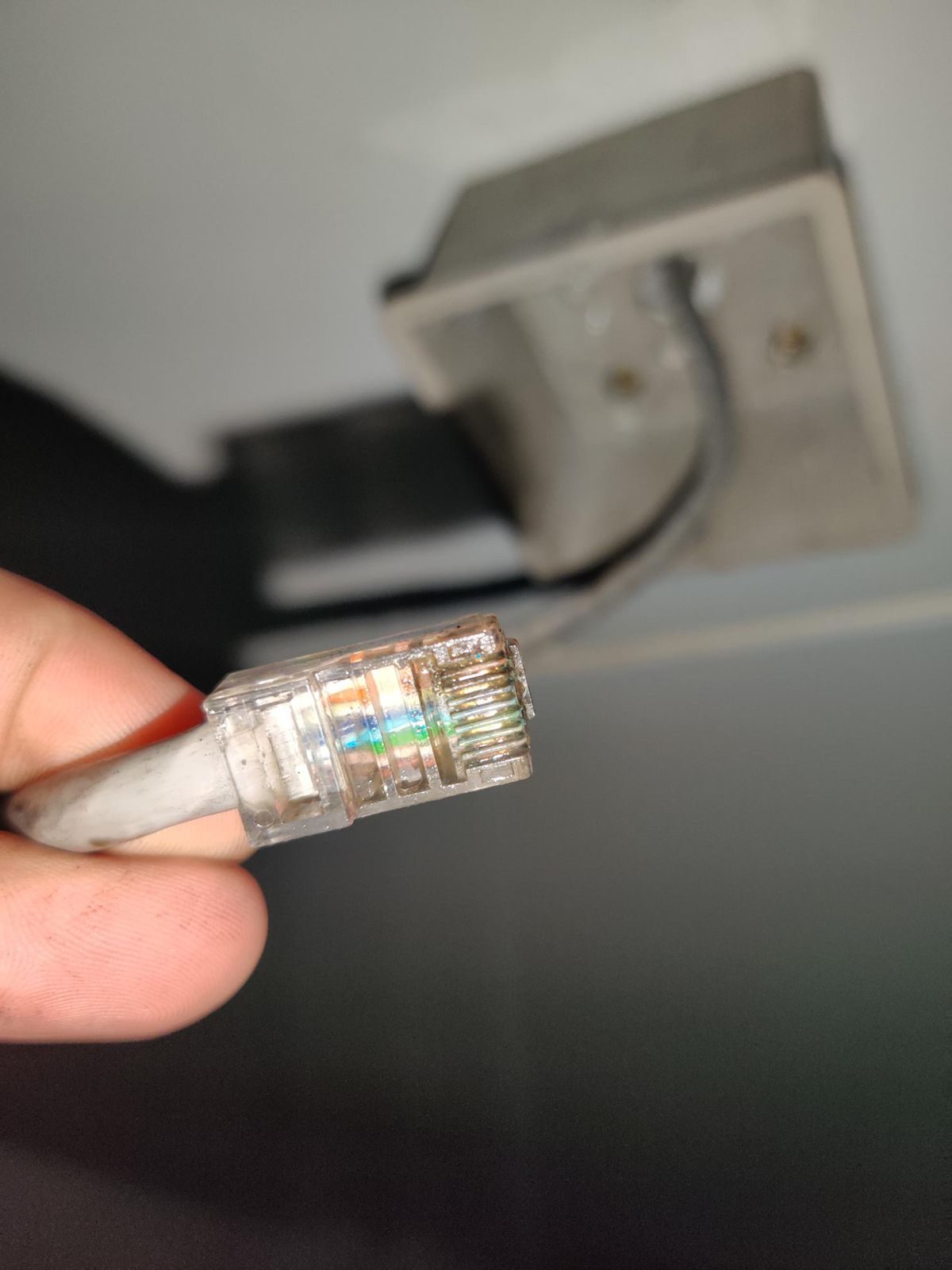
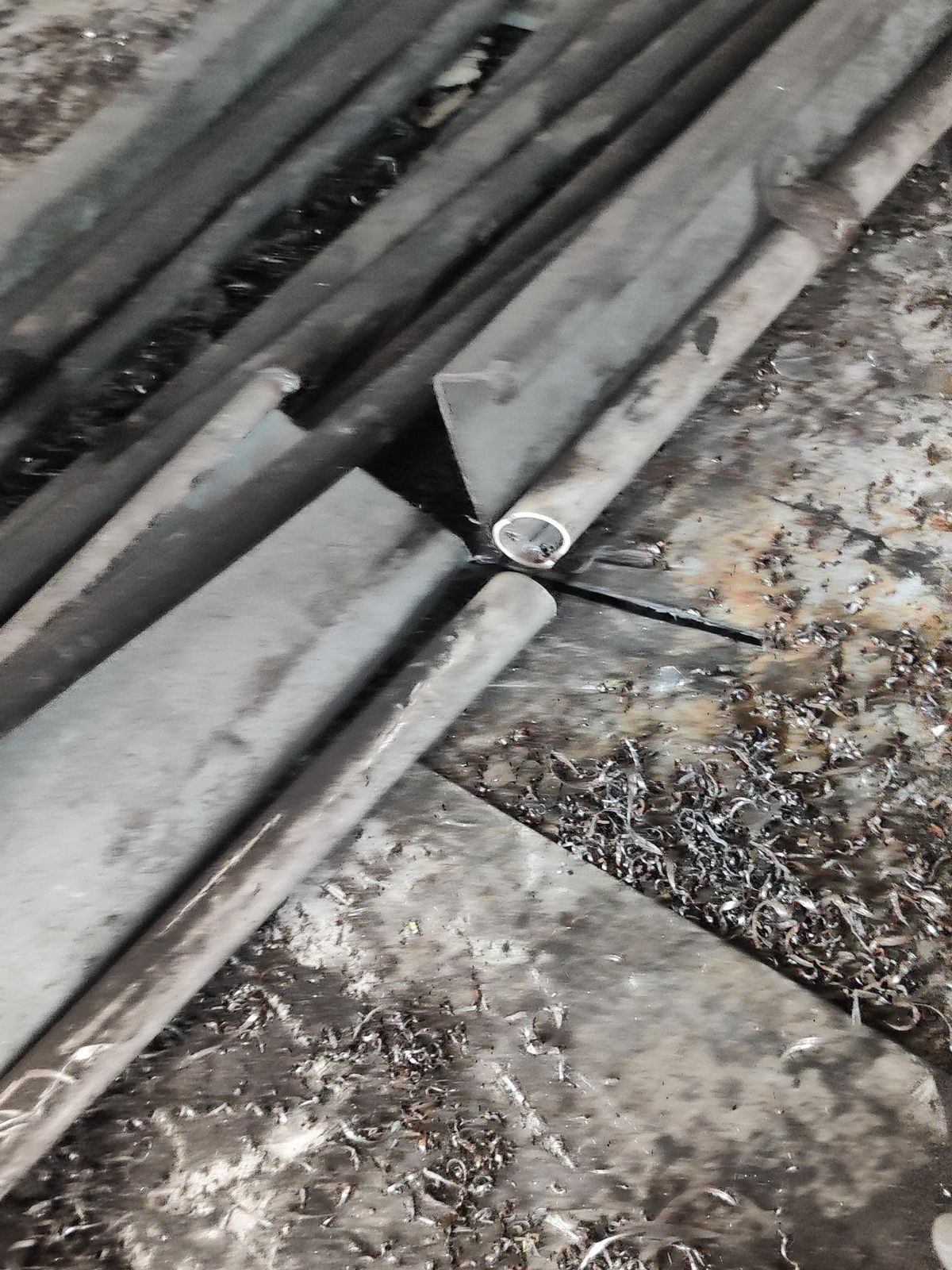
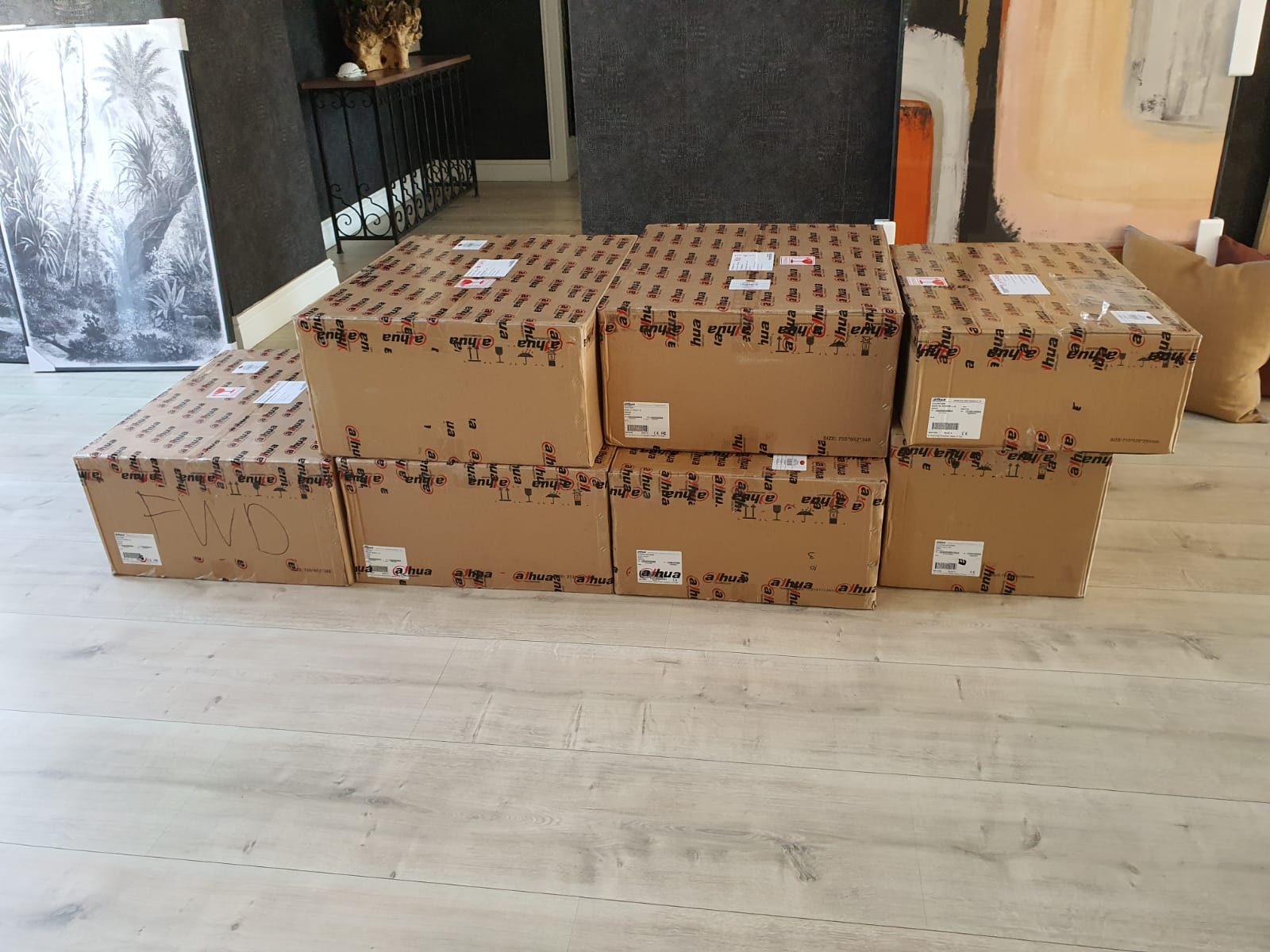
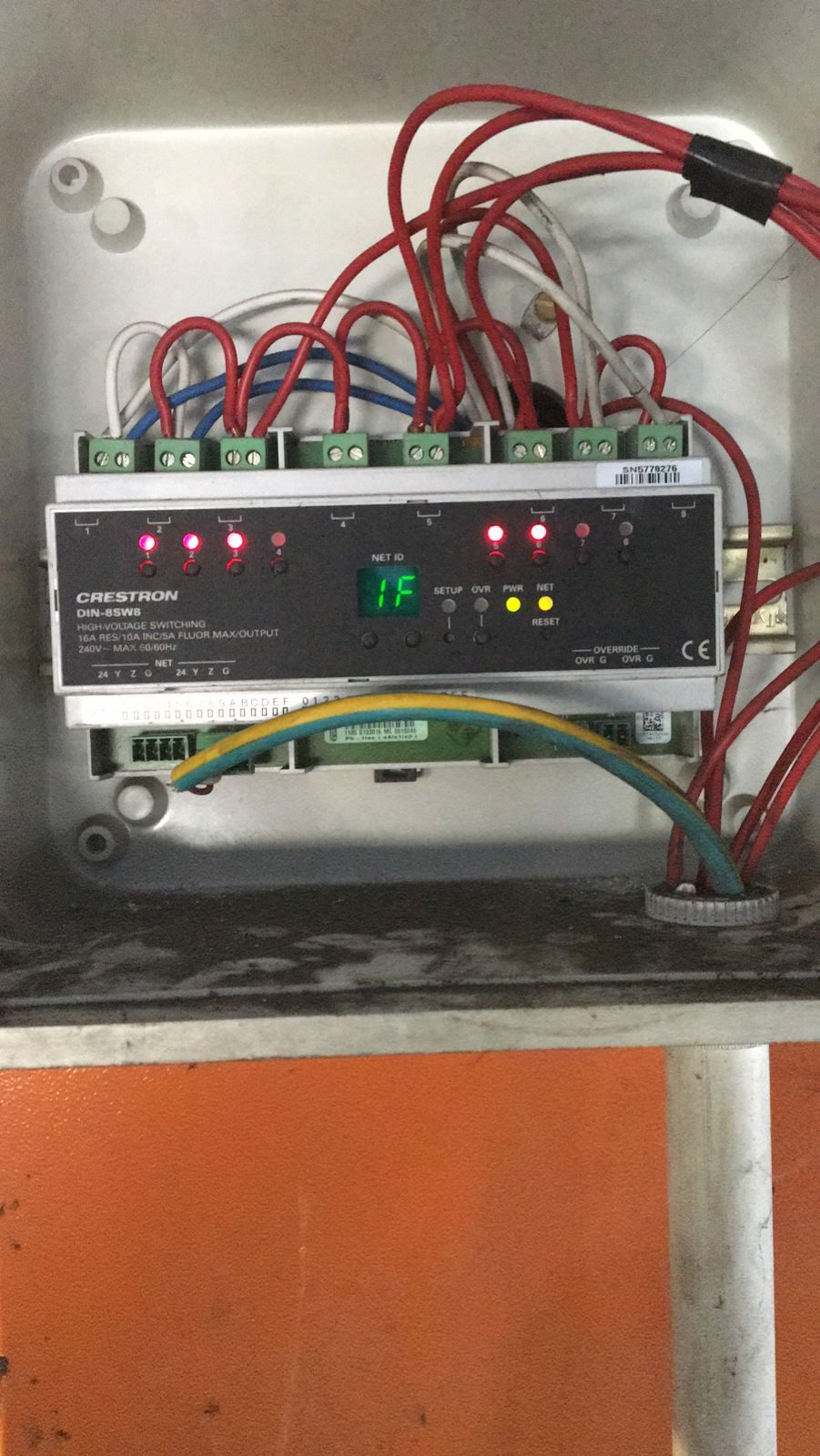
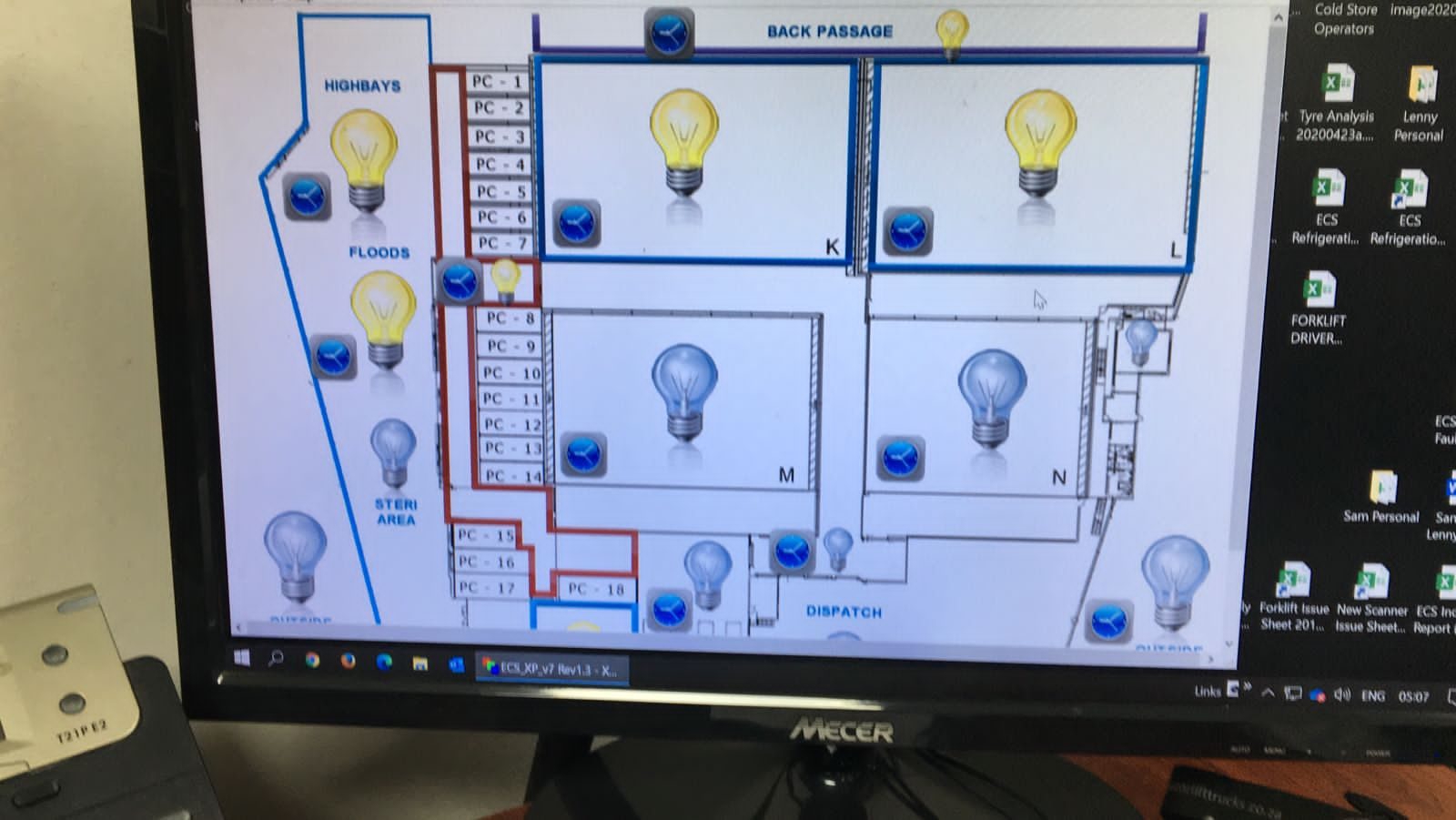
Field images from DG site work