Project 05
Ethekwini Cold Stores Industrial CCTV
Industrial Cold-Chain Site, KZN
Industrial Cold-Chain Site, KZN
A large-scale Ethekwini Cold Stores (ECS) industrial CCTV, access-control and network renewal project.
A large-scale Ethekwini Cold Stores (ECS) industrial CCTV, access-control and network renewal project. We designed a centralised 4K surveillance platform with fibre-backed cabinet distribution, PoE switching, HikCentral visibility, Jarrison time-and-attendance integration and professional rack-mounted infrastructure.
Ethekwini Cold Stores, often referred to internally as ECS, has been one of DG Technologies’ most demanding commercial technology environments.
This was not a small camera add-on. It was an industrial CCTV and network infrastructure project for a working cold-chain site where security, operations, staff movement, access events, loading areas, cold rooms, offices and supportability all had to be considered together.
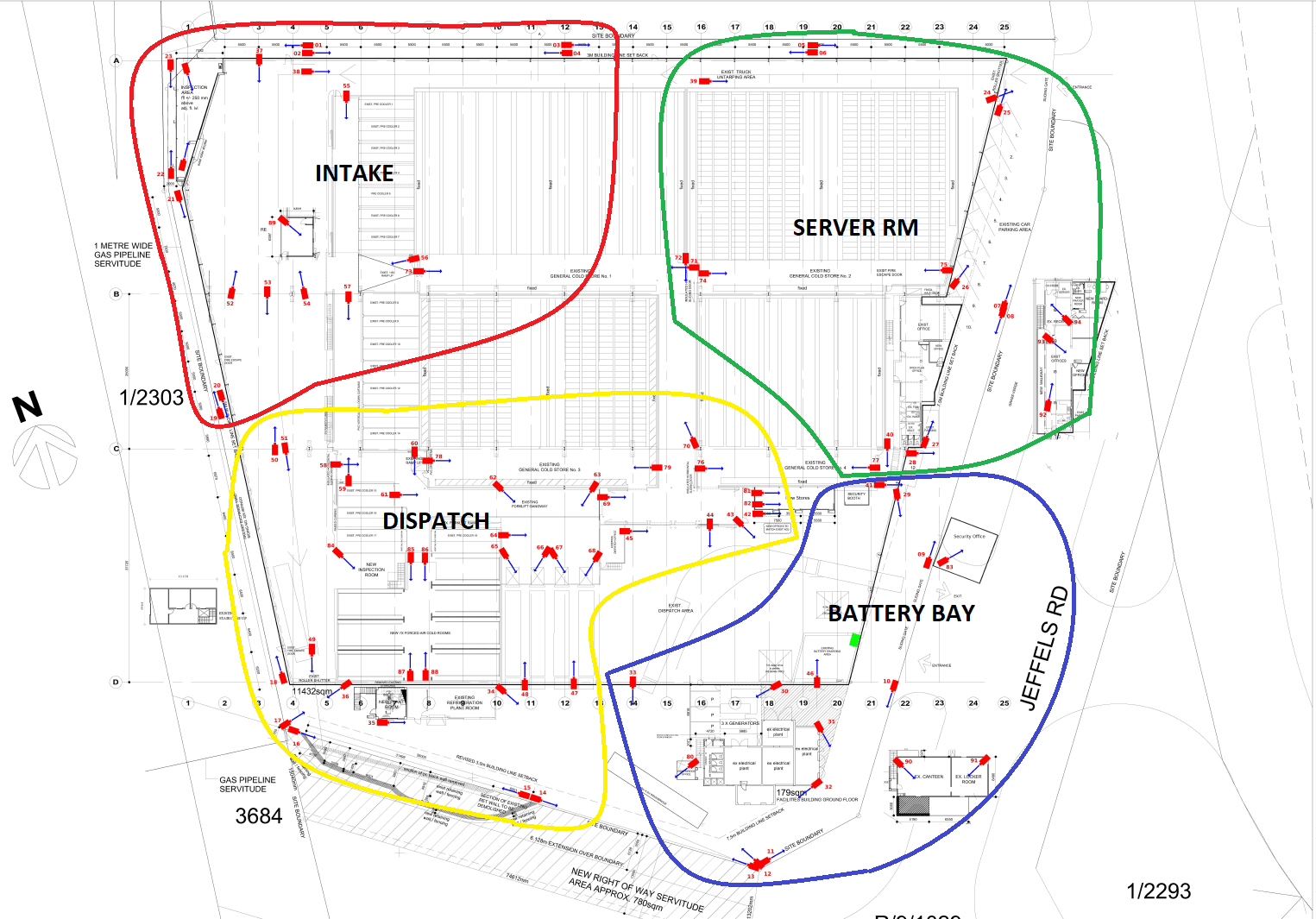
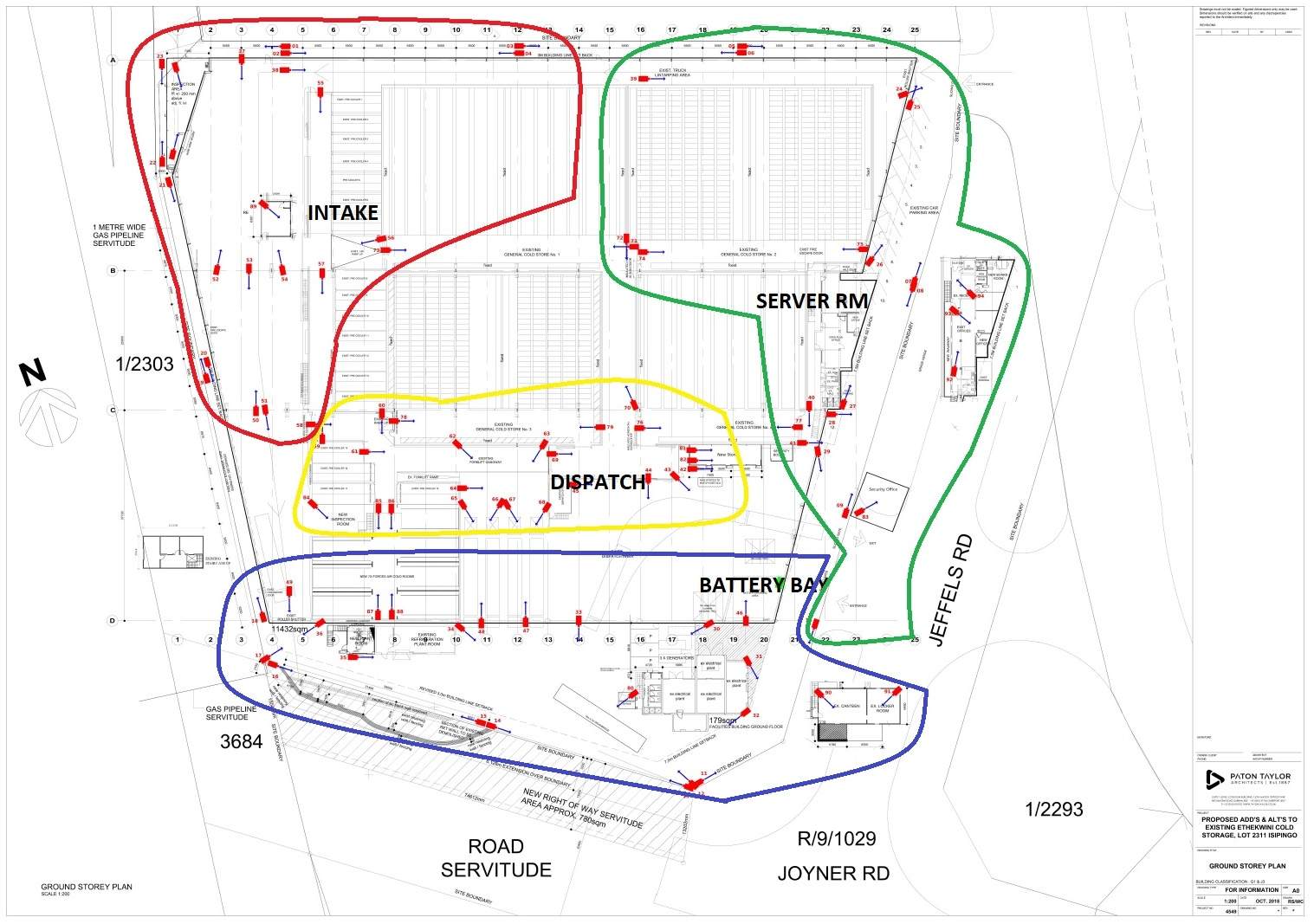
For public safety and client confidentiality, we do not publish sensitive camera layouts, blind spots, access procedures or operational security detail. What we can say is that the project required the kind of planning normally associated with serious infrastructure: cabinet distribution, fibre links, PoE switching, containment, recording strategy, access-control integration and documentation.
The Challenge: Infrastructure Recovery
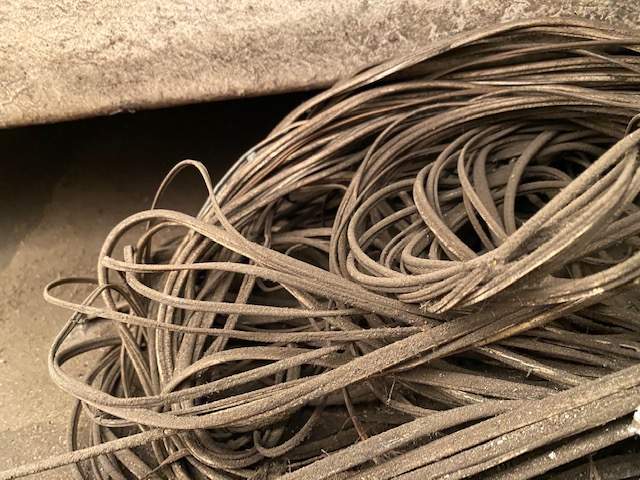
When we first became involved, the site carried years of technical debt. Previous analogue CCTV infrastructure, ageing cable routes, corroded connections, failing camera runs and ad-hoc additions had created a system that was difficult to trust and difficult to support.
On an industrial site, that is not only inconvenient. A camera failure can affect security, dispatch review, access verification, staff safety and management confidence.
The first job was not simply to add more cameras. It was to understand the site properly.
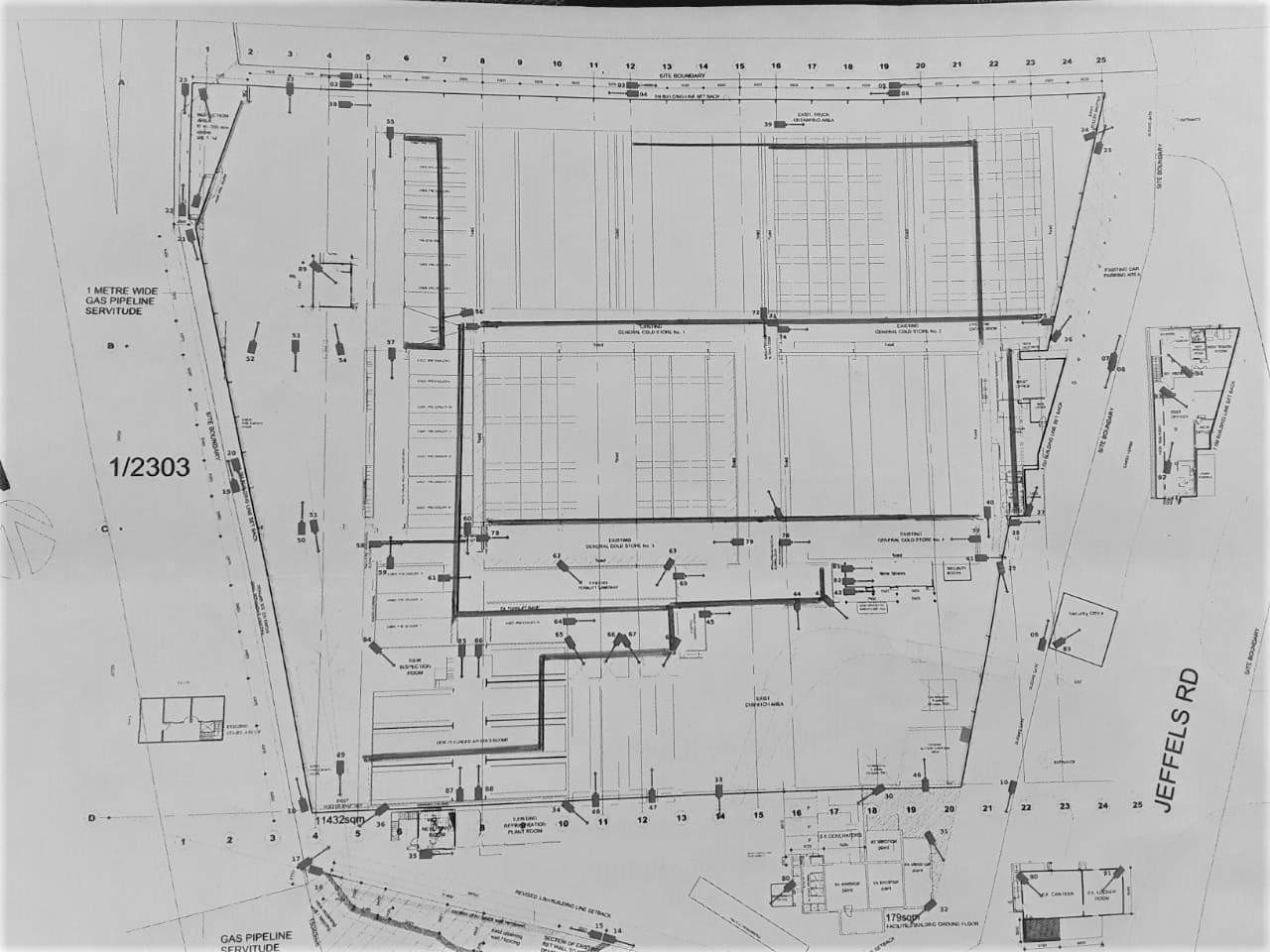
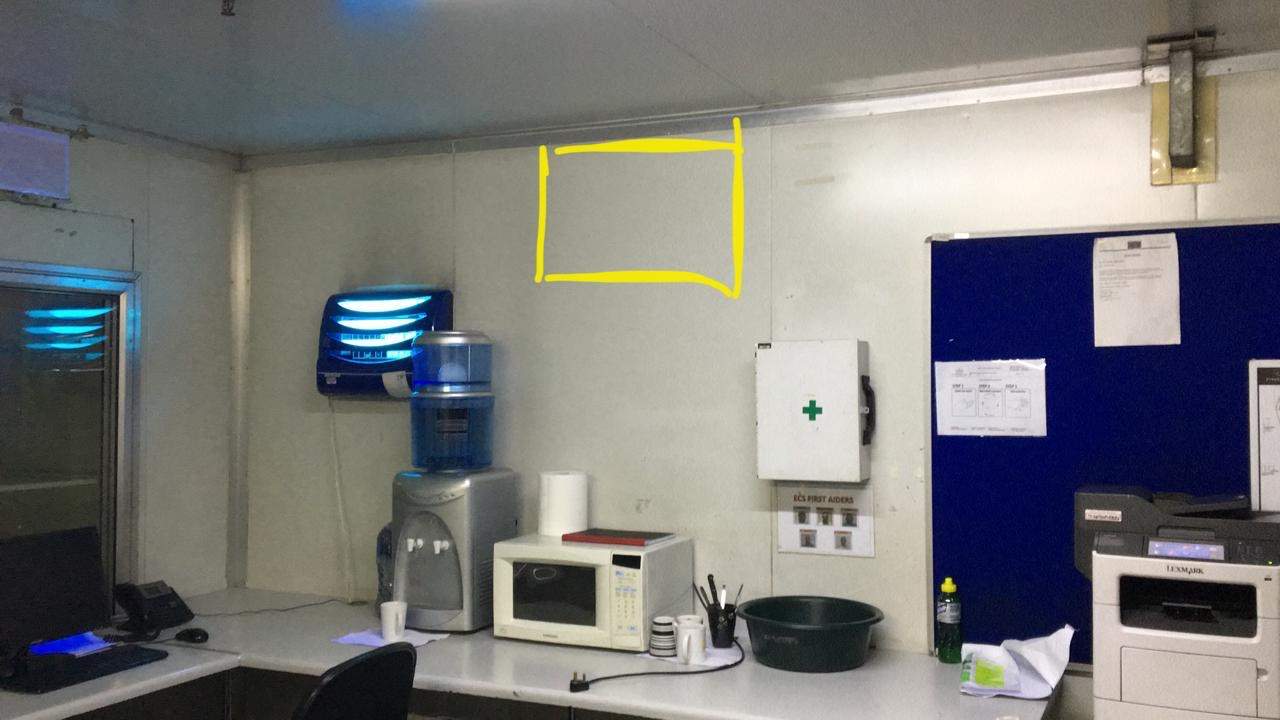
We worked through existing camera positions, cable routes, cabinet locations, distances, working areas, access constraints and the practical reality of keeping a busy cold-store operation running while the work was underway.
The Design: More Than Camera Count
The design moved the site toward a professional IP CCTV architecture rather than a patched collection of isolated cameras.
Key design requirements included:
- 4MP camera planning for usable identification detail
- low-light capability for operational areas with changing lighting conditions
- IP67-rated units for outdoor, cold-room and internal passageway environments where appropriate
- a 128-channel NVR architecture to allow capacity and future growth
- recording settings planned per camera rather than guessed globally
- six-month internal recording storage as a design target
- PoE-powered camera infrastructure
- multiple cabinet zones serving different parts of the site
- fibre optic cabinet links back to the server room
- 1Gbps fibre termination with an upgrade path toward 10Gbps capability
- SFP-based switch uplinks
- labelled cable trays and trunking for CCTV routes
- identification and removal of obsolete CCTV cabling
That level of planning matters because a large industrial CCTV site can fail in many places before the camera itself is at fault. Cable distance, PoE budget, switch capacity, cabinet position, condensation, dust, heat, access, fibre links, recorder capacity and labelling all affect the final result.
Unified Systems: Jarrison & HikCentral
The depth of the project sits in the integration.
Ethekwini Cold Stores did not need a standalone camera system that lived separately from daily operations. The site also required access-control and time-and-attendance thinking. DG Technologies worked with HikCentral and Jarrison Systems so access events and CCTV visibility could be understood together.
For a cold-store or warehouse environment, that matters. Management may need to review a staff access event, a gate event, a dispatch issue, a loading-bay incident or a camera fault. The system should support that investigation instead of forcing people to jump between disconnected tools with unclear timestamps and incomplete context.
The Site Reality
The work had to be completed in a live industrial environment.
That meant planning around trucks, forklifts, operating areas, weather, height access, permissions, cutting routes, conduit decisions, cabinet locations and the practical safety of the installation team. In some areas, cable distances forced design changes. In others, a proposed route had to be reconsidered because it would exceed sensible copper limits or interfere with operational movement.
This is where commercial CCTV becomes engineering work.
A camera number on a drawing is easy. Getting a stable, serviceable cable route to that camera in a working cold-chain facility is the real job.
Technical Highlights:
- Fibre-backed IP network: Distribution cabinets linked back to the server room by fibre, with structured switching and SFP uplinks.
- Large-channel recording architecture: A 128-channel NVR design with storage planning and per-camera recording consideration.
- HikCentral visibility: A centralised management layer for a large industrial CCTV estate.
- Jarrison integration: Time-and-attendance and access-control context considered alongside video review.
- PoE distribution: Camera power and data planned through dedicated PoE switching rather than unmanaged ad-hoc power.
- Professional containment: Cable tray and trunking used deliberately, labelled and planned for future support.
- Cold-store environment planning: Camera selection and installation methods considered low light, weather exposure, cold-room areas and industrial movement.
- Documentation: Camera allocation, cabinet planning and network structure documented so the system could be maintained after handover.
Long-Term Support
The ECS relationship also shows an important part of DG Technologies’ business: support after the initial project.
Large CCTV systems do not remain static. Cameras get damaged, routes are changed, access-control devices need attention, software licences change, staff responsibilities shift, networks evolve and management requirements become clearer once the site has lived with the system.
DG Technologies has continued to support ECS through repairs, additions, camera replacements, network adjustments, access-control and time-and-attendance issues, viewing monitors, UPS requirements and related infrastructure work.
That long-term support history is part of the case study. The value of the project was not only the installation. It was leaving behind a system that could be understood, serviced and extended.
ECS2: The Cornubia Expansion
The relationship later grew into what the client and team referred to as ECS2: a major second-site rollout in Cornubia.
This was not only a CCTV extension. ECS2 required a full turnkey technology package across CCTV, network infrastructure, Wi-Fi access points, extra network points, cabinet work, fibre planning and a PA and announcement system for the warehouse environment.
The first delivery push was compressed into roughly a week, with weekend work, long days and coordination around a live operational site. Wi-Fi had to support real warehouse use, including scanner coverage in cold-store and intake areas where thick walls, cold-room construction and roof-mounted access points could not simply be guessed from a drawing.
During the decommissioning of inherited equipment from the previous site occupants, newly installed cabling was cut and cabinet infrastructure was disturbed late at night. The network dropped, only part of the wireless system remained visible, and the priority became operational continuity rather than blame. DG Technologies worked with the client team after hours, traced what had been affected, restored critical connectivity and had intake Wi-Fi back before the start of the next working day.
That is the part of the work that never fits neatly into a product list.
Industrial technology projects are not only about what gets installed when everything goes according to plan. They are about how the installer responds when a live site is under pressure, when another team damages infrastructure, when downtime has to be kept to an absolute minimum and when the client still needs the building to operate the next morning.
ECS2 also continued beyond the first push, with further network points, PA cabling, camera adjustments, HikCentral and time-and-attendance support, generator-related cabling, patch-panel labelling, switch labelling and cabinet clean-up. The project shows the same principle as the original ECS work: a large site needs a technology partner who understands the whole system, not only the device at the end of the cable.
What This Project Demonstrates
Ethekwini Cold Stores demonstrates DG Technologies’ commercial capability beyond residential automation.
The same engineering habits apply whether the site is a private estate home, a hotel, a boardroom, a warehouse or an industrial cold-chain facility:
- inspect before quoting blindly
- plan the network, not only the end devices
- respect cable distance and power limits
- use cabinets and fibre where the site requires it
- label and document the system
- think about the next technician
- design for support after handover
- avoid publishing sensitive client security detail
For industrial CCTV in Durban and KwaZulu-Natal, the visible camera is only the final endpoint.
The real system is the design behind it.


Want something like Ethekwini Cold Stores Industrial CCTV?
Tell us about your space and we'll come back with a tailored proposal.