A spare data cable sounds simple.
Pull an extra Cat6 cable while the walls are open. Leave it for the future. Use it when the client needs another access point, TV, camera, intercom, control device, solar interface, inverter connection or network point.
That is the theory.
In real homes, spare cables often disappear.
Not physically. They are still in the building somewhere. But they stop being available for the purpose everyone thought they were saved for.
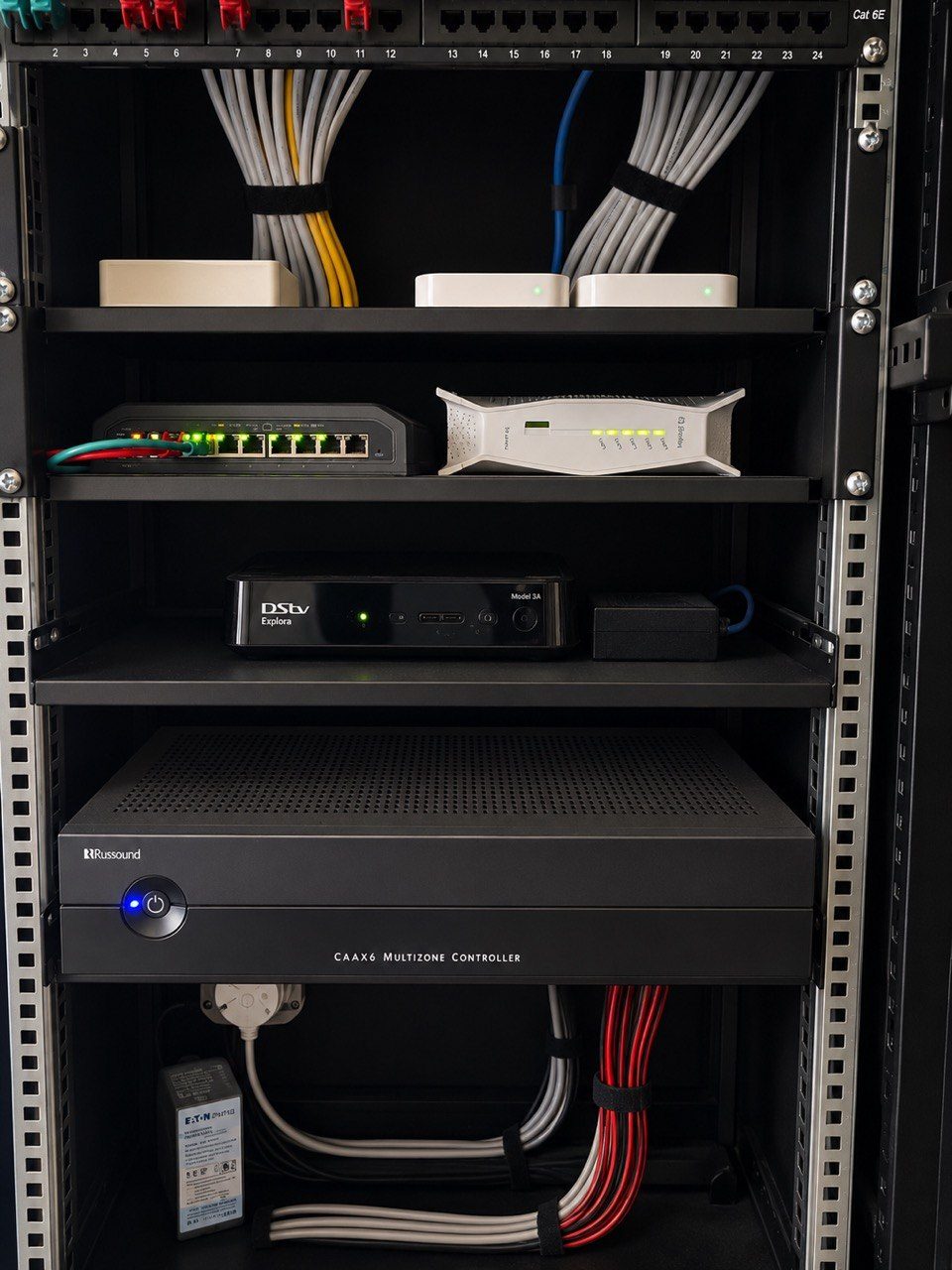
Another trade uses the cable. A future contractor assumes it is unassigned. A cable is taken for an inverter, a gate device, a temporary network need or a last-minute change. The label is missing. The route is not documented. Nobody remembers where it starts or ends. A fault appears and the cable everyone hoped to use is no longer an option.
That is why spare data cables must be reserved and documented.
A spare cable is only spare if everyone knows it is spare
On a busy site, unlabelled cable is vulnerable.
If a cable is lying in a rack, ceiling or services area with no clear purpose, someone may treat it as available. That person may not be careless. They may simply be solving the problem in front of them with the information they have.
This is how future planning gets lost.
The AV team may have pulled a spare route for a future access point. Later, someone uses it to feed another device. Months later, when the client needs the access point, the spare is gone.
The lesson is not “never use a spare cable.”
The lesson is: decide deliberately.
If a spare is going to be reassigned, the documentation must change. If a spare is reserved for a future purpose, it must be labelled clearly enough that another person does not unknowingly consume it.
Spares need a destination and a reason
DG Technologies prefers spare cabling to have context.
“Spare” is weaker than:
- spare Cat6 to patio ceiling for future access point,
- spare Cat6 from rack to gate pillar,
- spare Cat6 to cinema projector position,
- spare speaker cable to covered verandah,
- spare conduit from head-end to TV wall,
- spare fibre route to outbuilding,
- spare data route reserved for inverter monitoring.
That kind of description tells the next person why the cable exists.
It also helps the homeowner understand the value of what was installed. A spare cable is not waste if it protects future flexibility. But it must be traceable.
Not every cable can replace another cable
Another practical lesson is that cables are not always interchangeable.
A spare Cat6 may be useful for many things, but it may not be suitable for every requirement. Some applications need a specific cable type, route quality, length, shielding, outdoor rating, fibre path, speaker cable gauge or control wiring.
This matters when a fault appears.
If the faulty cable is a specific type required for a particular device, the other loose cables nearby may not solve the problem. The route may need to be traced. The pipe run may need to be understood. The cable may need replacement rather than substitution.
That is why documentation should record more than “cable present.”
It should record what the cable is, where it goes and what it was intended for.
Route records save time when faults appear
A future fault often begins with a simple question:
“How does that pipe run?”
If nobody knows, the support call becomes slower.
The technician may need to inspect ceilings, open access panels, tone cables, test continuity, look for draw boxes, trace labels and work through assumptions. In a finished home, every minute spent searching is time the client is paying for and disruption the home could have avoided.
Route records do not need to be overcomplicated.
They can include:
- rack termination label,
- room or area destination,
- ceiling or wall route notes,
- draw box locations,
- cable type,
- intended purpose,
- spare/reserved status,
- date installed,
- and any known limitations.
That information turns future fault finding from guessing into methodical work.
Spares are part of future-proofing
Future-proofing is often misunderstood.
It does not mean guessing every future technology.
It means creating practical options while the building is open.
A spare cable or conduit can be incredibly valuable later, especially in large KZN homes where concrete walls, finished ceilings, stone, joinery and landscaping make retrofits difficult. But the spare only protects the future if it remains usable.
That means:
- label both ends,
- photograph important routes,
- keep a cable schedule,
- protect reserved cables from casual reassignment,
- leave draw wire where future replacement may be needed,
- keep draw boxes accessible,
- and update the records when a spare is used.
Without that discipline, “future-proofing” becomes a comforting word rather than a real benefit.
Homeowners should ask for the spare-cable list
At handover, homeowners should ask a simple question:
“What spare routes do we have, and what are they reserved for?”
A good answer should not be vague.
It should identify the important spare cables, conduits or routes and explain what they can realistically be used for.
That list becomes useful years later when the client wants to add cameras, improve Wi-Fi, upgrade a TV wall, add an audio zone, install gate equipment, connect inverter monitoring or move a device.
It also protects the homeowner from unnecessary work. If the route already exists, a future upgrade may be far cleaner.
Spare routes should not become hidden mysteries
DG Technologies treats spare cabling as part of the system’s long-term value.
But spares are only valuable when they are managed.
An unlabelled spare can become a mystery.
A documented spare becomes an asset.
For premium homes in Durban, Umhlanga, Zimbali, Simbithi, Mount Edgecombe, Ballito and the wider KZN area, DG Technologies can help plan spare routes, cable schedules, rack labels and documentation that make future upgrades easier.
For related reading, see why smart-home documentation matters years later, why cable routes should be designed for future access and why rack photos should be part of every smart-home handover.