Renovation teams often ask a simple question:
“Can you just come remove the TV and equipment before the work starts?”
Yes, we can.
But the better question is:
“How will it all go back?”
That is where many AV problems begin.
A television is removed from a wall. Decoders are placed on the floor. An amplifier is moved to another room. The cabinet is rebuilt. A cable is pulled through a new hole. The flooring team comes in. The painter comes in. Weeks pass.
Then everyone expects the system to go back exactly as it was.
That only happens when the removal was planned as part of the reconnection.
Before photos are not decoration
Before we disconnect a working system, I want photos.
Not pretty photos.
Useful photos.
That means:
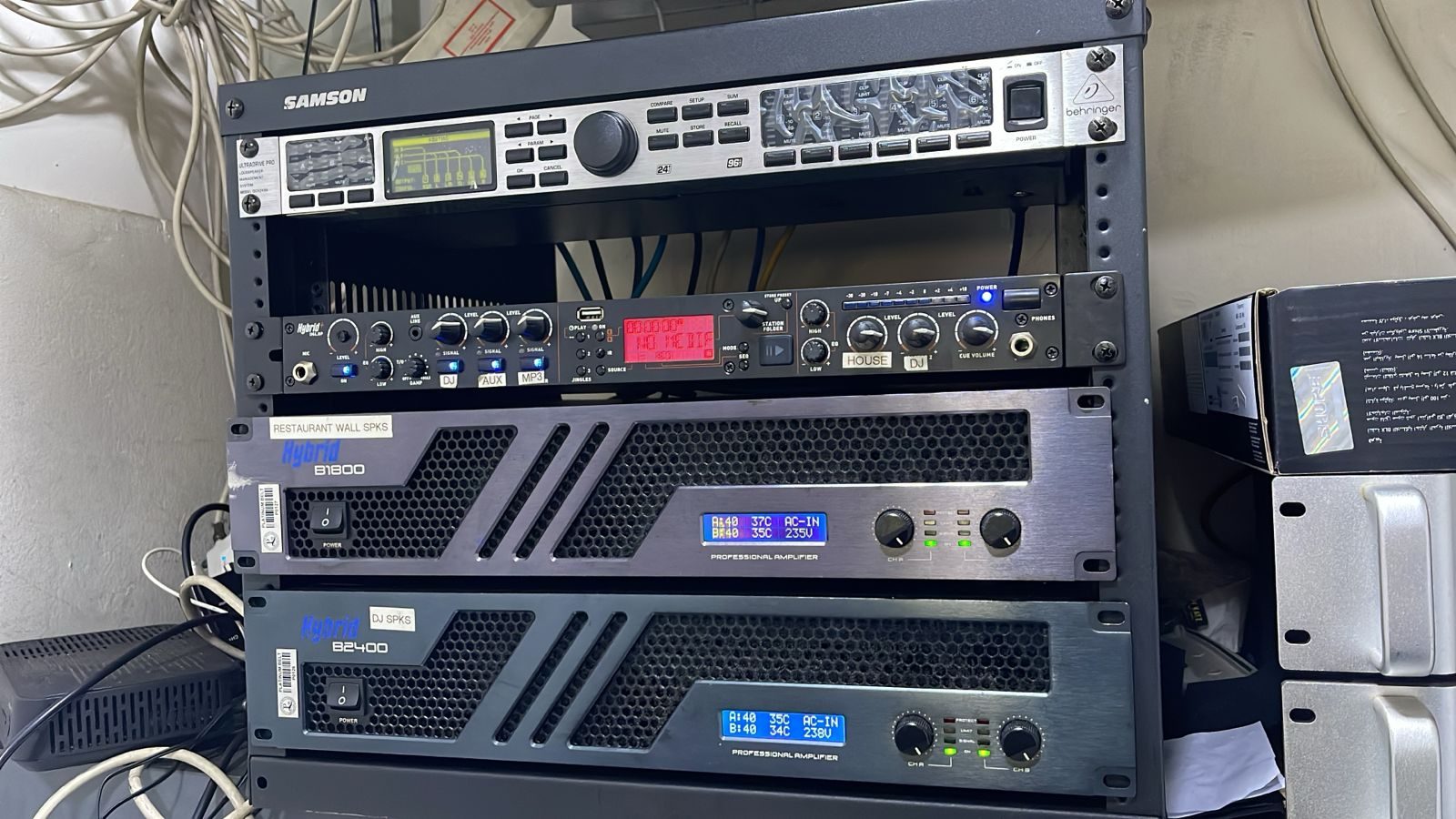
- the back of the amplifier
- the input labels
- the decoder positions
- the HDMI connections
- the speaker terminals
- the power layout
- the cabinet cable entry points
- any temporary workarounds that are keeping the room functional
Those photos become the memory of the system.
Without them, the reconnection depends on guesswork.
Labels matter when the cabinet is empty
When equipment is still connected, a cable can sometimes be traced by following it.
Once everything has been removed, many cables look identical.
That is why labels are not optional.
A label should tell the next technician what the cable does, not only where it was found.
“HDMI 1” is not enough if nobody knows whether HDMI 1 was Apple TV, DSTV, projector return or TV audio.
Good labels make the system serviceable after the room has been disturbed.
Temporary setups need boundaries
Sometimes the client still wants partial use of the room during renovation.
That may mean decoders on a temporary table, an amplifier left accessible, or a TV running from a simplified source while the cabinet is being rebuilt.
That is fine, but temporary setups need boundaries.
They should be stable enough to use, but not mistaken for the final installation.
The risk is that temporary cables become permanent cables. Temporary power boards become permanent power boards. Temporary equipment positions become the new normal.
That is how a clean system slowly turns into a mess.
Reconnection is also a test
Putting equipment back is not only a physical job.
After reconnection, the system must be tested:
- each source
- each room
- each remote
- each speaker zone
- each control button
- each app or touchscreen path
- each display input
If the renovation changed cabinet depth, TV height, power position or cable route, the old assumptions may no longer apply.
That is why the AV team should return before the room is considered finished.
Renovation support protects the finish
The expensive part of a renovated room is usually the finish: joinery, stone, paint, flooring, wallpaper, cabinetry.
AV mistakes after that point become expensive and stressful.
A missing cable can mean reopening a cabinet.
A short HDMI can mean pulling a wall plate apart.
A badly placed amplifier can mean heat problems.
A hidden power board can make future support painful.
The best time to avoid those problems is when the room is still open and everyone understands what is changing. If a cabinet will be rebuilt, agree the new usable depth, ventilation and cable entry position before the equipment is removed.
Removing equipment is the easy part.
Putting it back cleanly is the real job. Our pre-renovation smart-home inspection guide explains what to check before the builders close the room.