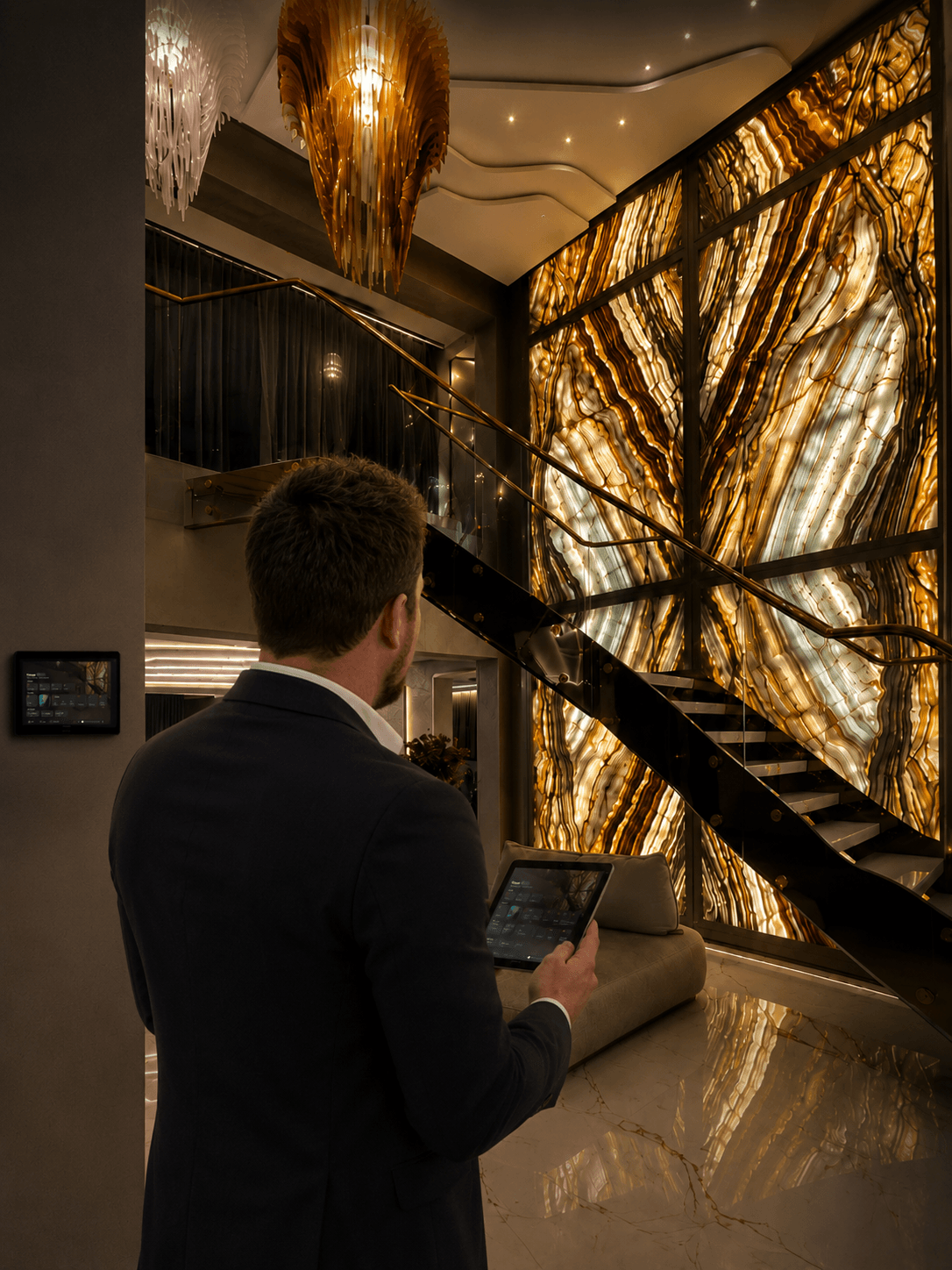
Working in an occupied luxury home is different from working on an empty building site.
The system still has to be repaired, maintained or upgraded. The rack still needs attention. The Crestron processor, touch panels, lighting, Wi-Fi, CCTV, audio and TV systems still need technical care.
But the environment is different.
There may be family members at home. Guests may be arriving later. Staff may be preparing rooms. Security may need contractor details. The owner may not want noise, dust, exposed equipment or unnecessary people walking through private areas.
Good Crestron support is not only technical.
It is also operational.
Access must be planned before the visit
Many support delays start before the technician reaches the rack.
Who will open the house? Which estate gate should be used? Does security have the contractor details? Are keys available? Is the rack room locked? Is the house manager onsite? Are there dogs? Is there a time window where certain rooms cannot be entered?
These questions may sound small, but they affect the quality of the visit.
If the technician arrives and cannot access the rack, ceiling void, TV cabinet, lighting DB or exterior camera, the client still loses time.
For premium homes, access planning is part of professional support.
The house should keep functioning where possible
A support visit should not casually take the whole home down.
Sometimes downtime is unavoidable. A processor restart, network change, switch replacement or rack rewire may interrupt multiple systems. But the client should know what will be affected before it happens.
Good technicians ask:
- Which rooms are being used today?
- Can the Wi-Fi be interrupted?
- Is anyone working from home?
- Are guests arriving?
- Does CCTV need to remain recording?
- Can lighting be restarted safely?
- Should audio zones be tested at a quiet level?
This is especially important in large homes where technology supports daily life, staff operations and security.
Discretion is practical, not decorative
People often talk about discretion as if it only means privacy.
Privacy matters, but discretion also means behaviour.
It means arriving professionally. It means not discussing the client outside the project. It means not taking unnecessary photographs. It means keeping tools controlled. It means closing doors. It means not leaving equipment visible in formal spaces. It means speaking calmly with staff and security. It means understanding that the home is private, even when the project is technical.
DG Technologies works in homes where the technology is important, but the household should not feel like a public showroom.
The work should be precise and quiet.
House managers need useful handover
In many luxury homes, the owner is not the only person who interacts with the system.
A house manager, assistant, guard, cleaner or family member may be the first person to notice a problem. They may need to restart a TV source, check whether a rack device has power, confirm whether CCTV is recording, or explain what happened before the fault started.
That does not mean they need technical training.
It means the handover should be practical.
For example:
- which button turns the room off
- where the remotes belong
- which rack should not be switched off
- who to call for support
- what to photograph before reporting a fault
- which rooms are grouped for audio
- how to export CCTV footage if authorised
- what not to touch during a power problem
Small handover details reduce panic later.
Support records protect continuity
Occupied homes often change slowly.
A TV is replaced. A staff member changes. A router is upgraded. A decoder is moved. A new phone is added. A camera is adjusted. A lighting scene is changed for an event. A temporary cable is installed to get through a weekend.
If those changes are not recorded, the system becomes harder to support.
That is why DG Technologies believes a premium home needs a technical memory.
Support records should note what changed, why it changed and what may need follow-up. This prevents the same fault being investigated from scratch months later.
Clean work matters more in finished homes
On a building site, access is rough and messy by nature.
In a finished home, support work has to respect interiors.
That means protecting floors, working cleanly around joinery, avoiding damage to painted surfaces, keeping ceiling access controlled, checking that panels and covers are replaced properly, and not leaving fingerprints, dust or cable offcuts behind.
The client may never see the rack work, but they will see how the team treats the house.
That behaviour becomes part of the brand.
Support should be calm during urgent moments
Many support calls happen before a function, guest weekend, holiday arrival or important meeting.
That is exactly when stress is highest.
The technician’s job is not only to fix the fault. It is to reduce uncertainty. Ask the right questions. Isolate the issue. Explain what is happening. Offer a temporary workaround if the perfect repair cannot be completed immediately.
Sometimes the best support decision is not the most elegant technical decision. It is the one that gets the family through the evening safely, then returns later to repair the system properly.
Luxury support is about trust
Crestron, AV, CCTV and network systems can be technically complex, but the client experience is simple:
Can I trust this team inside my home?
Can I trust them to understand the system?
Can I trust them not to create unnecessary disruption?
Can I trust them to tell me the truth about what needs to be fixed?
That trust is built through small behaviours repeated over years.
For DG Technologies, supporting an occupied luxury home means treating the system and the household with the same level of care.
The technology should work.
The home should still feel like home.