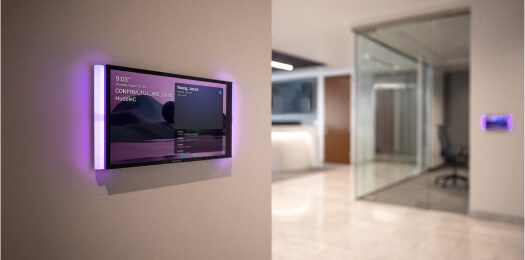
A large luxury home should not feel like a technical project once the family moves in.
The rooms should behave naturally. Lighting scenes should make sense. Music should start where it is needed. Cameras should load without delay. Wi-Fi should feel invisible. Guests and staff should not need training every time they want to use a room.
That level of simplicity only happens when the system underneath is designed properly.
For large homes in Durban, Mount Edgecombe, Zimbali, Simbithi, Umhlanga and the KZN North Coast, Crestron Home can be a very strong platform because it gives the homeowner a polished residential control experience while still allowing the integrator to build around proper infrastructure.
The important point is this: Crestron Home is not a magic box. It works best when the home has been designed around good wiring, stable networking, sensible lighting circuits, serviceable equipment locations and a clear understanding of how the property will be used.
Large homes are infrastructure projects
A large residence is different from a normal smart-home installation.
It may have multiple bedroom wings, entertainment areas, patios, garages, staff areas, gate houses, CCTV zones, guest suites, cinemas, outdoor speakers, garden lighting and several people using the system in different ways.
That means the control system has to sit on top of a real backbone:
- structured network cabling
- properly placed Wi-Fi access points
- managed switches and rack equipment
- lighting-control panels or modules
- CCTV and access-control infrastructure
- distributed audio and video paths
- clean power and power-recovery planning
- documentation for future support
If that layer is weak, the finished app will expose the weakness. The homeowner may blame the touchscreen, the phone app, the cameras or the music system, but the real issue is often hidden in the network, rack, cabling or lighting design.
This is why DG Technologies treats network infrastructure and wireless distribution as part of the Crestron conversation, not as a separate afterthought.
Crestron Home should reduce complexity, not add to it
One of the mistakes in premium automation is assuming that more control always means a better home.
It does not.
A large home can quickly become frustrating if every room has too many buttons, too many app pages, too many scenes and too many separate ways to perform the same task. The client did not build a luxury home so they could become the system operator.
Good Crestron Home design should simplify the daily experience.
That may mean:
- fewer, clearer room scenes
- touch panels only where they genuinely help
- app control where it gives the same practical result
- keypads placed where the hand naturally reaches
- house modes that make sense, such as welcome, evening, away and night
- staff-friendly controls for routine use
- guest-friendly operation in entertainment areas
The goal is not to show off every possible feature. The goal is to make the property easier to live in.
We cover the broader philosophy in what it is really like working with DG Technologies. In short, the value is not only in the equipment. It is in deciding what should be controlled, what should be simplified and what should be left alone.
Lighting control must be designed from the circuits upward
Lighting is one of the biggest reasons to use a professional control platform in a large home.
But lighting control is not only about elegant keypads.
Before the keypad can make sense, the circuits need to make sense. The integrator, electrician and architect need to understand which loads are dimmable, which should be relay switched, where drivers are located, how exterior circuits are grouped, how scene lighting will work and how the home should recover after power interruptions.
In large homes, this planning matters because the lighting can affect the whole feel of the property. One scene may involve kitchen pendants, cove lighting, patio lighting, pool lighting, passage lighting and garden lighting. If those circuits were not planned properly, the final scene can feel clumsy no matter how good the user interface looks.
That is why we wrote separately about why lighting control design starts with circuits, not keypads.
The rack and documentation matter years later
Crestron Home can make the visible side of the system feel clean, but the hidden side still needs discipline.
The rack should be labelled, ventilated, serviceable and understandable. Network equipment should be documented. Lighting circuits should be recorded. Passwords and admin ownership should be handled responsibly. Remote support should be set up in a way that protects the client.
This is especially important in private estate homes, where contractors may not have instant access and the homeowner may not live there full time.
A large smart home should not become dependent on memory. If a technician opens the rack in five years, the system should still make sense.
Why Crestron Home is often the sensible residential choice
There are homes where custom Crestron programming has a place. There are also many private homes where Crestron Home gives the better balance of performance, usability, maintainability and cost.
For residential work, that balance matters.
A homeowner usually wants a stable system that can be supported, adjusted and understood. They want the home to work for family, guests and staff. They want future changes to be possible without turning every small adjustment into a major programming exercise.
That is why DG Technologies often looks at the actual residential requirement before recommending the most complex route.
We have written more about this in Crestron Home vs custom Crestron programming.
The DG Technologies approach
For large homes, our starting point is not the app screenshot.
We look at the property, the drawings, the way people will live there, the infrastructure already planned, the electrical design, the network requirements, the security needs, the entertainment spaces, the service access and the long-term support path.
From there, the Crestron Home system can be designed around the home instead of forcing the home around the technology.
For high-end homes in Durban and KZN, that is the difference between a smart home that impresses on handover day and a smart home that still feels calm, reliable and logical years later.
If you are planning a large build or reviewing an existing system, speak to DG Technologies about home automation in Durban and KZN, Crestron installation or early architect coordination.