Outdoor entertainment areas are not just indoor rooms with tougher speakers.
A verandah, pool deck or covered patio behaves differently. The sound escapes. Background noise is higher. Sunlight affects the screen. Moisture affects equipment. Cable routes are harder. Guests use the space differently. A system that works beautifully in a TV lounge may feel awkward outside.
This is why DG Technologies treats verandah audio and outdoor TV as their own design discipline.
The goal is simple: make the outdoor area enjoyable without turning it into a technical project every time someone wants to watch sport, listen to music or entertain guests.
Outdoor audio needs coverage, not just volume
The common mistake with outdoor speakers is trying to solve everything with volume.
If two speakers are placed at one end of a long verandah, the people near the speakers may find the sound too loud while the people near the pool can barely hear it. Turning the volume up does not fix the design. It only makes one area uncomfortable.
Good outdoor audio is about even coverage.
That may mean more speakers at lower volume. It may mean separating the pool area from the verandah. It may mean using weather-rated speakers aimed carefully rather than simply mounting the biggest pair available.
For multiroom audio, the best result usually comes from matching the zones to how the home is actually used.
Pool areas and verandahs may not be one zone
Architecturally, a verandah and pool deck may feel like one entertainment space.
Practically, they may behave like two zones.
People at the dining table may want background music. People around the pool may want more energy. Someone watching rugby outside may want TV audio on the verandah but not across the whole garden.
If everything is tied into one zone without thinking, the client loses flexibility.
At the same time, splitting every area into its own zone can add unnecessary cost and complexity.
The right answer depends on how the family entertains.
This is where experience matters. We do not design only from the floor plan. We ask how the space will be used.
Outdoor TV is not only screen size
An outdoor TV point needs more planning than many people expect.
Important questions include:
- where does the sun hit the screen?
- will the TV be exposed to wind or moisture?
- is the bracket strong enough?
- does the TV need to swivel?
- where is the source equipment?
- is the signal local or distributed from another room?
- can the HDMI or network extender be serviced?
- is there ventilation behind the TV?
- how will someone control DSTV, Apple TV or streaming?
If these questions are left until the TV arrives, the installation can become messy.
TV audio outside needs a clear path
Outdoor TV audio is often underestimated.
The TV speakers may be too weak for a verandah. A soundbar may not suit the weather or the architecture. Using the main outdoor audio speakers for TV sound can work, but only if the source path, amplifier and control method are designed properly.
The client should not have to understand which input, decoder, receiver and speaker switch is involved.
The system should make sense:
Watch DSTV outside.
Listen to music outside.
Adjust volume outside.
Turn it off when finished.
That simplicity usually requires more planning behind the scenes.
Cable routes are harder outside
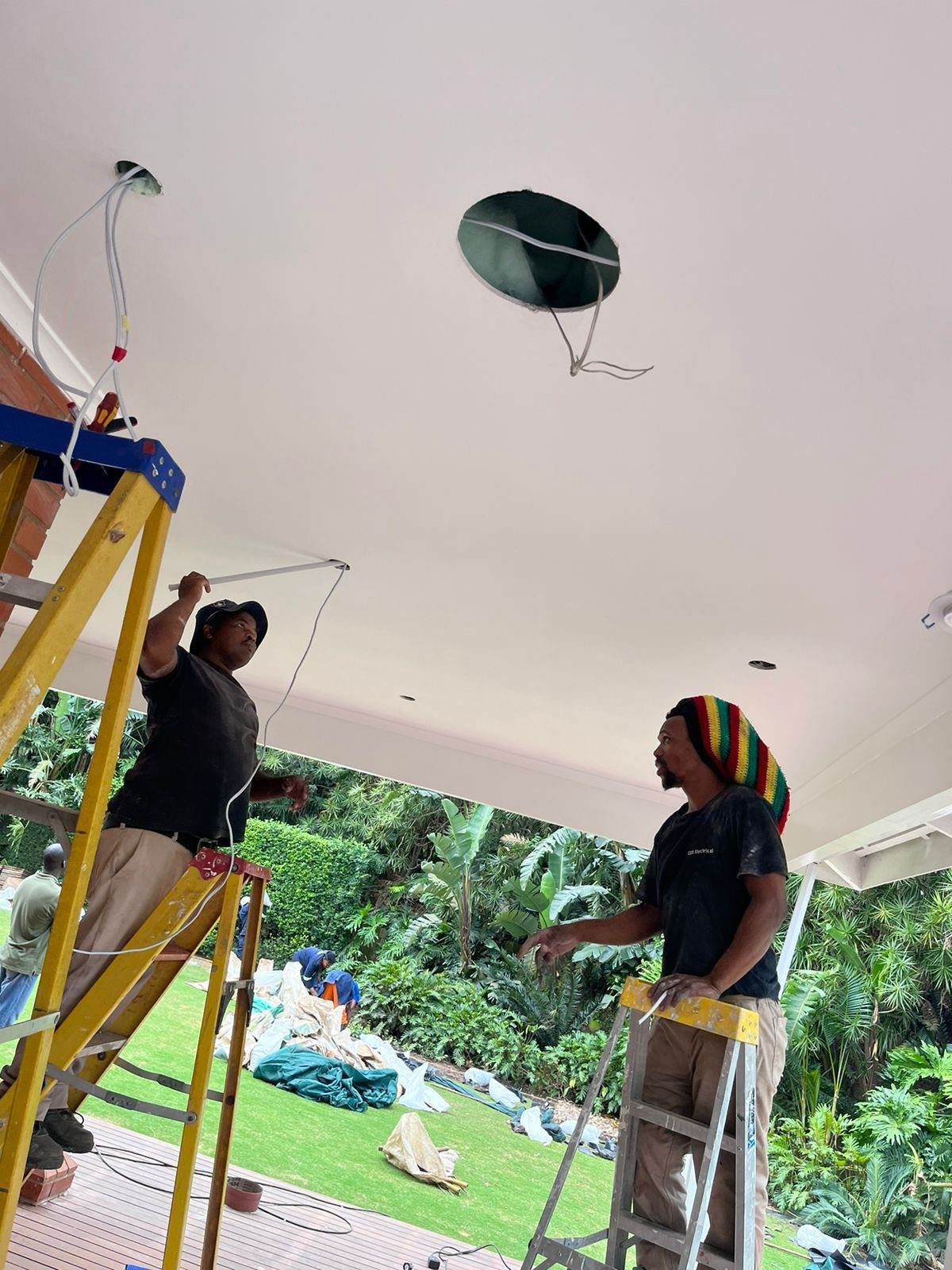
Outdoor areas often have fewer easy cable routes.
There may be existing conduits, slabs, beams, cladding, pavers, waterproofing, timber ceilings or stonework. Sometimes old cables will not move. Sometimes a new conduit needs to be chased before finishes are complete. Sometimes the cable route that seems shortest is not the route that can be serviced later.
For this reason, outdoor AV should be discussed early with the builder and interior designer.
Once ceilings, cladding, pavers and cabinetry are complete, every change becomes more expensive.
Weather-rated does not mean careless
Outdoor speakers and TVs may be rated for harsher environments, but they still need sensible installation.
Connections should be protected. Cable entries should be neat. Brackets should suit the weight and exposure. Equipment should not sit where moisture collects. Power supplies and extenders should not be buried in inaccessible positions.
KwaZulu-Natal coastal conditions can be hard on equipment.
Salt air, humidity, heat and storms all shorten the life of poorly installed electronics.
The outside area should be as easy as the lounge
The best outdoor entertainment system does not feel like an add-on.
It feels like part of the home.
The client can watch sport, play music, entertain guests or enjoy a quiet evening without fighting the system.
That is the standard DG Technologies works toward in premium residential AV and outdoor entertainment projects.
Outdoor areas are often where families spend the most enjoyable time together.
They deserve the same level of planning as the rooms inside the house.