Not every speaker in a home lives in the same environment.
A bedroom speaker, a kitchen speaker, a verandah speaker and a sauna speaker may all appear in the same audio schedule, but they do not face the same conditions. Heat, steam, moisture, salt air, roof-space temperature and cleaning routines all affect how long the speaker will last and how well it will perform.
This is why wet-area audio should never be treated as a simple copy-and-paste from the rest of the home.
For DG Technologies, these spaces are small on the drawing but important in practice.
A sauna is not a normal room
A sauna is one of the harshest audio environments in a home.
The temperature can be high. Moisture can be present. The enclosure is usually timber. Space is tight. The client expects the technology to disappear, but the speaker still needs to survive.
That changes the design conversation.
Before specifying the speaker, we need to understand:
- the sauna construction
- the likely operating temperature
- whether steam or high humidity is present
- where the speaker can be mounted safely
- whether the grille and materials suit the environment
- how the cable enters the space
- whether the speaker can be accessed again later
The wrong product may work on day one and fail later.
That is not good enough for a premium home.
Bathrooms need more than “ceiling speaker here”
Bathrooms are often added to multiroom audio schedules because clients like music while getting ready.
The idea is simple. The execution needs thought.
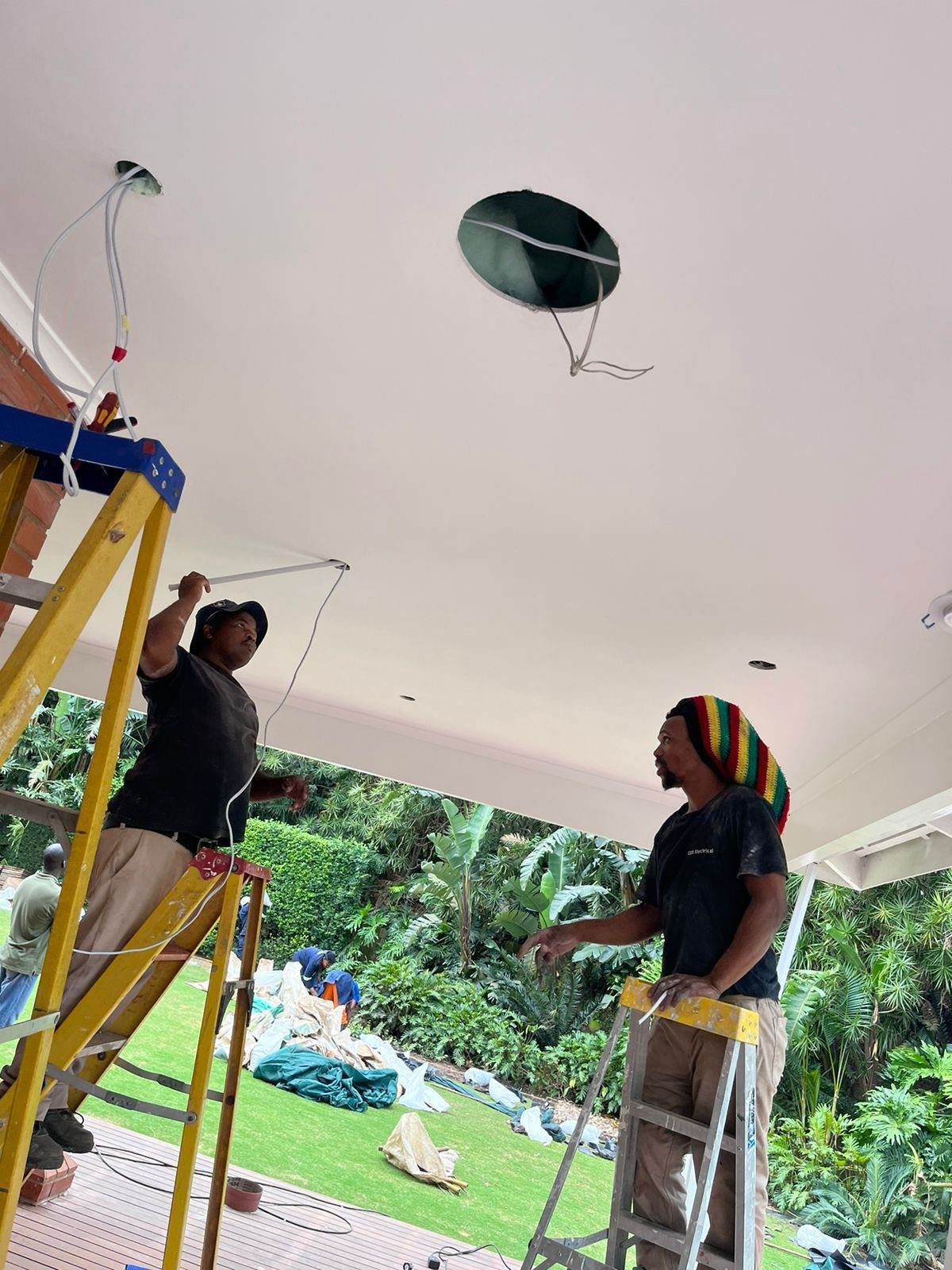
A bathroom speaker may sit near steam, extractor fans, downlights, insulation, roof-space heat and waterproofing details. If the ceiling is concrete or slab, the speaker depth and cable route need to be planned early. If the ceiling is rhinoboard, access and moisture exposure still matter.
Interior designers may also want grilles to match downlights, aircon diffusers and ceiling finishes.
That is all possible, but it should be discussed before the ceiling is closed.
Coastal KZN adds another layer
KwaZulu-Natal homes often deal with humidity and salt air.
Near the coast, exterior speakers, verandah speakers and even some roof-space equipment can age faster than expected. Grilles can corrode. Fixings can stain. Connections can degrade. Outdoor cabinets can trap moisture.
This does not mean outdoor or wet-area audio should be avoided.
It means the product, placement and service plan should match the environment.
Sometimes a discreet on-wall speaker is the better choice. Sometimes a ceiling speaker with a pivoting tweeter makes sense. Sometimes the better decision is to create an access point through a speaker aperture so future maintenance does not require damaging the ceiling.
Cleaning and daily handling matter
In luxury homes, technology is often handled by more than one person.
The homeowner may use the app. Staff may clean around speakers, remotes and touch panels. Guests may turn up the volume. Children may use bathrooms and entertainment areas differently from adults.
Wet-area speakers need to be placed where they are protected from normal use, not only from the theoretical environment.
That is one reason we think carefully about grilles, wall positions, ceiling positions and access.
The best installation is not only the one that looks good in the completion photo. It is the one that survives the way the home is actually lived in.
Audio zones should still make sense
A wet-area speaker should not be added just because it can be added.
The bathroom, dressing room and bedroom may need to operate together. Or they may need to be separate. A sauna may form part of the pool entertainment zone, or it may need its own control. Outdoor shower areas may not need audio at all.
These decisions affect amplifier channels, control interfaces, cable routes and budget.
For a premium installation, we would rather ask the awkward questions early than leave the client with a confusing audio system later.
Service access is part of the design
The simplest rule is this: if we install it, someone may one day need to reach it.
That applies to speakers, access points, keypads, amplifiers and cable joins.
In wet areas, access is even more important because environmental conditions increase the chance that a grille, driver, connector or cable termination may need attention over the life of the home.
Planning access does not mean making the room ugly.
It means using the architecture intelligently so the home remains beautiful and supportable.
That is the balance DG Technologies is always trying to protect.