Outdoor audio problems are not always caused by bad speakers.
Sometimes the problem is distance.
Sometimes it is amplifier loading.
Sometimes it is the way the speakers face each other.
Sometimes it is a design that looked simple on paper but became difficult once cable length, impedance, volume expectations and the physical entertainment area were properly considered.
That is why DG Technologies does not treat outdoor audio as “add a few speakers outside”.
It needs design.
Long cable runs change the calculation
Outdoor speakers are often far from the equipment rack.
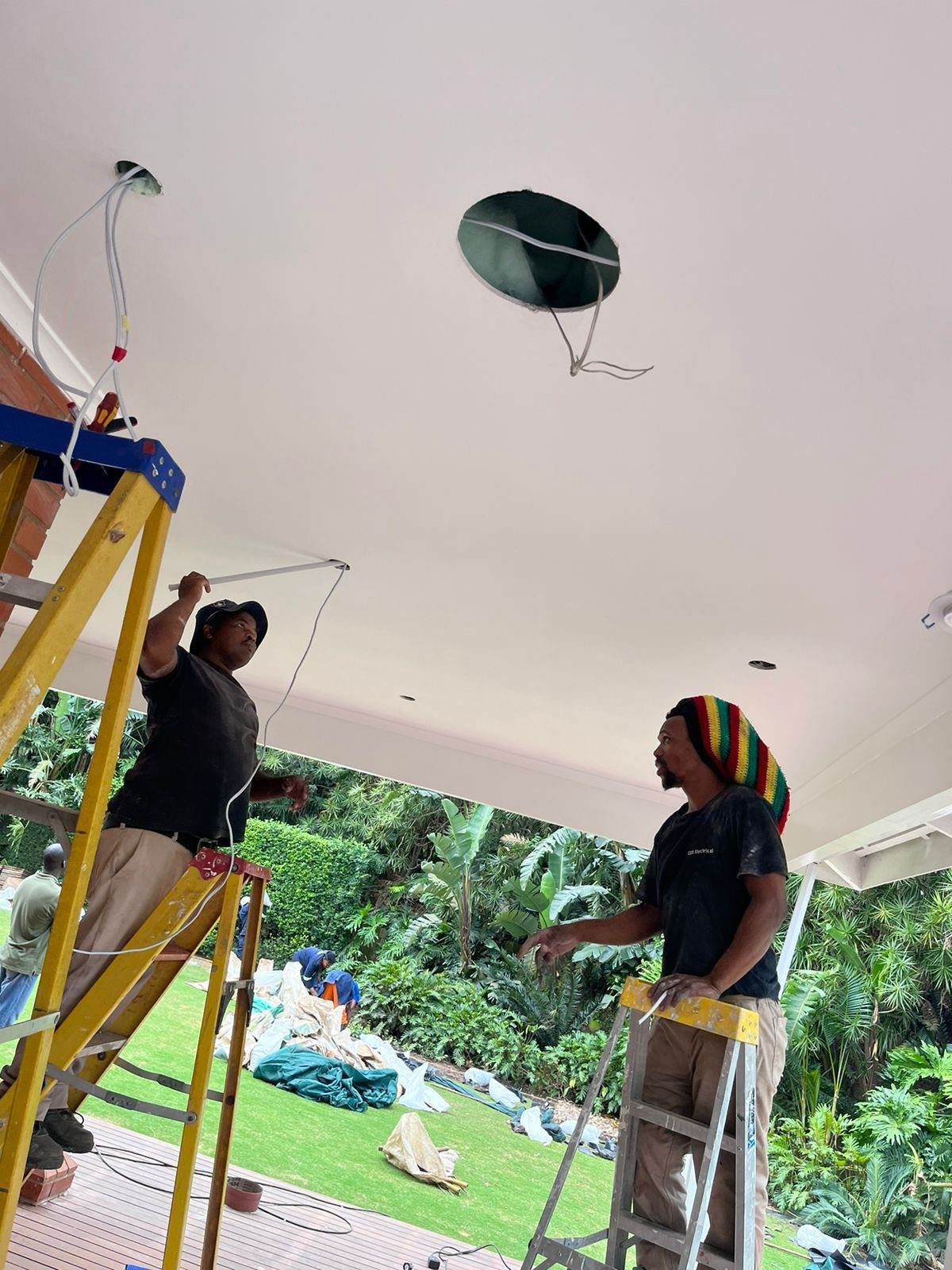
The amplifier may be inside the house. The speakers may be near the pool, firepit, garden, deck or entertainment lawn. Cable routes may travel through ceilings, conduits, wall cavities, service ducts and outdoor containment before they arrive at the final speaker position.
That distance matters.
The longer the speaker cable run, the more carefully we need to think about cable size, amplifier load and how hard the amplifier will need to work.
In a premium home, the goal is not to make the system work once during handover.
The goal is to make it reliable when the client has people over, the volume is higher, the outdoor area is busy and the amplifier has been working for hours.
Impedance is not just a technical detail
Speaker impedance affects how the amplifier sees the load.
If too many low-impedance speakers are connected in the wrong way, the amplifier may be driven harder than it should be. Add long cable runs and high outdoor volume expectations, and the risk increases.
The symptom may be:
- the amplifier gets too hot
- the audio cuts out
- one area plays softer than expected
- the system shuts down under load
- the client keeps increasing volume to compensate
This is why we are cautious about simply adding more speakers to an outdoor area.
More speakers can improve coverage when designed correctly.
More speakers can also overload the wrong amplifier when designed badly.
Speakers firing at each other can create problems
Outdoor seating areas often tempt people to place speakers opposite each other.
It looks symmetrical.
It may not sound right.
When speakers fire directly against each other across a small seating area, the result can be uneven sound, strange reflections, bass build-up or uncomfortable listening positions. In some cases, a better solution is fewer speakers, better aimed, playing at a more sensible level.
This is especially important around firepits, decks and built-in seating.
The goal is coverage, not symmetry.
Good audio design asks where people sit, where they stand, where the sound should go, and where it should not go.
Bass without midrange is not music
Outdoor bass is tricky.
A subwoofer or bass speaker can add weight, but if it is used without enough midrange and high-frequency support, the result can feel muddy or disconnected. People may hear boom outside while the actual music detail is missing.
That is why adding “more bass” is not always the answer.
Outdoor audio needs balance.
It needs the right speaker type, the right quantity, the right amplifier, the right placement and the right commissioning.
We would rather design a system that sounds natural at normal entertainment levels than create one area that shakes while another area cannot hear the song properly.
Outdoor audio should be commissioned
An outdoor speaker installation is not finished when the speaker is mounted.
It still needs to be tested.
We need to listen from the dining table, the pool, the braai area, the garden edge and the doorway back into the house. We need to check whether doors change the balance. We need to confirm whether TV audio and music behave differently. We need to see whether the client can control the area without confusion.
This is where practical experience matters.
Outdoor entertainment areas are used socially. They are not used like a listening room.
The design has to suit real people moving around a real space.
The best outdoor systems feel effortless
When outdoor audio is done well, the client does not think about impedance, cable length, amplifier loading or speaker aiming.
They just press play.
The music fills the right area.
The amplifier keeps running.
The neighbours are not punished unnecessarily.
The guests can enjoy the space.
That effortless result depends on decisions made long before the first song plays.
For DG Technologies, those decisions are the work.