DStv and fibre are often treated as small services that can be added near the end of a build.
That is a mistake.
Both services need physical routes through the property. Both affect the head-end. Both can become untidy if the installer arrives after the home is finished and has to make a plan around closed ceilings, finished walls, paving, joinery and roof access.
In a new home, the cleanest result comes from planning DStv and fibre before first fix.
Fibre should have a route to the head-end
The fibre entry point should not decide where the router lives.
The technology plan should decide where the router belongs, and the fibre should be routed there.
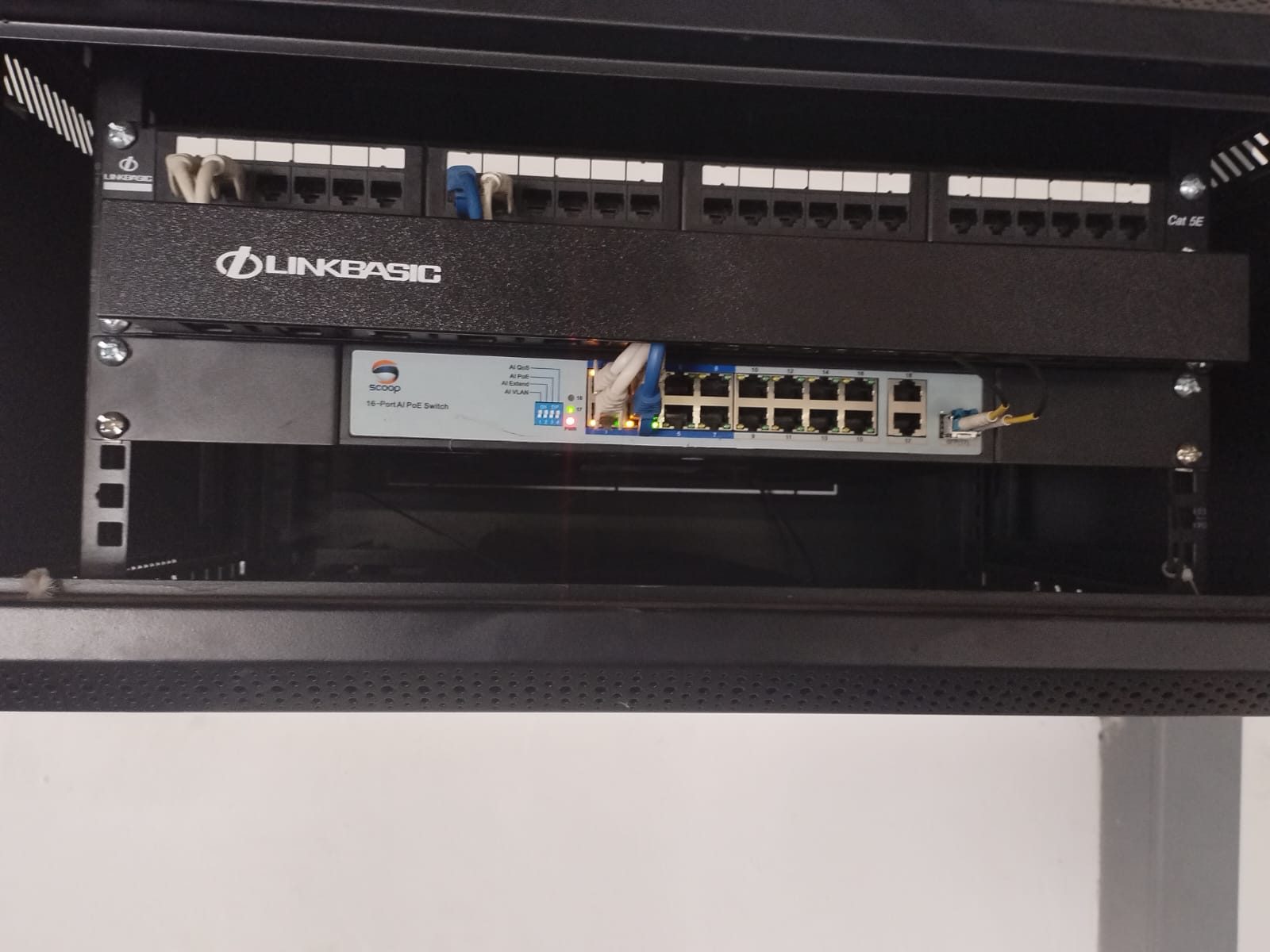
For a serious home, the fibre should enter the head-end or network cabinet where the rest of the technology equipment is planned. That allows the internet service, router, firewall, switches, access points, CCTV, automation and remote support to sit on a controlled foundation.
If the fibre terminates in a random lounge corner, the home may still get internet, but the network design has already been compromised.
For new builds, a dedicated conduit from the external fibre point or manhole to the head-end is a simple decision that prevents a lot of ugly work later.
This ties directly into why a new build needs a head-end room before it needs gadgets.
The dish point should be chosen deliberately
The DStv dish position needs more thought than people give it.
It needs a clear view, a stable mounting location, safe access, a clean cable route and a sensible path back to the head-end or TV distribution point.
In coastal KZN, the dish and mount are also exposed to harsh conditions. Corrosion, wind, roof access and future replacement all matter.
The dish route should not be an improvised cable run clipped across a roof because nobody allowed for it in the drawings.
Plan the dish route early.
Plan where it enters the building.
Plan how it reaches the head-end.
TV distribution depends on the same planning
Some homes only need DStv at one or two televisions.
Others need multiple viewing areas, guest rooms, bar areas, bedrooms, outdoor TVs or a centralised distribution approach.
The right answer depends on how the family actually uses the home.
Before the electrician starts pipework, the client should know:
- which rooms need TVs;
- whether any TVs need DStv;
- whether any sources will be centralised;
- whether HDMI, RF, IP streaming or a mix of methods is appropriate;
- where remotes or control interfaces will be used;
- where the equipment will be serviced from.
That planning should happen alongside TV point planning and the wider DStv distribution design.
Fibre, DStv and Wi-Fi should not fight each other
I often see homes where the fibre installer, DStv installer, electrician and Wi-Fi installer have each solved their own part of the job in isolation.
The result works at first, but it is difficult to support.
The router is in one place. The DStv cabling is in another. The network switch is somewhere else. The Wi-Fi access points are adopted to a system nobody controls. The TV equipment is hidden in cabinetry with poor ventilation.
That is not a technology plan.
It is a collection of separate fixes.
In a new home, fibre, DStv, Wi-Fi, TV distribution and automation should be viewed together. They all affect the same physical routes and the same head-end.
Service access must be designed in
Every service needs maintenance eventually.
Fibre equipment changes. Routers get replaced. DStv LNBs fail. Dish alignment changes. TV equipment gets upgraded. HDMI standards move. Streaming requirements change.
The question is whether those changes can be handled cleanly.
Good planning leaves:
- reachable equipment;
- labelled cables;
- spare routes where practical;
- draw wires;
- accessible draw boxes;
- enough space in the cabinet;
- enough ventilation around active equipment.
The client may never see those details when everything is working. But they matter the first time something has to be replaced.
Plan the boring routes before the beautiful finishes
Fibre and DStv are not the most glamorous parts of a smart home.
But if they are planned badly, they can affect almost everything else.
The internet connection supports the Wi-Fi, apps, CCTV remote viewing, streaming, automation support and software updates. The DStv and TV routes affect how cleanly the entertainment areas can be finished. The head-end affects whether the home can be supported without pulling everything apart.
For a new South African home, the goal is simple:
Get the service routes right before the finishes go in.
DG Technologies can coordinate fibre route planning, DStv routing, TV distribution, head-end layout and network infrastructure as part of a complete new-build technology plan.
Related reading: