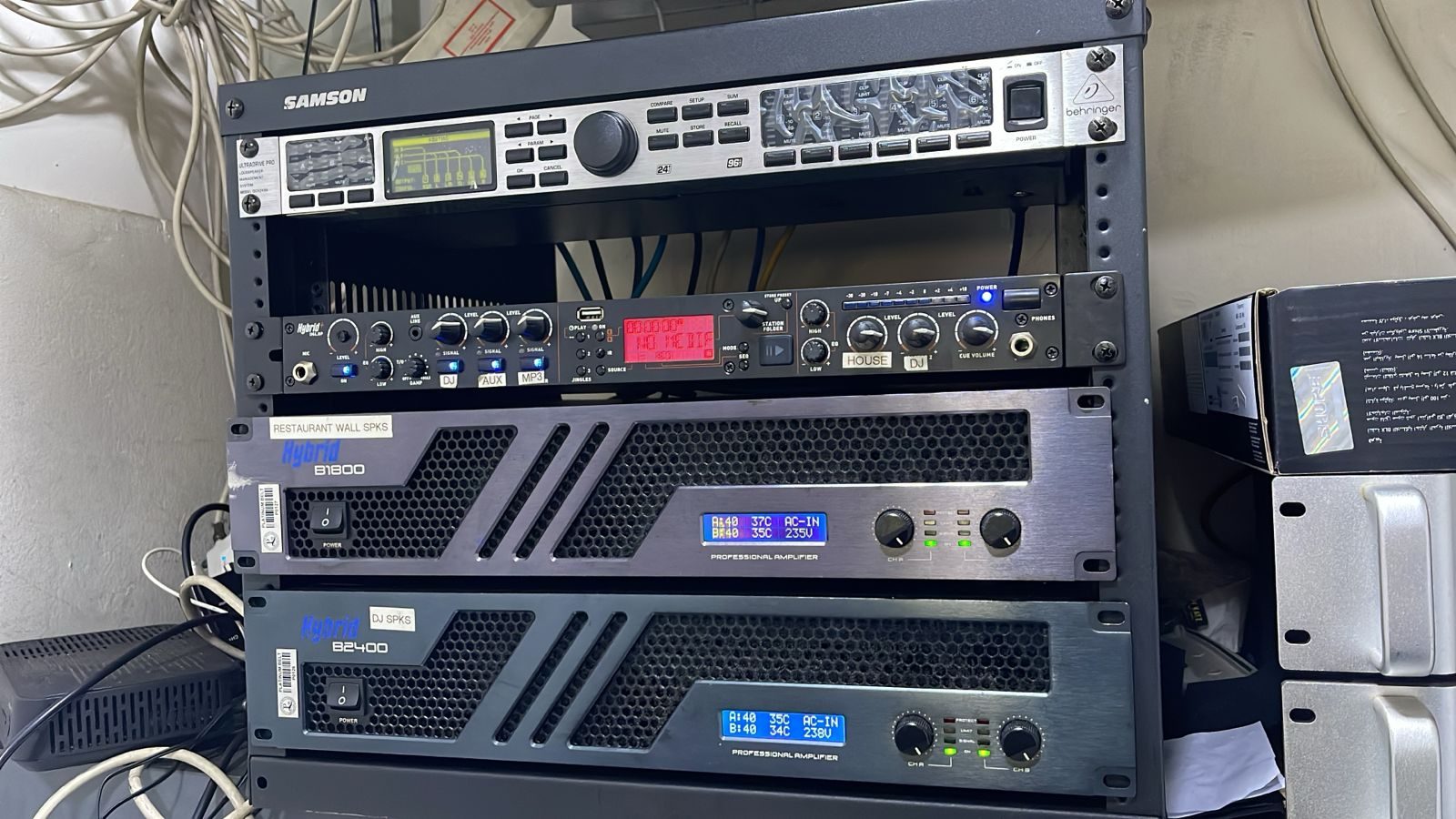
Emergency callouts are expensive because they happen under pressure.
The client needs the system working now. Guests are arriving. A meeting is starting. The house is occupied. Security footage is needed. The family is travelling. The fault is already causing frustration.
Scheduled maintenance is different.
It gives the technician time to inspect, test, document and correct small issues before they become urgent.
Small problems rarely stay small
A fan getting noisy is not dramatic.
A rack running slightly hot is not dramatic.
A UPS battery approaching end of life is not dramatic.
A camera view slowly being blocked by a growing tree is not dramatic.
But all of these can become real problems later. Heat damages electronics. Weak batteries fail during power events. Dirty camera lenses make footage useless. Poor ventilation shortens equipment life. A recorder that is almost full may not provide the retention period the client expects.
Maintenance is the habit of finding those details early.
Emergency work starts with less information
When a technician arrives for a planned visit, the job can be structured.
They can check the rack, network, CCTV recorder, access points, automation processor, remotes, touchscreens, UPS, labels, app access and known fault history.
An emergency callout often starts with a sentence like:
“It was working yesterday.”
That may be true, but it does not say what changed. A fibre router may have been replaced. A breaker may have tripped. A cleaner may have unplugged a power supply. A guest may have moved a source device. A staff member may have changed an app setting.
Planned visits give the support team a clearer baseline.
Maintenance protects the quiet systems
Some of the most important systems are not noticed when they work.
Wi-Fi is expected to be available. CCTV is expected to record. Lighting control is expected to respond. The gate intercom is expected to ring. Audio is expected to play. The cinema is expected to start when guests arrive.
Because those systems are quiet when healthy, they can be ignored until they fail.
A maintenance visit gives them attention before they demand it.
The real saving is disruption
The cost of an emergency callout is not only the technician’s time.
It is also the disruption around the failure.
If a boardroom cannot run a meeting, the cost is not only AV support. If a holiday home has no Wi-Fi when the owner arrives, the cost is not only a router check. If CCTV footage is missing after an incident, the cost cannot always be recovered.
Scheduled maintenance reduces those moments.
DG Technologies treats support as part of the system
For DG Technologies, the installation is not the end of the product.
A premium system should remain understandable, serviceable and supportable after handover. That means labels, documentation, maintenance notes, support access and a clear record of what has changed.
We explain this broader philosophy in what a smart-home support contract should actually cover and why supportability is part of the product.
Scheduled maintenance is not about inventing work.
It is about preventing avoidable failure.