A smart-home support contract should not be a vague promise to “come out if something breaks”.
That is not enough for a premium home.
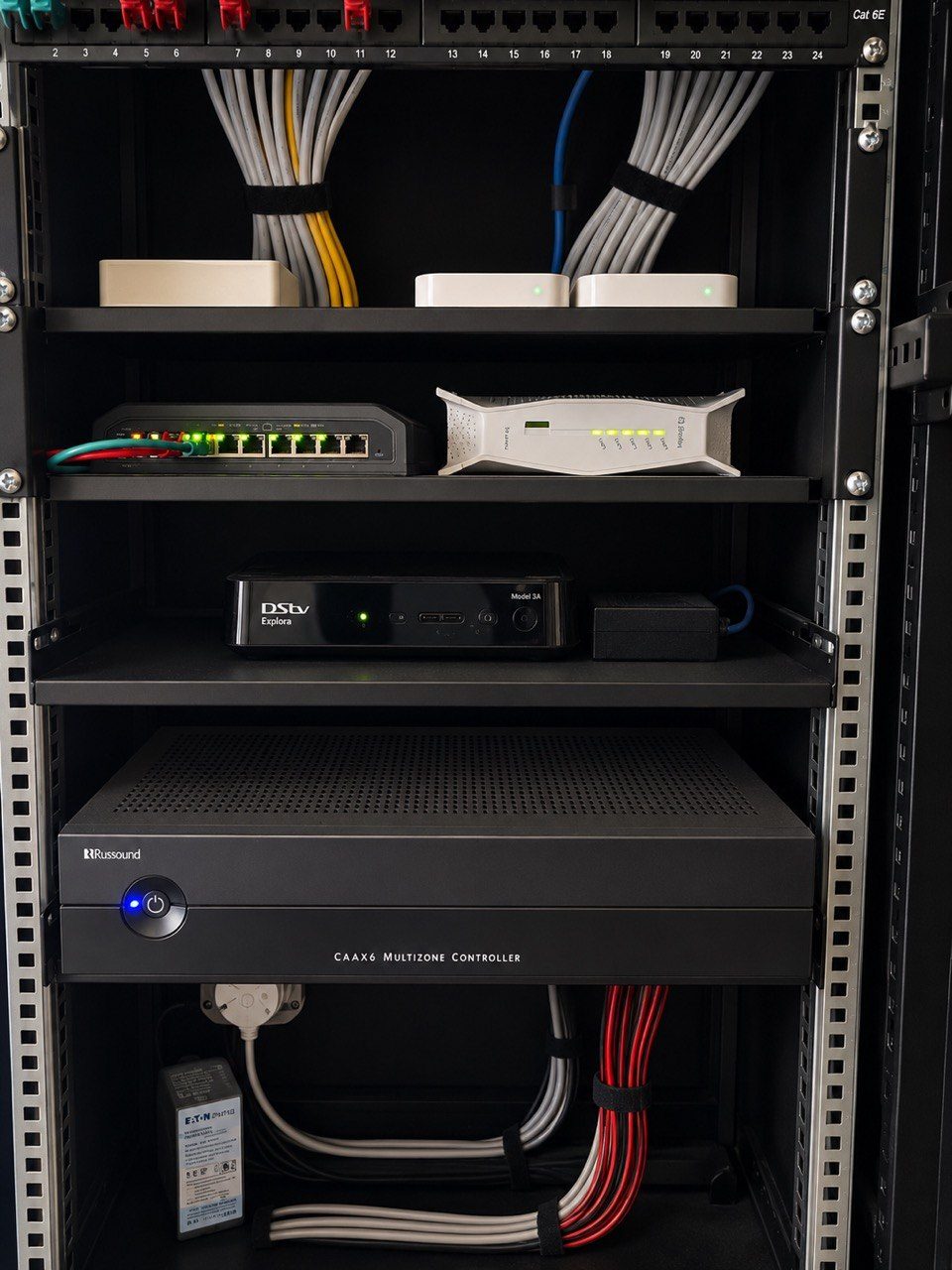
Modern homes depend on networks, Wi-Fi, CCTV, automation processors, apps, mobile devices, remotes, streaming services, source equipment, lighting control, rack power, firmware and documentation. These systems change even when the house itself does not.
A proper support contract should define how the home will be kept understandable, stable and supportable after handover.
It should include the network
The network is the foundation of most modern home technology.
If the network is unstable, many other systems look faulty.
CCTV cameras drop. Streaming buffers. Sonos rooms disappear. Crestron app control feels unreliable. Remote access fails. Guest Wi-Fi complaints increase. A perfectly good automation system can be blamed for a weak network underneath it.
For that reason, a smart-home support contract should include network review.
That may involve checking access point status, switch health, router uptime, guest networks, device names, IP addressing, firmware status and any changes made by the internet provider.
This is why DG Technologies treats network infrastructure as part of the smart-home support conversation, not a separate afterthought.
It should include CCTV health
CCTV maintenance should be proactive.
The worst time to check a CCTV system is after an incident.
A support contract should include periodic checks for:
- Camera availability.
- NVR recording.
- Hard drive health.
- Date and time accuracy.
- Remote viewing.
- Camera lens cleanliness.
- Changed or blocked views.
- User access.
- Firmware and app status where appropriate.
Good CCTV support is not only about replacing failed cameras. It is about ensuring footage is available when the client needs it.
Our CCTV planning guide covers the design side of this, but the support contract keeps that design working in real life.
It should include AV and entertainment checks
AV systems are used unevenly.
A cinema may sit unused for weeks, then be expected to work perfectly for guests. Outdoor audio may only be used on weekends. A guest bedroom TV may be ignored until family arrives. A decoder may update. A streaming app may log out. A remote battery may die.
Support should account for that pattern.
A proper contract can include checks on:
- Main TV rooms.
- Cinema or media room operation.
- Outdoor audio zones.
- Source devices.
- Remote controls.
- HDMI or eARC behaviour.
- Rack power and ventilation.
- App/source labels.
This is especially useful for holiday homes, which is why we recommend pre-arrival technology checks before important visits.
It should include firmware change control
Firmware updates can help systems.
They can also break things.
Routers, switches, cameras, recorders, streaming devices, apps, remotes and automation systems all receive updates. Some updates are harmless. Some affect compatibility, drivers, security, interfaces or control behaviour.
A support contract should define how updates are handled.
For premium homes, updates should be managed, recorded and tested where practical. The goal is not to avoid all updates. The goal is to avoid uncontrolled changes that leave the homeowner discovering a problem during normal use.
We explain this further in why smart-home firmware updates need change control.
It should include documentation updates
Documentation is not finished forever on handover day.
Homes change.
An access point is moved. A decoder is replaced. A new camera is added. A fibre router changes. A UPS battery is replaced. A room name changes. A guest network password is updated. A support login is removed. An amplifier channel is repurposed.
If the documentation is not updated, the system slowly becomes harder to support.
A serious support contract should include documentation maintenance, especially for larger homes and estates.
That means keeping useful records of equipment, rack photos, network notes, camera positions, room names, support access and any changes made during visits.
It should define remote support properly
Remote support is valuable, but it must be responsible.
The contract should define:
- which systems can be accessed remotely,
- who approves remote access,
- what is logged,
- who is authorised to request changes,
- what requires a site visit,
- and what credentials are stored or handed over.
Remote support should make the client safer and better supported, not create a hidden security risk.
This links to our article on why remote access to a smart home must be set up responsibly.
It should be realistic about response times
Not every issue has the same urgency.
No internet at a primary home is different from a cosmetic app label. CCTV offline during travel is different from a guest bedroom remote battery. A rack power alarm is different from a streaming app login.
A support contract should classify issues sensibly so urgent faults get attention and minor improvements can be scheduled.
This helps the client and support team work calmly.
The contract should protect the relationship
The best support contracts are not designed to trap clients.
They are designed to make the relationship clear.
The client knows what is covered. The support team knows what must be checked. The house manager knows how to report issues. The system remains documented. Small failures are caught early. Changes are recorded. The home stays easier to live with.
That is the real value.
For DG Technologies, support and maintenance is not separate from the installation. It is part of designing technology that still makes sense years later.