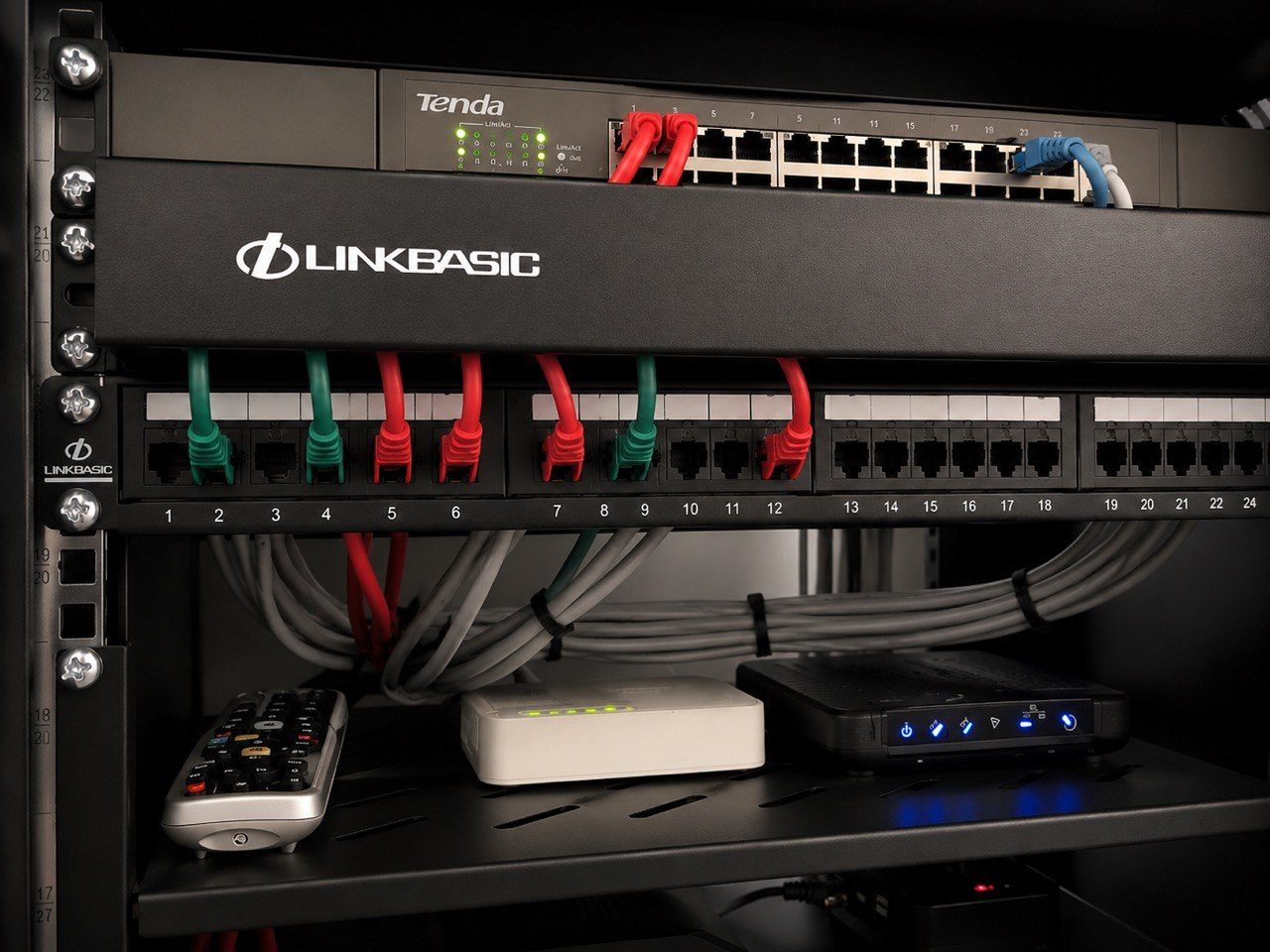
Moving equipment into a new cabinet can look like a simple housekeeping job.
The decoder is on a shelf in the lounge. The amplifier is in a cupboard. The router is in a study. The client wants everything moved into one clean AV cabinet or head end.
That is usually the right direction.
But it only works if the cabinet is ready.
If there is no power in the new cabinet, moving the primary decoder can take the whole TV system offline. If there is no ventilation, the amplifier may overheat. If cable routes are not complete, the team may be forced into temporary extensions. If the router is moved without understanding the network, Wi-Fi, CCTV, Crestron control or remote access may fail.
The cabinet is not just a storage space.
It is the centre of the system.
The source device may be more important than it looks
In many homes, one source device feeds more than one room.
A primary DSTV decoder may distribute to several TVs. An Apple TV may feed a cinema or media room. A network streamer may support a multiroom audio system. A router may be responsible for IP reservations, cameras, access points, touch panels and remote support.
If that device is moved casually, the impact can be larger than expected.
The question is not only, “Will it fit in the new cabinet?”
The better questions are:
- Is there reliable power?
- Is there enough ventilation?
- Do all required cables reach?
- Is the signal path understood?
- Is control still possible?
- Are IR emitters, remotes or app controls affected?
- Does the network design change?
- Is the cabinet accessible for support?
Those questions should be answered before the equipment is unplugged.
Power is not a finishing detail
AV cabinets often need more power than people expect.
A serious rack may contain a router, fibre equipment, network switches, PoE switches, CCTV recorder, Crestron processor, amplifiers, source devices, HDMI equipment, cooling, UPS and sometimes a transformer for imported equipment.
One plug point is rarely a proper plan.
The rack power design should consider load, UPS support, restart behaviour, heat, cable dressing and service access. If the power is not available yet, the team can often prepare cabling and cabinet layout, but final relocation should be handled carefully.
This is closely linked to smart-home rack ventilation and online double-conversion UPS planning.
Temporary work should not become permanent
Every integrator knows the danger of a temporary solution.
A multiplug is added “just for now”. A source is extended across a shelf. A cable is left hanging until the cabinet arrives. A decoder is placed where it can breathe for the moment. A router is left in the old room because the new route is not ready.
Then the project gets busy, everyone moves on, and the temporary solution becomes the system.
That is how premium homes end up with messy racks years later.
DG Technologies prefers to separate preparation from final relocation. If the cabinet is not ready, we can still pull cables, label routes, test lines, prepare shelves and confirm equipment. But the final move should happen when the cabinet can support the devices properly.
Control paths can change when equipment moves
Moving a decoder, amplifier or media player can affect control.
If a room used an infrared emitter, the IR route may need to move with the device. If a Crestron system controlled the source by IP, the network address must remain stable. If a remote relied on line of sight, hiding the source in a cabinet may require a different control path.
This is why source relocation is not only physical.
It affects programming, room names, source labels, remotes and handover.
We have written about this in why TV brackets, remotes and source control need handover.
The cabinet should make support easier
The whole point of a head end is to make the system easier to manage.
If everything is centralised but unlabelled, overheated, inaccessible or underpowered, the cabinet has not solved the problem. It has just moved the problem into one place.
A good AV cabinet should make future support easier:
- the equipment is reachable,
- cables are labelled,
- power is stable,
- airflow is planned,
- devices can be rebooted safely,
- source paths are documented,
- spare capacity exists,
- the next technician can understand it.
That is what the client is really paying for.
Move the system when the destination is ready
There is nothing wrong with centralising equipment.
In fact, for premium homes, it is often the correct approach. It reduces clutter in living spaces, protects equipment, improves support and gives the home a cleaner finish.
But the sequence matters.
Prepare the cabinet.
Confirm power.
Confirm cable routes.
Confirm control.
Confirm ventilation.
Then move the sources.
When that order is respected, the system gets cleaner without becoming fragile.