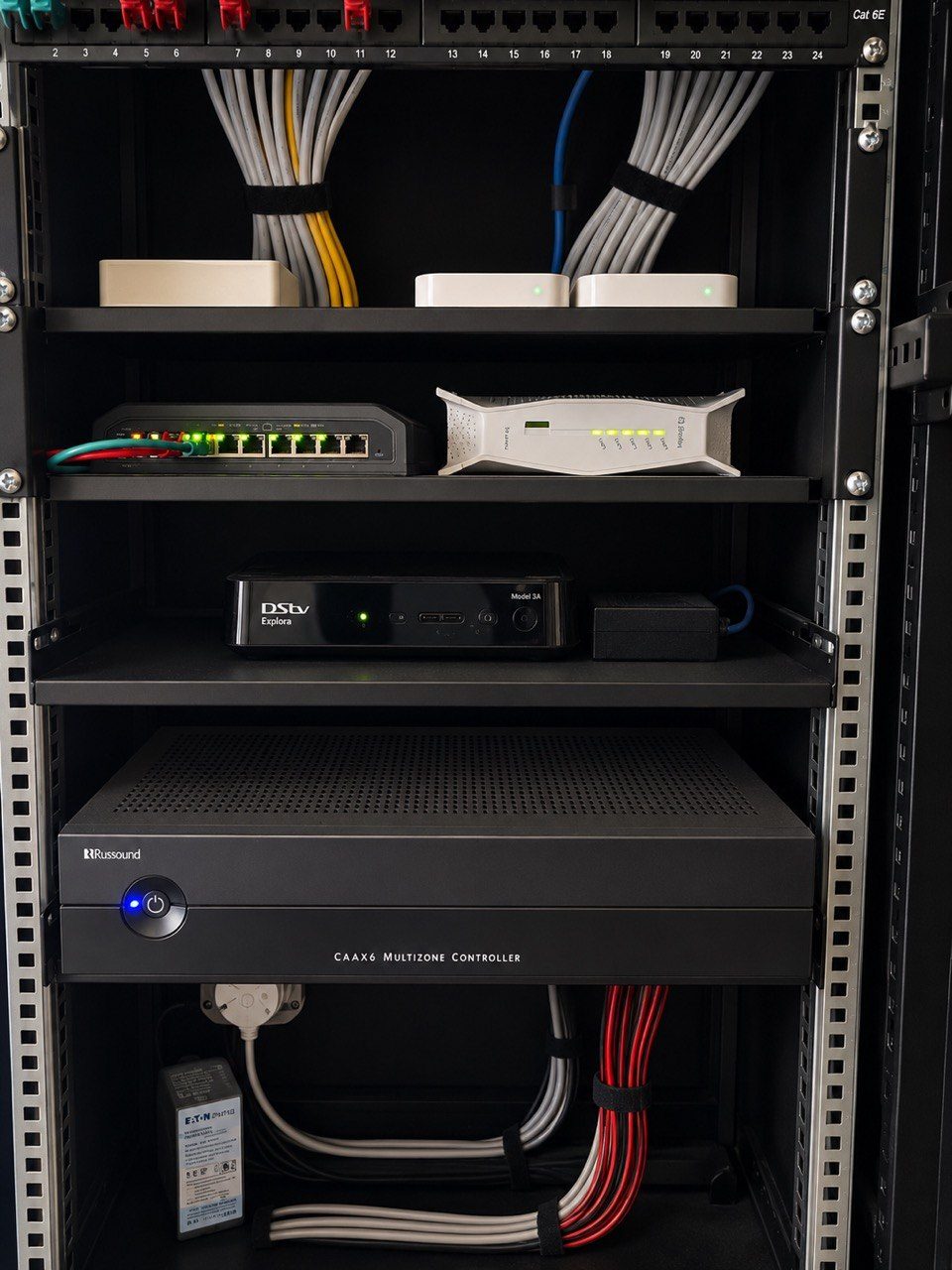
An IP CCTV camera does not only need a network point.
It needs power.
In most professional systems, that power comes from PoE: Power over Ethernet. The same network cable carries data and supplies power to the camera. It is clean, practical and reliable when designed properly.
But PoE is not magic.
A switch has limits. A camera has a load. Cable length matters. Infrared at night can increase demand. Outdoor cameras, PTZ cameras, long runs and groups of cameras on one switch all need thought.
If the PoE design is wrong, the fault may look like a bad camera when the real issue is power delivery.
A switch port is not the same as enough power
Many switches have enough physical ports for the camera count.
That does not automatically mean they have enough PoE capacity.
A 16-port switch may not be able to power 16 cameras at the level the cameras require. Some cameras draw modest power. Others need more, especially models with stronger infrared, heaters, varifocal lenses, microphones, analytics or PTZ movement.
The installer should check the total PoE budget, not only the port count.
For CCTV installation, this is a basic design responsibility.
Night-time load can expose weak design
A CCTV system may work perfectly during the day.
Then cameras start dropping at night.
One reason is infrared.
When IR illumination activates, some cameras draw more power. If the switch was already close to its limit, night-time load can expose the weakness. The client sees cameras offline or unstable at exactly the time they expect CCTV to be most dependable.
That is not acceptable.
The system should be designed with real operating load in mind, not only a daytime test.
Long cable runs need attention
PoE and data performance are both affected by cable quality and distance.
In a large home, estate property, warehouse or commercial site, cameras may be far from the recorder. Gates, boundary walls, outbuildings, loading bays and remote cabinets can push cable routes longer than expected.
Long runs should be measured honestly.
If the distance is too long, the answer may be a local cabinet, fibre link, properly powered switch or revised camera position. It should not be hope.
Poor cable, bad terminations, water ingress and excessive distance can all create intermittent camera faults.
Spare capacity is part of professional design
A CCTV system often grows.
The client adds a gate camera. A blind spot is discovered. A warehouse expands. A new staff entrance is created. A driveway camera needs replacing with a model that draws more power.
If the original switch was designed with no spare PoE capacity, every small expansion becomes awkward.
Professional design should leave room where practical:
- spare switch ports,
- spare PoE budget,
- clear patching,
- labelled camera routes,
- rack space,
- UPS capacity,
- documentation.
This connects directly to why patch panels should separate cameras, access points and control devices. Infrastructure should remain understandable as the site changes.
One overloaded switch can look like many camera faults
When several cameras behave badly at once, the cameras may not be the issue.
Look upstream.
An overloaded PoE switch, weak power supply, hot cabinet, failing uplink, poor UPS, damaged patch lead or bad cabinet ventilation can affect a group of cameras together.
This is why DG Technologies approaches professional CCTV as a networked system.
The camera is only the endpoint.
The switch, power and network path behind it decide whether the endpoint stays reliable.
PoE should be documented
On a proper handover, the next technician should be able to understand:
- which switch powers which cameras,
- which ports are spare,
- which cameras have higher power requirements,
- which cabinet feeds which area,
- which UPS supports the switch,
- which uplink carries the camera traffic.
Without that record, every support call starts with tracing.
With it, support starts with diagnosis.
The DG Technologies view
PoE planning is not a sales extra.
It is part of making CCTV dependable.
For Durban and KZN homes, estates, warehouses and commercial premises, DG Technologies designs camera systems around the full chain: camera, cable, PoE, switch, recorder, storage, network, power and support.
If the PoE design is weak, the camera system is weak.
Good cameras deserve proper power.