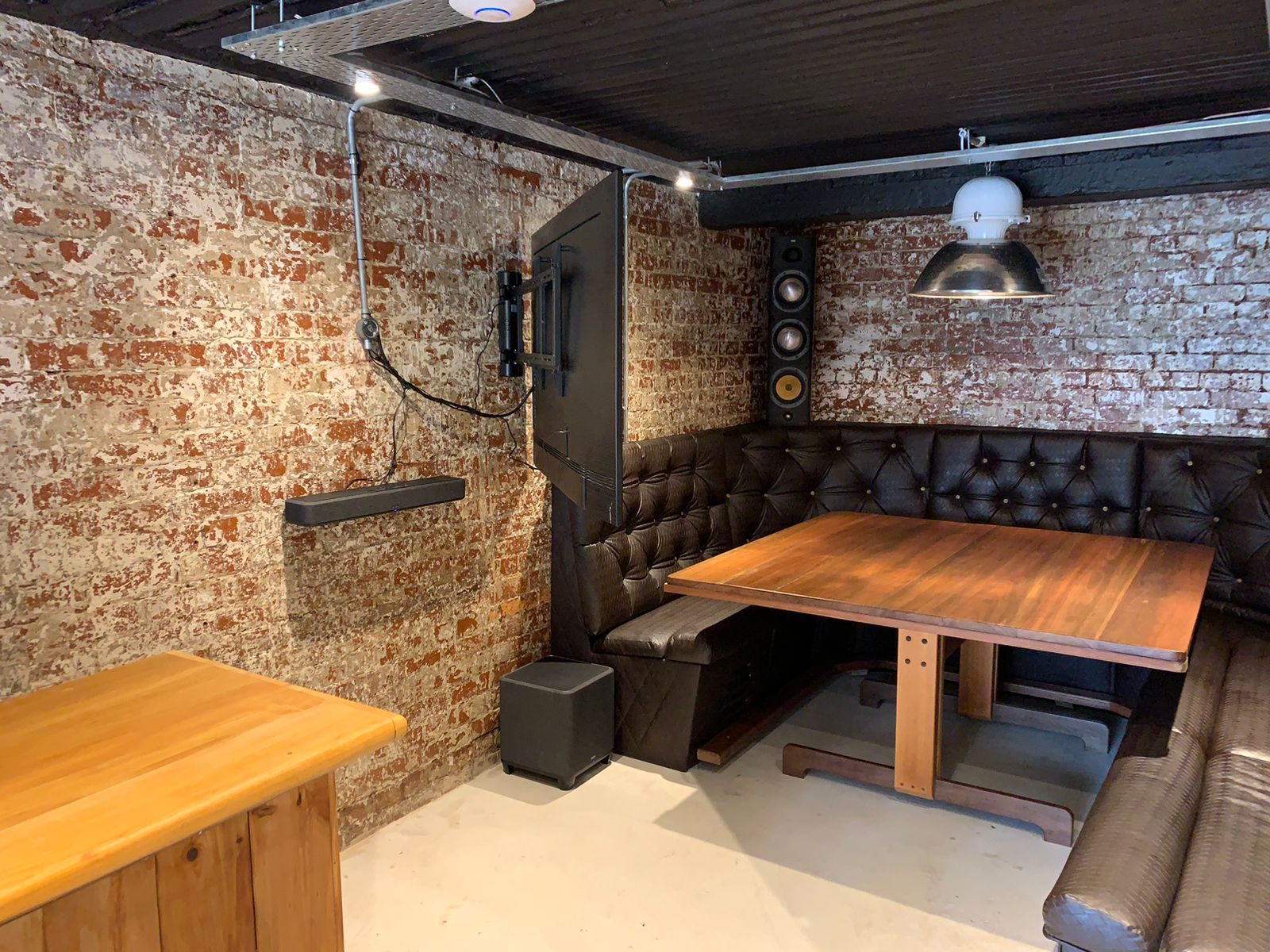
A motorised TV bracket is one of those features people love to watch.
Press a button. The screen moves. The room changes.
It feels simple when it works.
Behind that simple movement is a surprising amount of planning. The mechanism is only one part of the system. The wall structure, TV weight, cable route, control logic, safety, stopping positions and future service access all matter.
For home automation and premium AV rooms, a moving screen should never be treated as a normal TV installation with a motor attached.
Structure comes first
A fixed TV already needs proper support.
A motorised TV needs more.
The bracket may extend, rotate, tilt or move in a way that changes the load on the wall or cabinet. That leverage matters. The mounting surface must be strong enough, correctly fixed and suitable for the movement over time.
If the structure is weak, the mechanism may work during testing and become a problem later.
Movement exposes shortcuts.
Cables must move safely
When the TV moves, the cables move too.
That includes power, HDMI, network, optical, control cables or any connection feeding the screen. If those cables are too tight, poorly routed or trapped behind the mechanism, they can fail after repeated movement.
Cable movement needs a planned path.
It needs enough slack without looking messy. It needs protection from pinch points. It needs connectors that are not strained. It needs a route that still allows service access.
A motorised bracket should not be allowed to slowly destroy its own cabling.
Control logic matters
The client should not have to think about the mechanism.
If the TV is part of a Crestron or smart-home system, the movement should be tied into sensible control logic. A scene may move the screen, select the source, set the audio mode and adjust lighting. A shutdown command may return the room to a default position.
But automation must also be careful.
There may be safe positions, manual overrides, delay timing, source warm-up times and limits around when movement should happen.
The best control sequence feels boring because it works every time.
Safety should not be an afterthought
Anything that moves needs respect.
A TV bracket may be near furniture, people, children, pets, curtains, decor, cabinetry or loose objects. The installer must consider the movement path and what could interfere with it.
That does not mean the system has to be overcomplicated.
It means the mechanism should be tested in the real room, with the real furniture and the real use case.
Service access protects the investment
At some point, the TV may need to be replaced.
A cable may fail. A bracket may need adjustment. A control module may need diagnosis. A source may change. A firmware update may affect HDMI behaviour.
If the TV is motorised into a beautifully built but inaccessible detail, every future task becomes painful.
This is why AV planning should include maintenance before the joinery is closed.
The feature should serve the room
A motorised TV bracket should not exist only because it is impressive.
It should solve a real problem:
- hiding the screen when not in use,
- improving viewing angle,
- protecting an architectural feature,
- allowing one room to serve multiple purposes,
- making a meeting or entertainment area easier to use.
When the reason is clear, the feature feels premium.
When the reason is weak, it can feel like a gimmick.
Good automation is not about movement for the sake of movement.
It is about making the room adapt intelligently.