One of the clearest lessons my work has taught me is that a home technology project does not end when the last television is working and the client receives the handover.
I have supported one Zimbali home for more than a decade. The relationship began with the original audio, television and internet installation. Since then, the requirements have changed, equipment has failed, the wireless network has needed attention, a lighting control issue has appeared, cabling has been revisited and the system has been quoted and updated as the home moved into its next stage.
That is what long-term support actually looks like. It is not one dramatic replacement project. It is understanding the system well enough to make sensible decisions as the house, its equipment and the family’s habits change.
The original brief was only the beginning
The first work was a new-build technology installation. Audio, television and internet infrastructure had to be coordinated with the home and the equipment available at the time.
That original work created the foundation, but it could not predict every future change. Routers would be replaced. Streaming habits would develop. Wireless access points would need maintenance. Devices would be moved or upgraded. The control system would eventually need attention.
This is why I encourage new-build clients to think about the technical memory of the home from the start. Cable routes, equipment names, network details, programming records and photographs of concealed work can save a great deal of time years later.
A Wi-Fi complaint is sometimes a support-history problem
Over the years, the home developed the kind of issue that many homeowners describe simply as “the Wi-Fi is not working.” In practice, that can mean an access point is offline, a switch or power component has failed, a cable is unreliable, or a device is no longer communicating with the network properly.
In this case, the property was brought into a professionally managed UniFi environment. The network was monitored closely enough that access-point disconnections generated alerts instead of waiting for the homeowner to discover every failure first.
That changes the conversation. We can investigate a known event, compare it with the site’s history and decide whether the fault is a device, PoE supply, cable, switch, router or configuration issue. Monitoring does not eliminate faults. It shortens the time between the fault occurring and somebody knowing about it.
Our Zimbali Wi-Fi and networking service explains why I separate the fibre service from the router, switching, cabling, PoE and access-point layers before recommending another booster.
The system changed as the home changed
The work did not stay limited to internet access. Later support included audio and television requirements, a control keypad issue, structured cabling and equipment-related documentation for an insurance process.
None of those tasks can be handled properly by looking at one device in isolation. A keypad may depend on the control processor and network. A television problem may sit in the source, cabling, distribution or display. A wireless fault may be upstream of the access point. Equipment documentation may need to explain what was installed and what was actually found.
The useful information is the history connecting those events.
A good support relationship changes the upgrade decision
When I know how a system was installed, I can make better decisions about what should remain in service and what should be changed. I do not need to treat every older component as disposable simply because newer equipment exists.
The right question is usually whether the equipment is working, supportable and still appropriate for the way the home is used. Sometimes the answer is repair. Sometimes it is a new cable or a controlled reconfiguration. Sometimes the network or control layer needs to be modernised. The decision should follow testing and the client’s actual requirements.
That is also why a new-build technology partner should be chosen with the years after handover in mind. The person who knows why the cable was routed, how the rack was organised and which systems depend on the network can often diagnose a later problem much faster than somebody seeing the installation for the first time.
New technology does not remove the need for continuity
The property is still an active relationship. The company has changed its branding and technology has moved on, but the support responsibility remains familiar: understand the system, explain the options, solve the immediate problem and leave the next stage clearer than it was before.
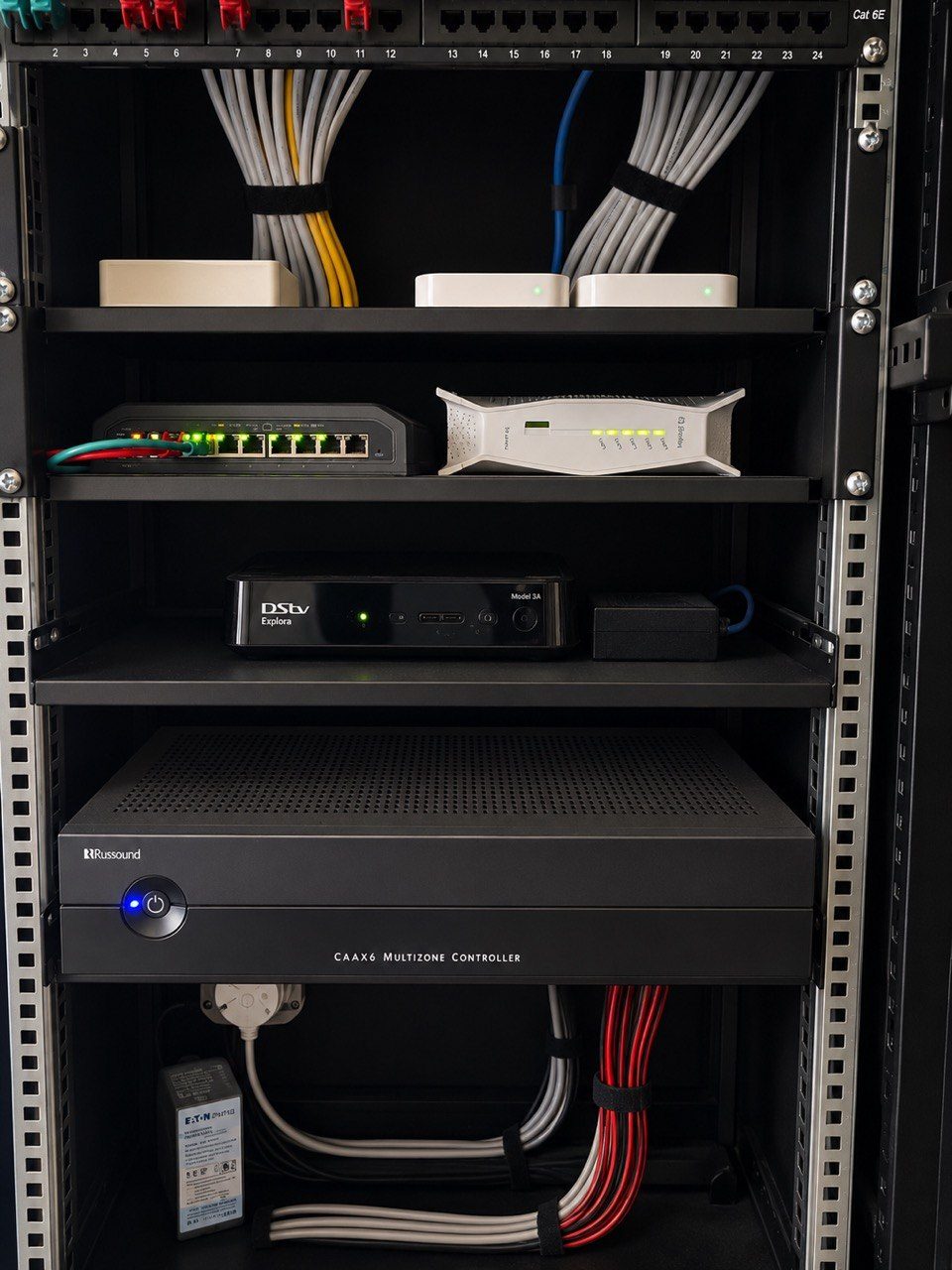
That is the part of integration work that is difficult to show in a product photograph. A home may have a Crestron processor, UniFi access points, distributed audio, televisions and structured cabling. The real value becomes visible when something stops working and the person attending already understands the story behind the installation.
For Zimbali new builds and established homes, DG Technologies can plan or support the network, automation, audio, television and control layers together. See the Zimbali Estate technology overview or our Zimbali home automation service for the wider approach.