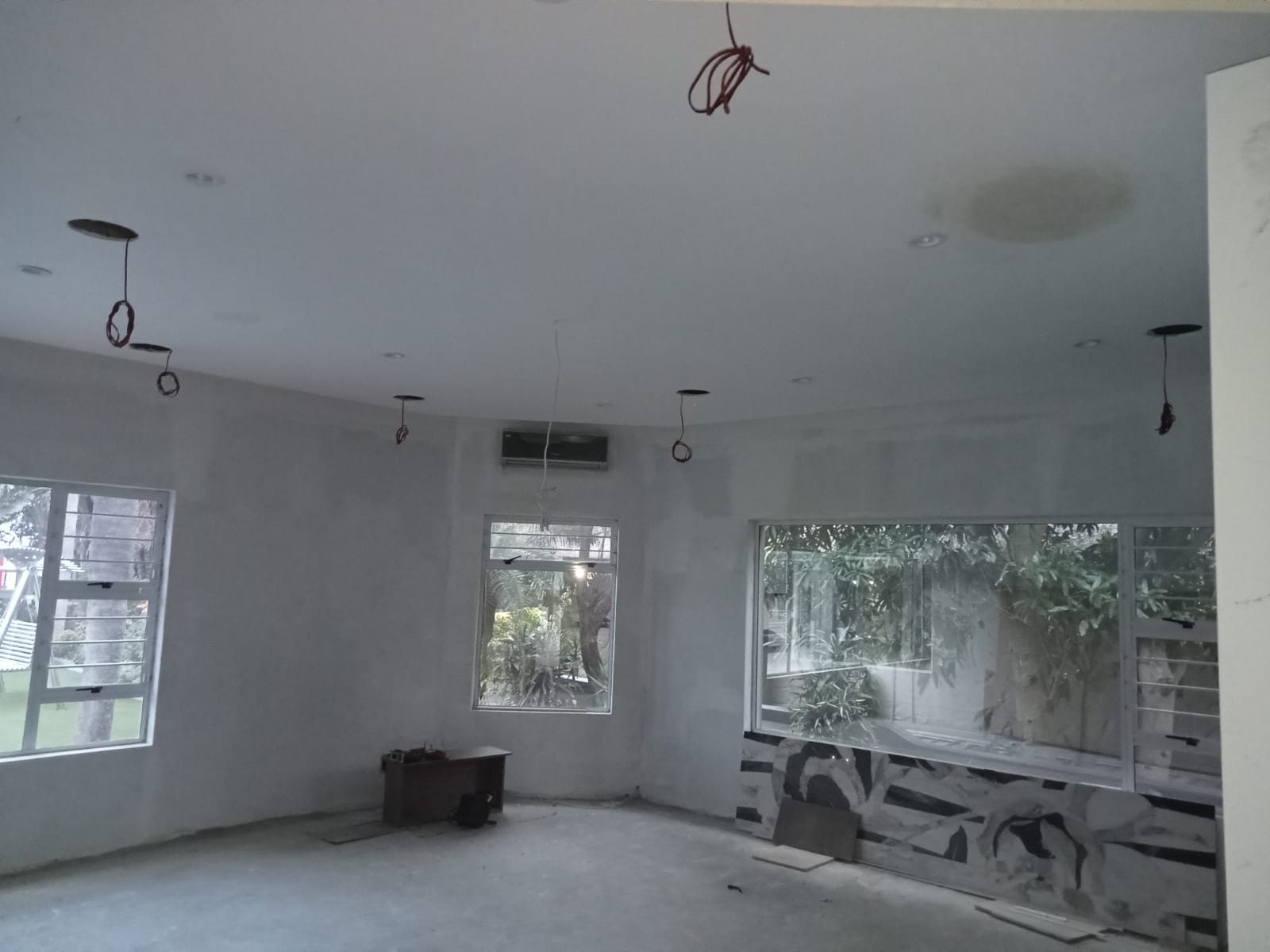
Ceiling spaces can look harmless once everything is closed.
They are not.
Inside the ceiling, fibre, data cables, speaker cables, lighting fittings, drivers, transformers, air-conditioning services and access routes may all be competing for space. If those services are not coordinated, small routing decisions can create serious faults later.
Fibre cables and downlights need safe separation.
Fibre does not like abuse
Fibre is excellent for long-distance data links, large properties, detached buildings and commercial networks.
It is also less forgiving than ordinary copper cable when handled badly.
Sharp bends, crushing, heat, poor protection and bad access can all create problems. A fibre link that should have been the strongest part of the network can become the fault if it is routed carelessly.
That is why fibre routes should be planned, protected and tested.
Downlights create more than light
Downlights, drivers and ceiling fittings can introduce heat and access challenges.
Modern LED fittings are far better than older lighting technologies, but ceiling design still matters. Low-voltage cables should not be casually laid across fittings, drivers or sharp metal edges. They should not be left where a future lighting change will damage them.
The cable route must assume that someone may service the lighting later.
If the lighting technician cannot see or understand the low-voltage cable, damage becomes more likely.
Separation makes maintenance easier
Good separation is not only about electrical safety.
It is about serviceability.
When fibre, data, speaker and lighting services are mixed randomly, future fault-finding becomes slow. A technician has to work out which cable belongs to which system, what can be moved, what must not be touched and where the route continues.
Clear routing makes future work calmer.
Messy routing makes every future visit risky.
Ceiling access should be deliberate
If a fibre route passes through a ceiling space, there should be realistic access for inspection and repair.
That access might be through a trap door, speaker opening, service hatch or planned ceiling access point. What matters is that the route is not permanently trapped behind finishes with no way to reach it.
On premium homes, the finish may be beautiful.
The hidden services still need to be maintainable.
The route should be photographed
Before ceilings close, photographs are valuable.
They show where fibre, data, speaker and control cables run. They show where ceiling services are nearby. They help the next technician avoid guessing. They also help when a future contractor wants to drill, cut, fit speakers, move lights or alter air-conditioning.
Photos are not decoration.
They are part of the technical memory of the building.
DG Technologies’ view
DG Technologies sees fibre and low-voltage routing as part of the engineering, not a finishing detail.
The best networks depend on routes that are safe, protected, accessible and documented. If the route is wrong, the equipment at each end cannot fully solve the problem.
Good cable planning is quiet.
You rarely see it when the project is complete, but you feel it every time the system keeps working.