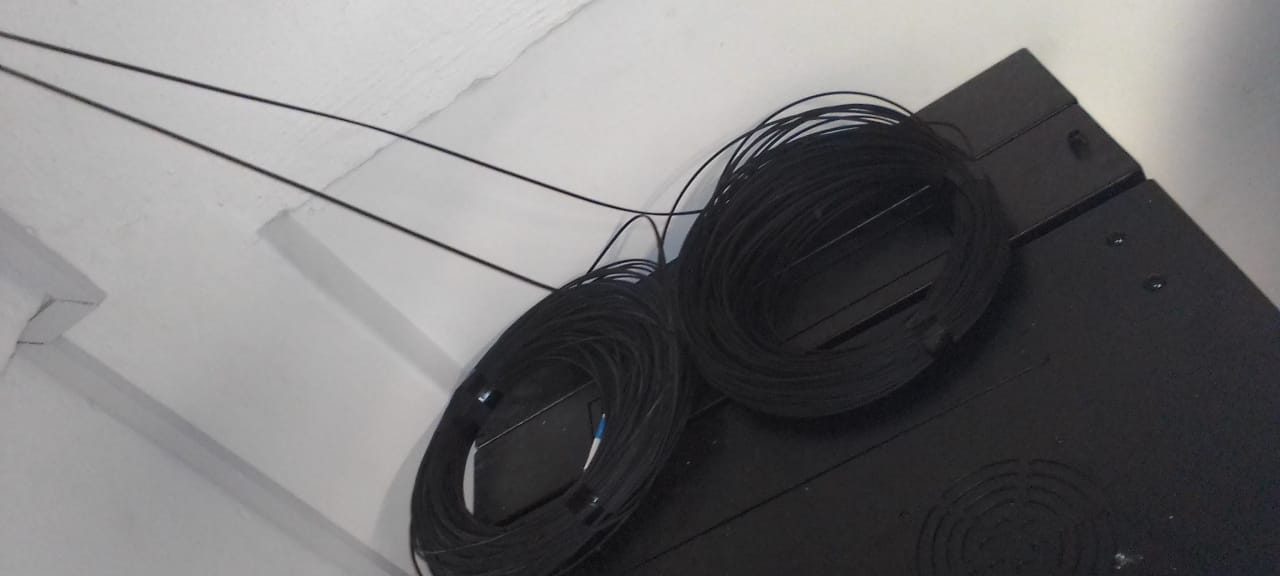
A cable that has not been tested is only a hope.
It may look fine. It may be labelled. It may disappear into the correct conduit. It may arrive at the correct cabinet. But until it has been tested, nobody truly knows whether it will perform when the equipment is installed.
That is why every low-voltage cable should be tested before finishes.
The expensive part is not always the cable
Replacing a cable during first fix is normally manageable.
Replacing a cable after ceilings, plaster, stonework, wallpaper, cabinetry and paint is a different conversation.
The cost is no longer just the cable. It becomes access, labour, disruption, making good and sometimes accepting a compromised route because the proper route is now closed.
This is why cable testing should happen while the building is still forgiving.
Different cables need different checks
Not every low-voltage cable is tested the same way.
A data cable may need continuity, pair order and performance testing. A speaker cable may need continuity and polarity checks. A fibre route may need careful handling and a suitable test method. A CCTV point may need confirmation that it reaches the correct cabinet and can support the intended device. A TV or HDMI path may need practical testing with the correct extender or source plan.
The point is not to make the paperwork look impressive.
The point is to know what works before the site moves on.
Cable labels are only useful if the cable is correct
Labels matter, but labels can be wrong.
On busy sites, cables can be pulled to the wrong point, swapped between rooms, extended badly, damaged by other work or left in a ceiling where nobody expects them. A label is useful only when it is backed by testing.
Good testing should answer:
- Where does this cable start?
- Where does it end?
- Is it the correct cable for the device?
- Has it been damaged?
- Is the pair order correct?
- Is the route accessible if it must be replaced?
- Does the label match the real location?
That knowledge saves hours later.
Testing protects the client and the contractor
Cable faults often turn into arguments.
The AV team says the cable is damaged. The electrician says it was installed correctly. The builder says the ceiling is already closed. The client just wants the system to work.
Early testing reduces those arguments.
If a problem is found before finishes, the team can fix it while access still exists. If a cable passes and is documented, everyone has a clearer record of the installation state at that point in the project.
That is good project management.
The last metre matters too
Many cable problems happen near the end of the run.
The cable may be kinked behind a TV box. It may be too short inside a cabinet. It may be terminated badly. It may be damaged where it exits conduit. It may be cut during cabinetry or ceiling work. It may be trapped behind a bracket.
Testing should not only confirm that the cable exists.
It should confirm that the cable can actually be used.
DG Technologies’ view
DG Technologies treats cable testing as part of the installation, not an optional extra.
The hidden cable becomes the foundation for Wi-Fi, CCTV, audio, TV distribution, Crestron control, intercoms and future support. If that foundation is uncertain, everything built on top of it becomes uncertain.
A premium installation should not rely on luck inside the walls.
It should be tested before the walls disappear.