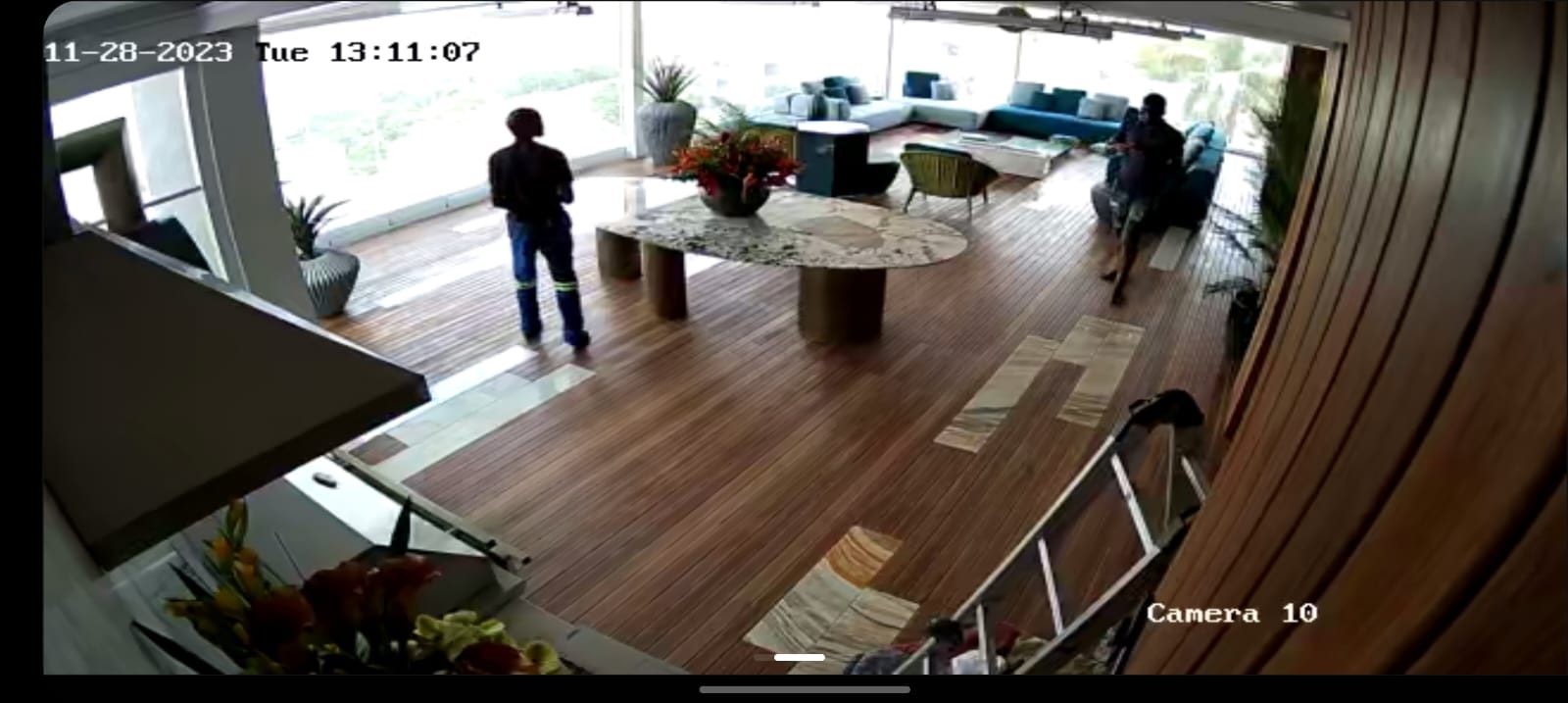
A CCTV system can show movement without giving useful evidence.
That is one of the most common disappointments after an incident. The client opens the footage, finds the right time, sees someone moving through the property, and then realises the person is too far away, too backlit, too high under the camera, or too small in the image to identify properly.
The system recorded the event.
It did not record enough detail.
That distinction matters.
For CCTV installation, the question should not only be, “How many cameras do we need?” A better question is, “What do we need to prove later?”
Movement is not the same as identification
A wide camera is useful.
It shows context. It helps you understand direction of travel, which gate was used, which vehicle entered, which door opened and how an event unfolded.
But wide cameras are not always strong evidence cameras.
If a person occupies a tiny part of the image, the footage may be useful for awareness but weak for identification. You may know someone walked past the driveway, but not who they were. You may know a vehicle entered, but not read the number plate. You may know a staff member crossed a loading bay, but not what they were carrying.
Professional CCTV design separates overview from identification.
Choke points are where evidence improves
The best face capture usually happens at predictable points:
- pedestrian gates,
- entrance doors,
- reception counters,
- staff clock-in areas,
- garage entrances,
- passageways,
- staircases,
- loading bay doors,
- vehicle access points.
These are places where people naturally slow down, turn, pause or pass through a narrower route.
That is where a camera can be aimed with more intention.
Instead of trying to identify a person from a wide garden camera thirty metres away, the system should capture them where the layout gives you a better chance.
Camera height affects what you see
Mounting a camera too high can make a site look neat.
It can also give you excellent footage of hats, heads and shoulders.
High mounting is sometimes necessary for protection, coverage or aesthetics. But if every camera is high and angled sharply down, the system may lose face detail. On large homes and commercial sites, we often need a mixture: high overview cameras for context and better-positioned cameras for doors, gates and internal choke points.
The camera height must match the job the camera is expected to do.
Lighting can make or break evidence
Night footage is where many CCTV systems expose their weakness.
A camera can have strong infrared and still produce poor evidence if the scene is wrong. Reflective surfaces, white walls, glass, headlights, garden lighting, shadows and backlighting can all affect the image.
Sometimes the answer is not a more expensive camera.
Sometimes it is a better angle, a better mounting position, controlled security lighting, or separating overview and identification cameras.
This is why camera positions should be checked on site and not only marked on a drawing.
Evidence also needs time and access
Good evidence is not only image quality.
It also needs retention and retrieval.
If the recorder overwrites footage too quickly, the evidence may be gone by the time the client realises they need it. If nobody knows how to export the clip, the footage exists but cannot be shared properly. If the cameras are badly named, finding the correct event takes longer than it should.
This is why handover and maintenance matter after the installation.
The best CCTV system is not the one with the most impressive camera count.
It is the one that answers the right questions when something happens:
- who was there,
- where they entered,
- where they went,
- what happened,
- when it happened,
- and how quickly the footage can be found.
Design for the moment after the incident
When we design CCTV, we think about the day the client phones and says, “Something happened last night.”
At that point, the system has to perform.
Not as a brochure.
As evidence.
That means camera placement, lens choice, mounting height, lighting, recorder capacity, naming, network reliability and handover all have to work together.
A camera that only shows movement may make a client feel covered until they need proof.
A professional CCTV system should be designed so that when the footage matters, it gives you something worth using.