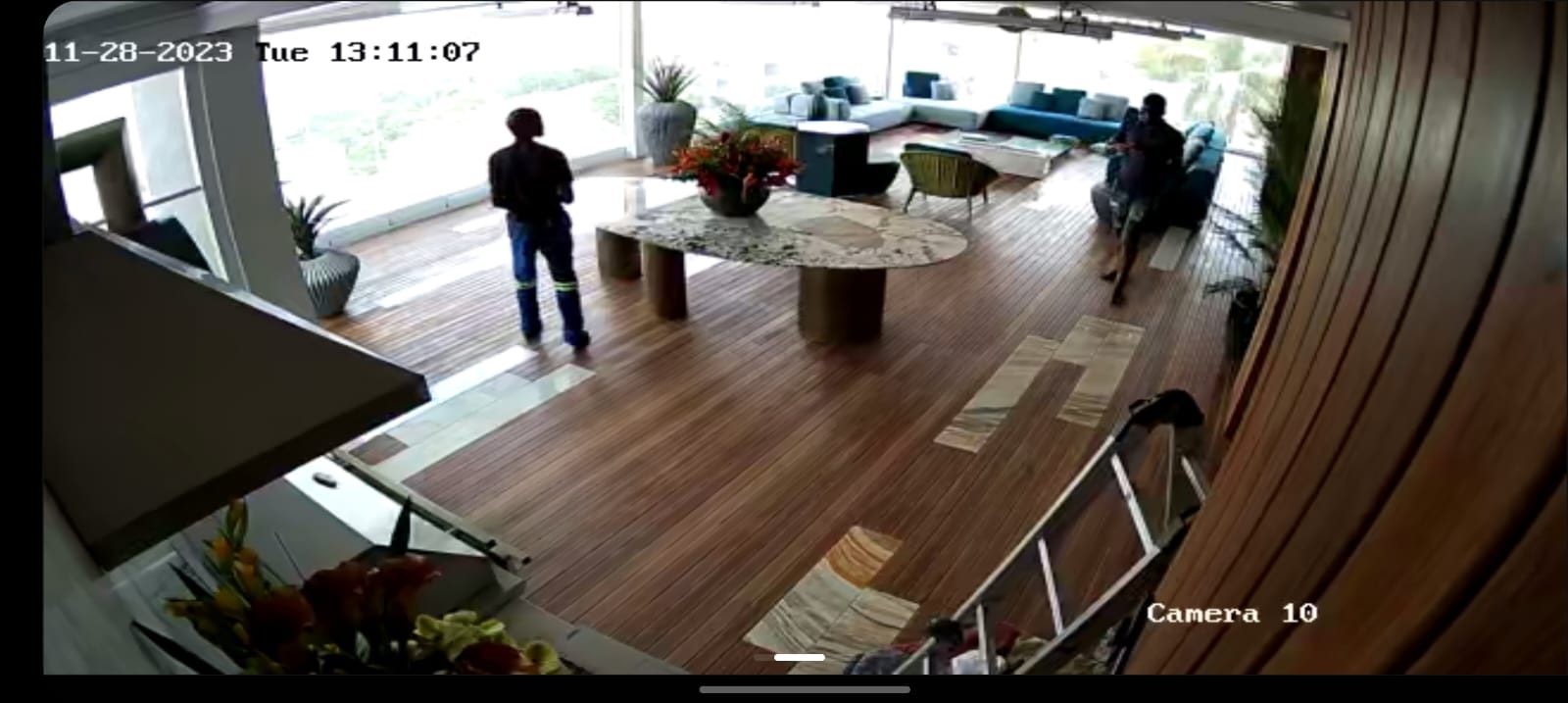
Not every security problem needs a full CCTV system.
Sometimes the property has no Wi-Fi, no network cabinet, no recorder, no cable route and no appetite for a major installation. But there is still a real problem that needs evidence.
In that situation, a targeted 4G camera can make sense.
The important word is targeted.
Start with the security purpose
A 4G camera should not be chosen because it sounds convenient.
It should be chosen because the risk is clear.
What must the camera see?
Is the goal to see a gate, trapdoor, driveway, storeroom, entrance, roof access, container, temporary site or isolated area?
Does the client need live viewing, recorded evidence, motion clips or a deterrent?
If the purpose is vague, the camera choice will be vague.
No Wi-Fi changes the design
When there is no Wi-Fi, the camera needs another communication path.
That may mean a camera with 4G built in, or a small camera connected through a 4G router. Either way, the system now depends on:
- mobile signal,
- SIM card,
- data bundle,
- power,
- storage,
- app access,
- and where the camera can be mounted.
Those details matter.
If the mobile signal is poor, the app will feel poor. If the data runs out, remote viewing may stop. If the power supply is easy to unplug, the camera is vulnerable.
Storage must be understood
Some 4G camera setups record to SD card. Some use cloud storage. Some do both. Some rely heavily on motion recording to preserve space and data.
The client needs to understand what they are getting.
How many days of footage are expected?
Can clips be exported?
What happens if the camera is stolen?
Is cloud storage active?
Is there a subscription?
Can the police be given useful footage if something happens?
Those questions should be answered before the camera is treated as a security solution.
Discreet placement can matter
Sometimes the camera is there because theft is already happening.
In that case, a very obvious camera may become the next item to steal. A discreet position may be more useful than the most visible one.
But discreet does not mean hidden so badly that the view is useless.
The camera still needs to see the event clearly enough to matter.
That usually means balancing three things:
- protection from tampering,
- useful field of view,
- and practical power/network access.
A 4G camera is not a substitute for a serious site system
I would not use a small 4G camera as a lazy replacement for proper commercial CCTV where a proper recorder, PoE cameras, structured cabling and monitored storage are required.
For a warehouse, estate, office park or large commercial site, the design should usually be more robust.
But for a specific blind spot, temporary area, remote outbuilding or small security problem where infrastructure does not exist, 4G can be the right tool.
The scale of the risk decides the scale of the system.
Data and power are part of the quote
The camera is only one part of the solution.
The client also needs to understand:
- who supplies the SIM,
- who loads data,
- how much data the camera may use,
- whether the camera has backup power,
- where the charger or solar supply will sit,
- who has app access,
- and how footage will be retrieved.
Without that, the camera may work technically but fail operationally.
Simple can still be professional
A small 4G camera solution can still be professionally thought through.
It should have a clear purpose, sensible placement, realistic data expectations, proper app handover and a tested recording method.
That is the difference between throwing a camera at a problem and designing a small security answer.
Sometimes the right system is not the biggest one.
It is the one that captures the evidence the client actually needs.
Related reading: CCTV installation Durban and KZN and who should have access to your CCTV app.