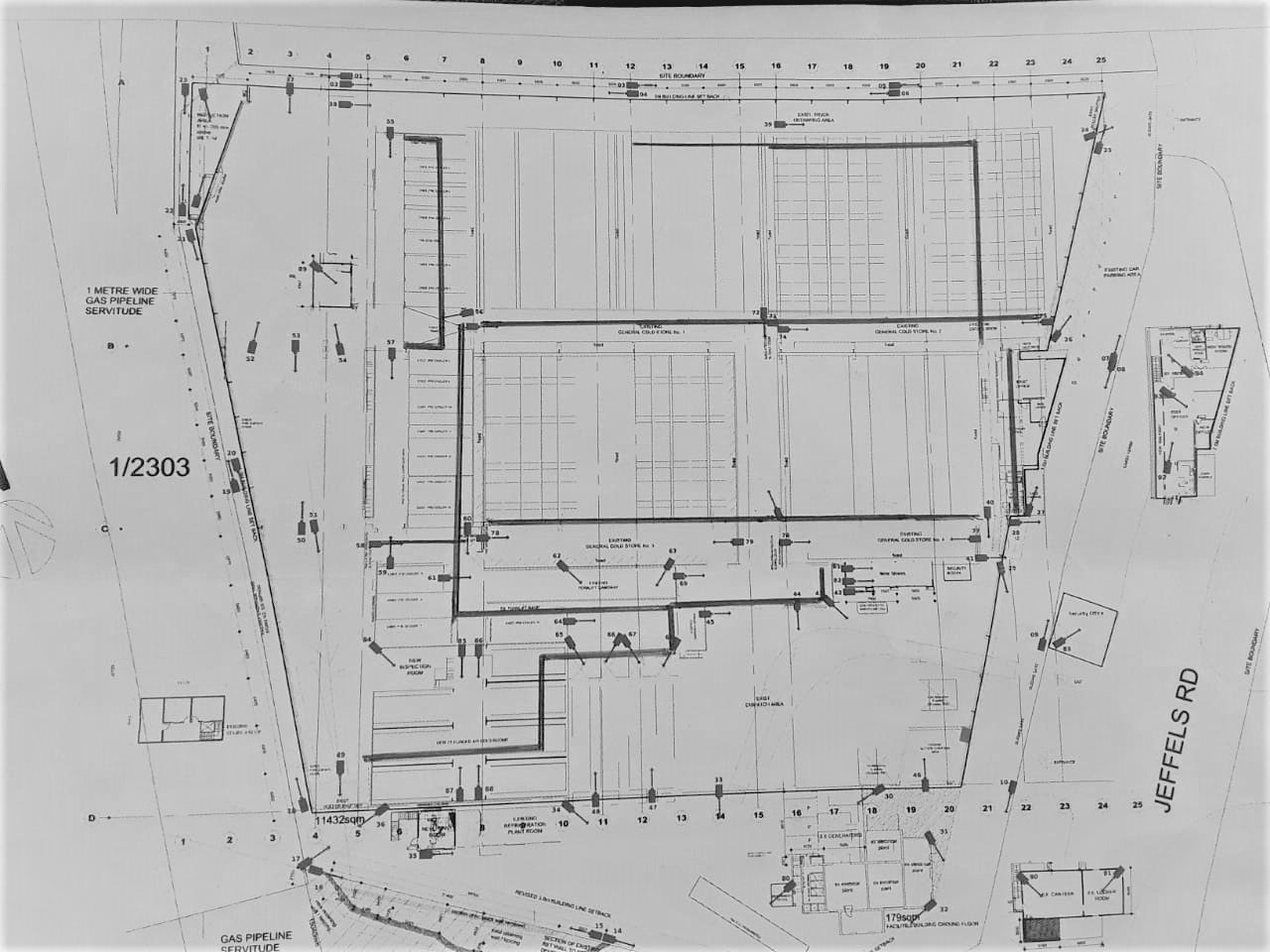
When we first set foot on the Ethekwini Cold Stores site, known to us internally as ECS, we were not looking at a simple technology problem.
We were looking at infrastructure debt.
Years of add-on installations had left the site with unmanaged cable runs, ageing routes, unreliable camera feeds and a network that was struggling under its own weight.
This is what we call technical debt.
For confidentiality and security, we do not publish sensitive camera layouts, operational blind spots, access procedures or exact site coverage. But the project is important to mention because it shows what commercial CCTV becomes when the site is large, operationally busy and technically demanding.
The Cost of Neglect
For an industrial client, a failing CCTV network is not just an inconvenience.
It is a security risk and an operational risk.
Inconsistent frame rates, dropped camera feeds, unreliable cabling, corroded connections and unclear cabinet structure make it harder to trust footage when it is needed. In a cold store or warehouse, CCTV may support gate review, dispatch, receiving, staff movement, loading-bay incidents, access events and management investigations.
If the system cannot be relied on, the business loses more than a picture.
It loses confidence.
Our Approach: Strip Back to Build Up
We did not begin by simply mounting new 4K cameras.
Our process followed a recovery roadmap:
- Audit & Trace: We mapped every existing run to identify what was salvageable and what was catastrophic.
- Structural Remediation: We installed new professional-grade cable trays and wireways.
- Fibre Backbone: We moved the design toward fibre-linked distribution cabinets so distance and bandwidth were treated properly.
- Active Management: We moved all gear into centralised, thermally managed cabinets.
The design had to be specific: 4MP camera planning, low-light capability, IP67 selection for exposed and cold-store areas where appropriate, PoE switching, cabinet zoning, a 128-channel NVR architecture, long-term recording storage planning, fibre links between cabinets, SFP uplinks and labelled CCTV containment.
That is the difference between a camera installation and an industrial surveillance system.
The Result
The site moved toward a cleaner, more supportable surveillance platform with HikCentral visibility and Jarrison access-control context.
Because the foundation was addressed, the system became easier to understand, maintain and extend. Future camera faults, access-control questions, viewing monitor requirements, UPS planning and network changes could be handled against a documented infrastructure instead of a mystery.
This work is now documented publicly in our Ethekwini Cold Stores industrial CCTV case study.
The Lesson
Never build a high-end CCTV system on a low-end foundation.
For large warehouses, cold stores and industrial sites in Durban and KZN, the visible camera is only the endpoint. The real system is the cabinet design, fibre, PoE, recording, containment, labelling, power protection, software integration and support process behind it.
