Some commercial CCTV projects are not really camera projects.
They are network projects with cameras on the ends.
The C&J Services CCTV work is a good example of that. The visible part of the job was the camera coverage, but the important design decisions sat behind the scenes: recorder capacity, storage, cable routes, cabinet locations, fibre links, PoE switching, remote viewing and how the owner would actually use the system during the day.
That is the part people often miss when they compare CCTV quotes.
The brief was bigger than adding cameras
A simple CCTV quote counts cameras.
This project needed more than that.
The work included a larger Dahua IP CCTV backbone, 26 new cameras, 26 new cable points, cabinet work, fibre between sections of the site, PoE switching, additional storage, larger recorder capacity and a viewing point that made the system useful from the office.
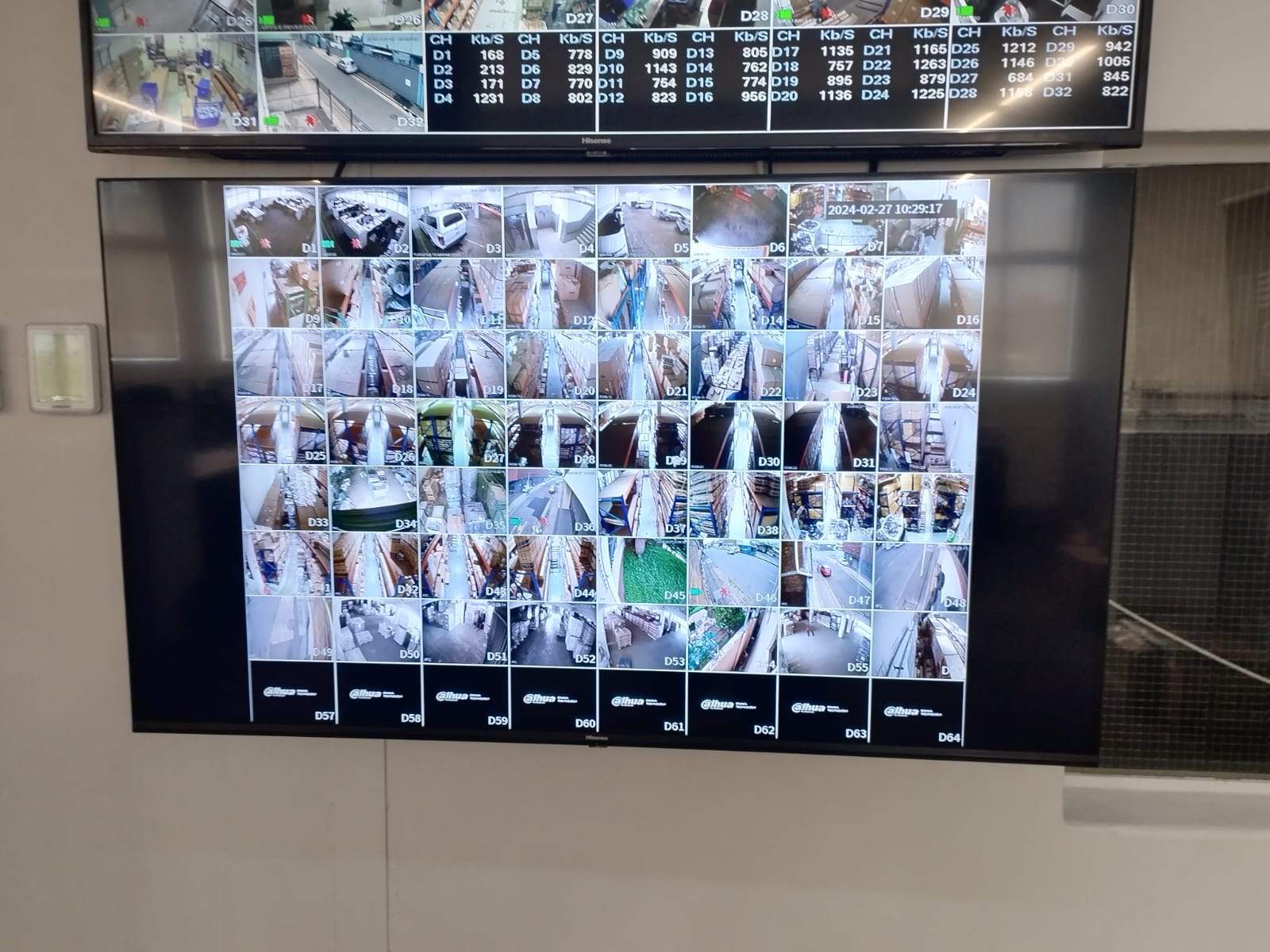
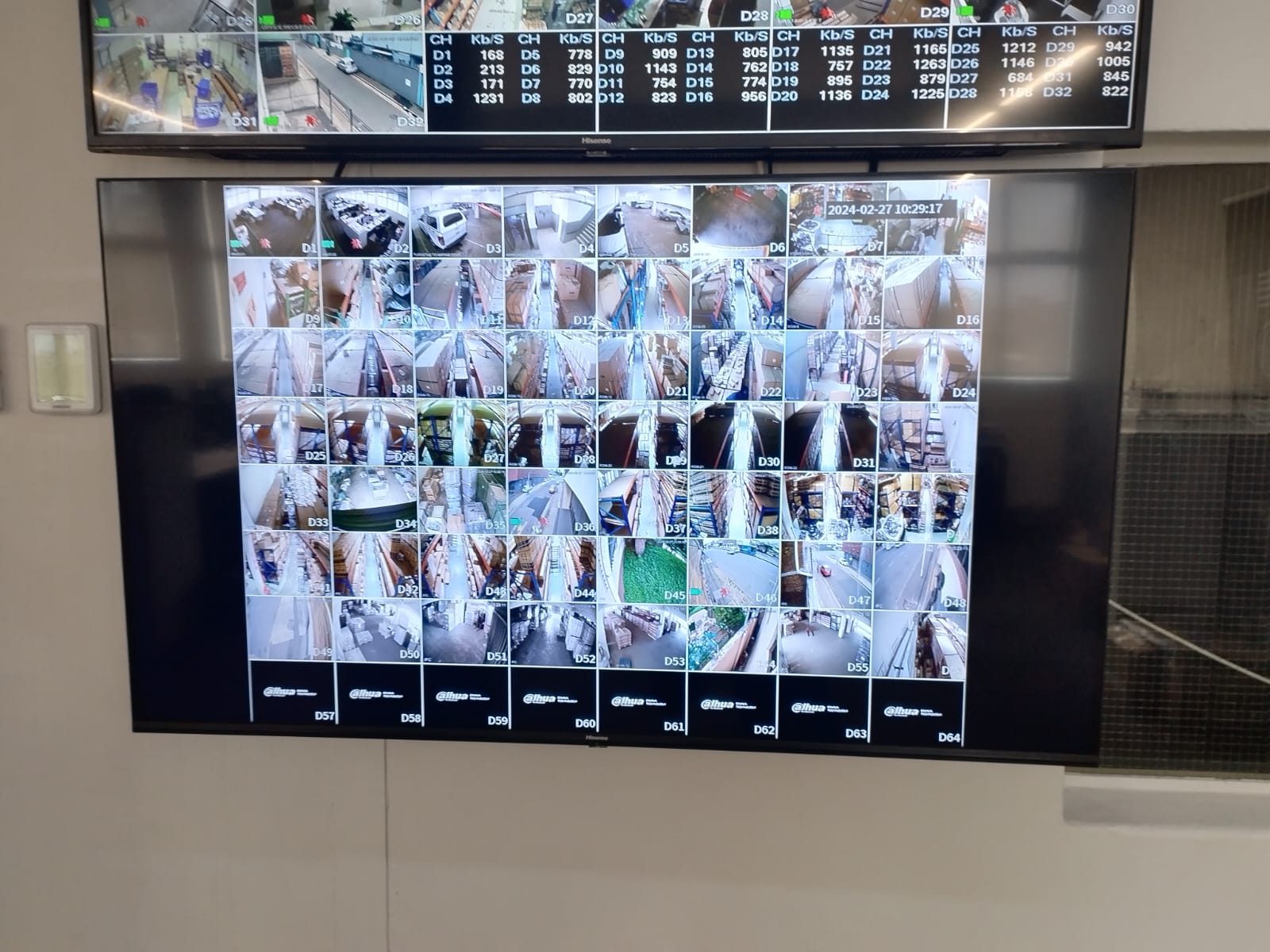
For a business owner, the end result is not meant to be technical. Shaun needed to be able to sit at his desk and understand what was happening across the site quickly. That meant the display position and camera layout mattered just as much as the NVR and cameras.
One system can cover more than one area
On larger business sites, it is tempting to install separate recorders in separate areas.
Sometimes that is necessary.
But often the better solution is to design one coherent system, then link sections of the premises back to a central recording and viewing structure.
That requires proper networking.
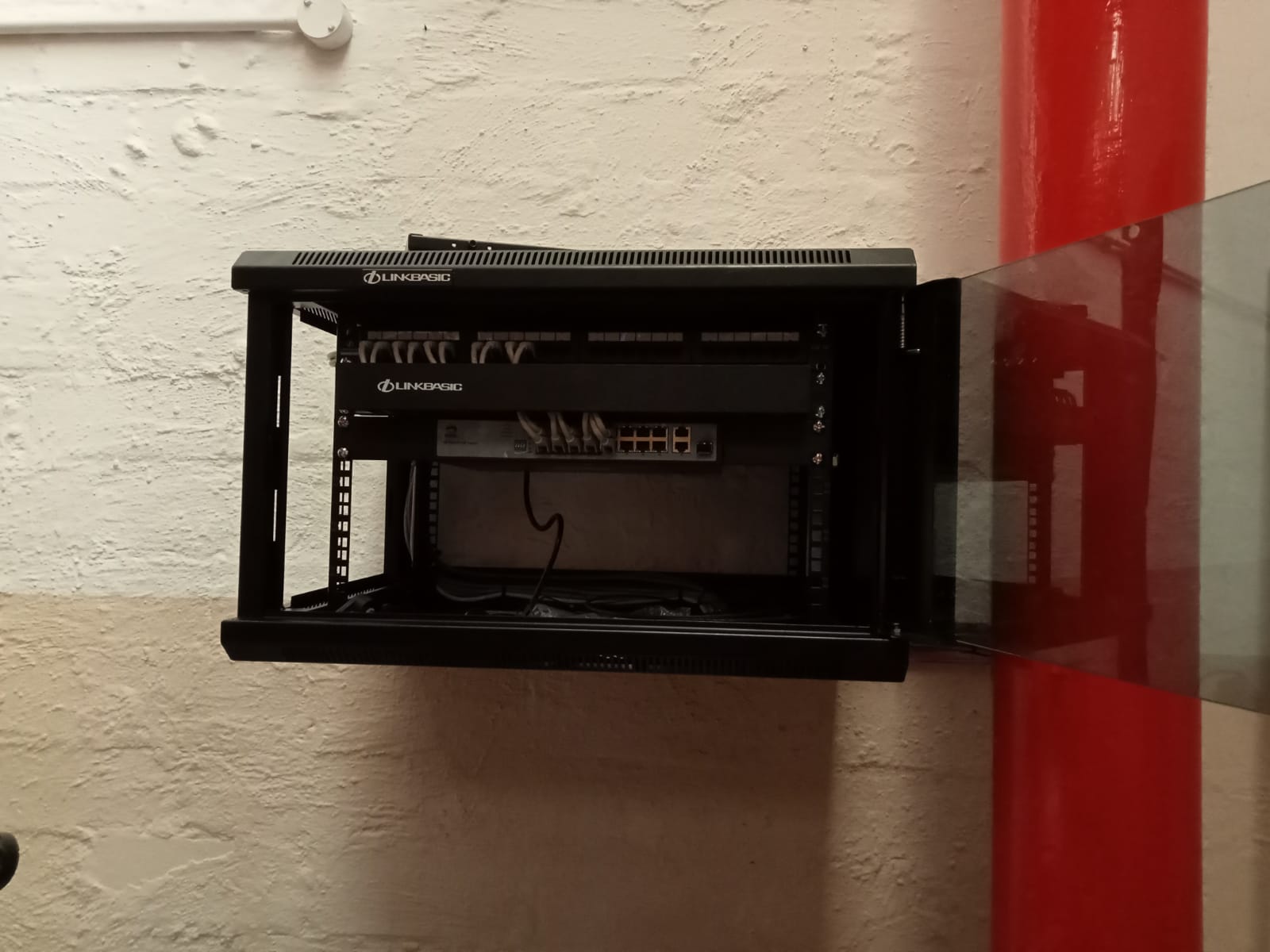
The C&J design involved linking areas together so 26 new cameras could be viewed and recorded as part of one CCTV system. The proposal included fibre-linked cabinet work, PoE switching and recorder capacity planning rather than treating each area as an isolated island.
This is the same principle we apply on larger commercial CCTV installations across Durban and KZN: if the site behaves like one business, the CCTV system should be planned as one business system.
Fibre and switching are part of CCTV
Modern CCTV depends on IP.
That means a camera is not just a camera. It is a network device needing power, bandwidth, addressing and a reliable route back to the recorder.
For C&J, the infrastructure mattered because the system had to support a meaningful camera count, expansion and multiple viewing requirements. The design included managed switching, fibre/SFP links, patching and cabinet planning so the system could grow beyond a small recorder-and-camera package.
That is why DG Technologies treats CCTV installation and network infrastructure as connected disciplines.
If the network path is weak, the camera system will eventually show it.
The viewing point was part of the design
Many CCTV systems fail in daily use because nobody thinks properly about the person looking at the footage.
A phone app is useful.
It is not always enough for a business.
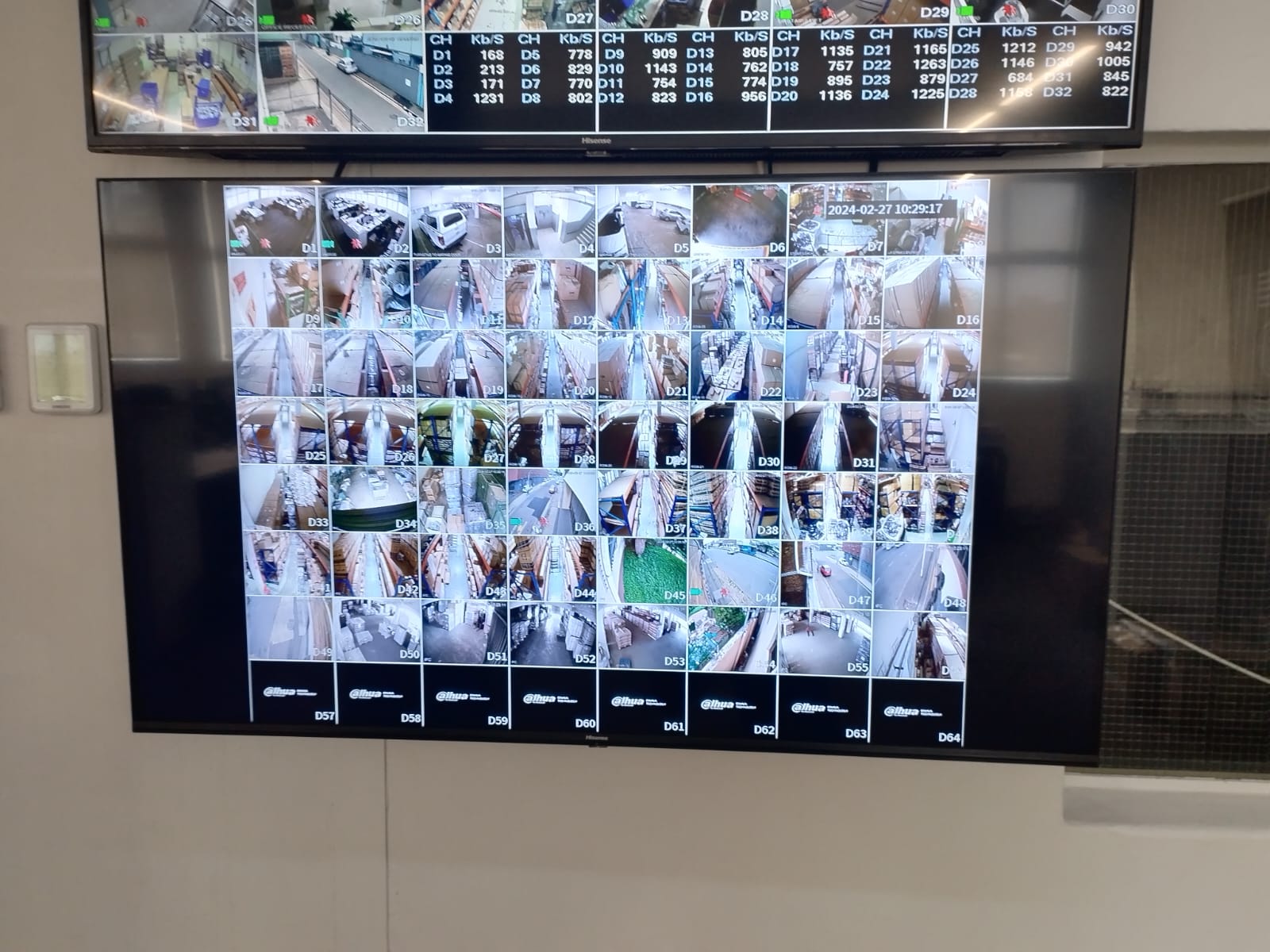
For C&J, the office viewing point mattered. The two large monitors gave Shaun a practical way to keep important views visible from his desk without constantly opening an app, logging into a recorder or searching through small thumbnails.
That is not a luxury detail. It is an operational detail.
The system should fit the way the client works.
Recorder capacity cannot be guessed
Recorder capacity is another area where cheap CCTV quotes become misleading.
The NVR must be sized for camera count, resolution, bit rate, storage expectation and future expansion. In the C&J proposal, recorder capacity and additional storage were part of the discussion because the system was not being designed as a short-term four-camera package.
On a commercial site, footage often becomes useful after the fact.
A delivery dispute.
A stock question.
A staff incident.
A gate event.
If the system records poorly, stores too little or becomes too hard to search, the camera count does not matter.
Cabling still decides reliability
The cleanest CCTV app in the world cannot fix a poor cable route.
Commercial sites create difficult installation conditions: concrete beams, existing structures, high shelves, plant equipment, ceiling access, working businesses and areas where downtime is not acceptable.
For this reason, cable routes, conduit, cabinet positions and draw access need to be planned before cameras are mounted.
What C&J demonstrates
The C&J project demonstrates a simple point:
Commercial CCTV is not about selling as many cameras as possible.
It is about designing a system that the business can actually use.
That includes:
- useful camera views,
- proper recorder capacity,
- storage planning,
- fibre and network design,
- PoE switching,
- cabinet layout,
- display planning,
- remote viewing,
- service access,
- future expansion.
Those decisions are the difference between a CCTV installation and a CCTV system.
For DG Technologies, that is where the real work sits.