When someone asks me what the best WiFi is in Durban, my answer is usually Ubiquiti UniFi.
But I need to be clear about what I mean by that.
I do not mean that one UniFi access point thrown into the wrong ceiling automatically becomes the best WiFi. I do not mean that the brand name fixes bad cabling, bad placement, weak PoE, poor routing or a network cabinet that nobody understands.
I mean that, for the type of work DG Technologies does in Durban, Umhlanga, Ballito, Simbithi, Zimbali, Mount Edgecombe and larger KZN properties, UniFi has become one of the most practical professional WiFi platforms to design around.
I have been using Ubiquiti equipment for many years. It has been part of home networks, estate homes, commercial sites, CCTV networks, holiday homes, offices, outdoor coverage problems and smart-home systems where the WiFi cannot be treated as a side item.
That history matters.
The best WiFi is not only the fastest product on a shelf.
It is the system that still makes sense when the client phones years later and says, “The office is weak,” “The cameras are offline,” “The music app is not seeing the rooms,” or “The fibre company changed the router and now nothing works properly.”
Why UniFi became our usual answer
UniFi suits the work we do because it behaves like a system rather than a collection of loose boxes.
A proper installation can include access points, PoE switching, routing, VLANs, guest networks, remote visibility, device lists, firmware management and a controller view of the network. That gives us a way to support the installation instead of guessing.
In a small flat, almost any decent router may be enough.
In a large Durban home, a coastal estate property or a business site, the requirements are different. The network may support:
- family WiFi
- guest WiFi
- staff devices
- smart TVs and streaming
- Sonos or other networked audio
- CCTV cameras and recorders
- Crestron Home or other control systems
- gate and intercom equipment
- solar and inverter monitoring
- remote support
- home offices and video calls
That is not “just WiFi” anymore.
That is infrastructure.
UniFi gives us a professional way to plan and manage that infrastructure without forcing every project into enterprise pricing that does not suit the client.
Durban homes are hard on WiFi
South African homes are often difficult wireless environments.
Many Durban and KZN properties are built with concrete, brick, thick walls, slabs, steel, glass and split-level layouts. Then the homes often open into patios, pools, garages, staff areas, gardens and gatehouses.
One router in a cupboard is not going to understand that building.
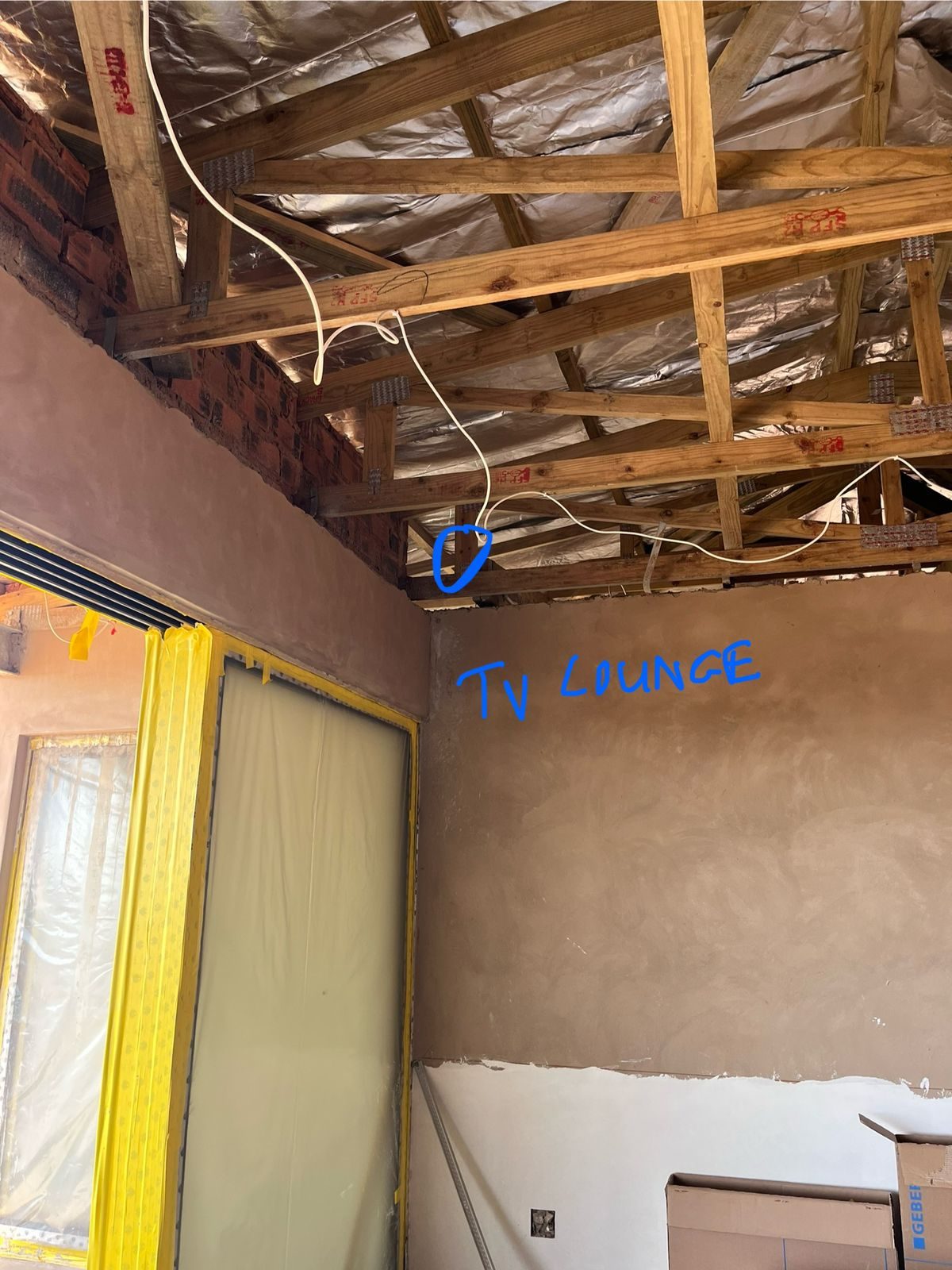
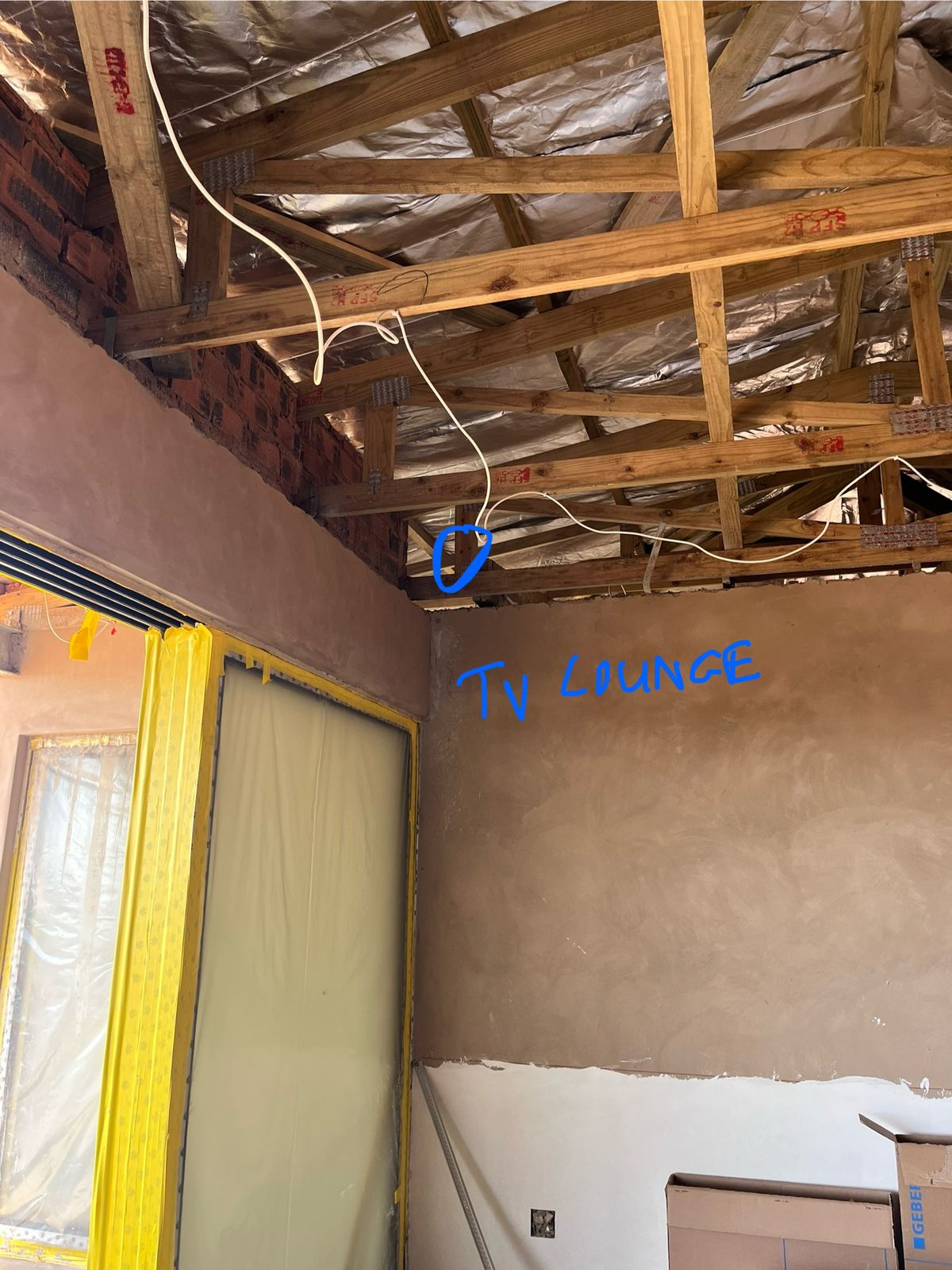
That is why the best WiFi design usually starts with access point placement, not a product box. We need to know where people actually use the network, where cables can be run, where ceiling access exists, where the rack is located and what other systems depend on the network.
In new builds and renovations, this should happen before ceilings close. On retrofit work, we have to work with what the building gives us, but the principle stays the same: a WiFi access point should be placed because the room needs coverage, not because that was the easiest place to hide a cable.
Wired access points beat casual boosters
Most WiFi frustration gets sold a quick answer: add a booster.
Sometimes that is acceptable for a temporary or very small problem.
For the properties we normally work on, I prefer wired access points wherever possible. A wired AP has a proper data path back to the switch. It can be powered by PoE. It can be named, monitored and managed. It is part of the network rather than a random device repeating whatever weak signal it can hear.
That difference becomes important in larger homes and businesses.
If a wireless booster is repeating a poor signal, the client may see more bars but still have a weak experience. Video calls still freeze. Phones still cling to the wrong area. Streaming still buffers. Camera apps still struggle.
A wired UniFi access point gives the network a much better foundation.
The best WiFi has a proper cabinet behind it
The visible access point is only the end of the system.
The real quality is often in the cabinet:
- is the router managed properly?
- are the access points cabled back cleanly?
- are the ports labelled?
- is there enough PoE capacity?
- is the fibre equipment on protected power?
- are guest, private, CCTV and smart-home networks separated where needed?
- can the system be supported remotely?
- does someone know the admin credentials?
This is why DG Technologies treats WiFi installation and network infrastructure as part of one design.
The access point matters, but the cabinet decides how supportable the system is later.
UniFi is not magic
I am comfortable saying UniFi is usually my preferred WiFi platform.
I am not comfortable pretending that the name alone solves everything.
UniFi can be installed badly. It can be placed badly. It can be underpowered, overpowered, poorly channelled, poorly labelled or left unmanaged. A great access point on a bad cable is still a bad installation.
That is why the installer matters.
The value is in the decisions around the product:
- where the APs go
- how many are actually needed
- which areas need outdoor coverage
- which devices should be wired instead of wireless
- how guest access should be handled
- whether VLANs are required
- how the network will recover after power events
- how it will be supported after handover
The best WiFi in Durban is not only a brand choice.
It is a design and support choice.
Where UniFi fits especially well
UniFi is often a strong fit for:
- large homes with multiple access points
- KZN estate homes with guest and staff access
- holiday homes needing remote support
- boardrooms and small offices
- commercial CCTV networks
- warehouse and operational WiFi
- smart homes using Crestron, Sonos, CCTV, intercoms and app control
It gives enough visibility and structure for serious work without making every project unnecessarily complicated.
That balance is why I keep coming back to it.
When I would not automatically recommend it
There are times when UniFi may not be the right answer.
A very small home may not need that level of system. A project with an existing enterprise network may need to stay within that ecosystem. A site with unusual RF conditions may need deeper survey work. A client with a specific IT department may need the network designed around their standards.
The right answer depends on the property.
But if a Durban client asks me what WiFi platform I would normally trust for a properly installed, supportable home or business network, UniFi is still the answer I usually give.
What to ask before accepting a WiFi quote
Before choosing a WiFi installer, ask:
- are the access points wired or just repeating wireless?
- where will each AP be placed, and why?
- is the cabling included?
- is PoE included?
- is the network cabinet included or tidied?
- will the cables and ports be labelled?
- will the installer manage the router properly?
- will guest WiFi be separated if needed?
- will CCTV, audio and smart-home systems be considered?
- can the system be supported later?
Those questions are more useful than asking which box has the biggest number printed on it.
The DG Technologies answer
For premium homes, estates and selected commercial sites in Durban and KZN, DG Technologies usually designs WiFi around Ubiquiti UniFi.
Not because it is fashionable.
Because after years of installing and supporting networks, I want a platform that gives me proper access point deployment, PoE, management, visibility, guest network control, remote support and a clean path for future changes.
The best WiFi should feel boring once it is working.
Phones connect. Cameras stay online. Music keeps playing. The smart-home app responds. Guests get internet without touching the private network. The office works. The rack makes sense. And when support is needed, the system can be understood.
That is what “best WiFi” should mean.
For the kind of work DG Technologies does, that usually starts with UniFi, proper cabling and a network design that can still be supported years later.
Related reading: What makes UniFi a strong choice for estate home networks, Why premium Wi-Fi is not about signal bars and Wi-Fi planning for large coastal homes.