A system can work perfectly while it is already awake.
That does not prove it will recover properly after everything turns off.
In South Africa, that distinction matters. Power events, load shedding, inverter changes, UPS battery issues and manual restarts can all expose weaknesses that do not appear during normal use.
Power-up order matters
Some devices start quickly. Others take longer.
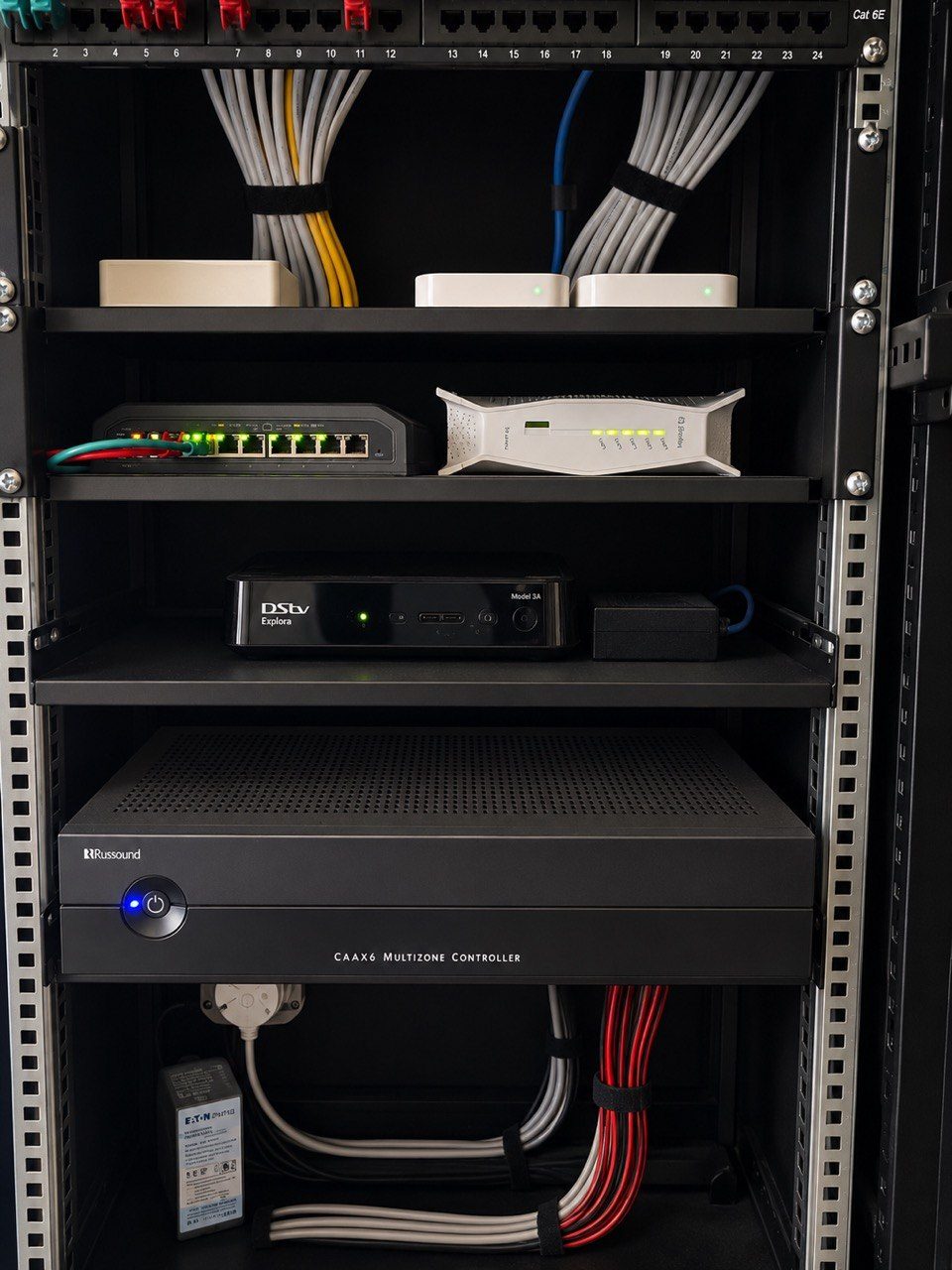
The fibre ONT, router, network switch, control processor, CCTV recorder, touch panels, Wi-Fi access points, amplifiers and media sources may all recover at different speeds.
If the system depends on one device being ready before another, the wrong start-up order can create odd symptoms.
Warm testing is not enough
If every device is already on, pressing buttons proves the current state.
Cold-start testing proves recovery.
Can the touch panels reconnect? Do cameras return? Does the music system appear? Do Wi-Fi access points come back? Do TV sources behave normally? Does remote access recover without someone manually restarting three devices?
Those are different questions.
Some faults only appear after a restart
A weak power supply may work until it is asked to start from cold.
A network device may boot slowly. A camera may not reconnect. A media source may wake on the wrong input. A processor may come online before the network is ready.
If the installer never tests that condition, the client becomes the first person to discover it.
Cold-start testing is practical
It does not mean abusing the system.
It means creating a controlled restart condition, observing the sequence and recording anything that needs adjustment.
DG Technologies sees cold-start testing as part of real-world commissioning. A smart home must work after handover, after weekends away and after South African power events, not only while the installer is standing in front of an already-running rack.