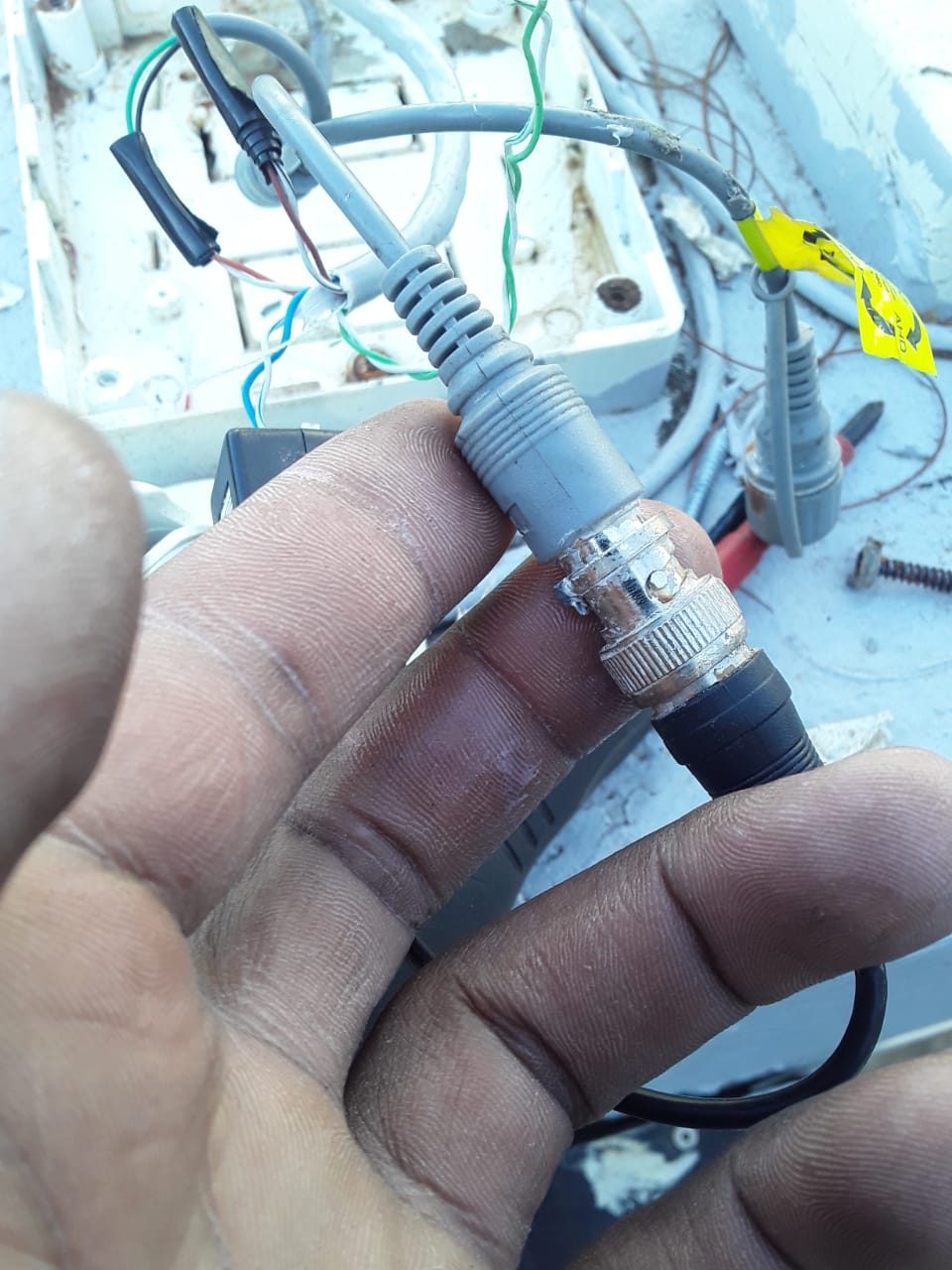
Low-voltage cable is usually small.
The damage caused by a poor route can be large.
That is especially true when cables need to pass through roofs, external walls, waterproofed areas, pool decks, balconies, flat roofs or outdoor service spaces. A rushed hole may solve today’s cable problem and create tomorrow’s water problem.
That is why DG Technologies is careful about roof routes and exterior penetrations.
If a cable needs to get from one part of a roof to another, through a wall, across a waterproofed section or into an outdoor device, the route must be planned with the builder, electrician or waterproofing contractor where necessary.
The goal is simple:
get the cable where it needs to go without compromising the building.
A cable route must respect the building envelope
AV and security installers are often focused on getting signal from point A to point B.
That is not enough.
A route through a roof or exterior wall must also respect water, heat, UV exposure, maintenance access and future repair. If a cable is pushed through a poor opening and sealed casually, it may work electrically but fail as part of the building.
Waterproofing problems are expensive, emotional and difficult to diagnose.
The client may only notice staining, damp or swelling months later. By then, nobody wants to hear that the cause may be a cable route that should have been sleeved, piped or handed to the correct trade.
That is why DG Technologies would rather slow down and ask for a proper conduit than create a neat-looking shortcut.
Outdoor joins are a last resort
Outdoor cable joins are another common risk.
Sometimes a cable is short. Sometimes the existing route cannot be pulled. Sometimes an old installation has exposed joints, taped connections or weathered boxes outside.
DG Technologies tries to avoid unnecessary outdoor joins because they become future fault points. Moisture, heat, movement, corrosion and poor strain relief can all turn a working cable into an intermittent problem.
Where a join cannot be avoided, it should be moved to the most protected and accessible location possible, inside a proper enclosure, with the correct termination method and enough service access to repair it later.
The worst option is a hidden, exposed or inaccessible join outside.
That is not a repair.
It is a delay.
Conduit is not only for neatness
On exterior routes, conduit is not decoration.
It protects the cable. It defines the route. It makes the work easier to inspect. It gives the next technician a clue. It can reduce UV and mechanical damage. Most importantly, it can allow a cable to be replaced later without cutting open finished work.
But conduit only helps if it is installed correctly.
It needs sensible bends, accessible draw points, correct entry into boxes, proper fixing, suitable route selection and coordination where waterproofing or structure is involved.
A pipe installed in the wrong place can be almost as bad as no pipe at all.
Control cables need the same respect as AV cables
This is not only a CCTV issue.
Air-conditioning control, intercoms, gate control, outdoor speakers, access points, lighting sensors, Crestron inputs and exterior automation modules can all require small cables that travel through awkward places.
Because those cables are small, people sometimes underestimate them.
But if the cable controls a critical function, it deserves a proper route.
An air-conditioning interface that cannot be reached, an intercom route with a poor exterior join, a gate cable with water ingress or a CCTV cable hidden in an exposed roof path can all create support problems that are far harder than the original installation.
The right route is part of the installation quality
Clients rarely ask how a cable crosses a roof.
They ask whether the camera works, whether the gate opens, whether the intercom rings, whether the room has Wi-Fi and whether the automation responds.
But the long-term answer depends on route quality.
DG Technologies sees exterior low-voltage routing as one of those hidden decisions that separates a professional installation from a rushed one.
The cable must work.
The building must remain protected.
And the next technician must be able to understand what was done.