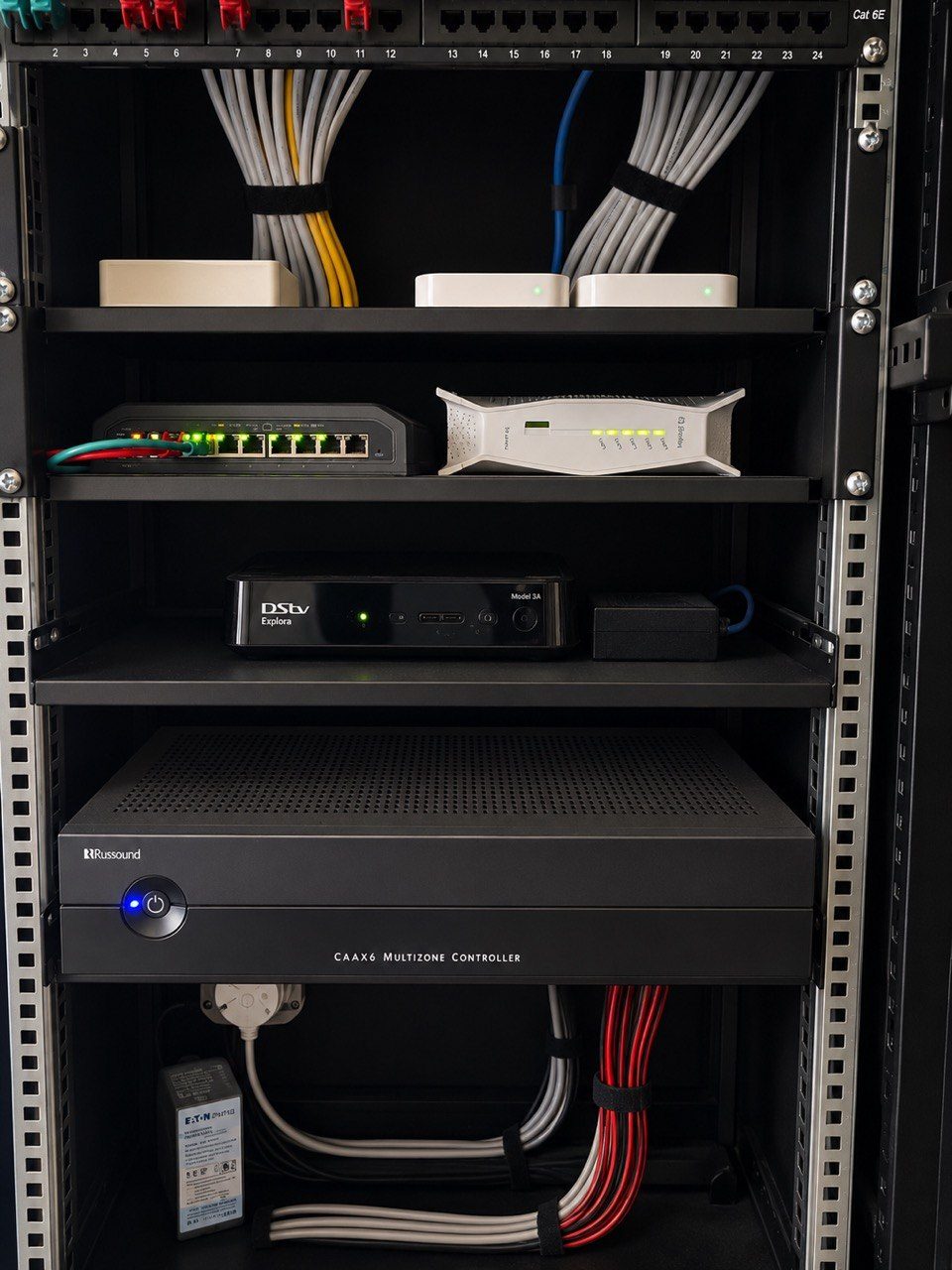
Every extra automation request needs somewhere to live.
That sounds obvious, but it is one of the most common pressure points near the end of a premium home project. A client asks to add pool lights, garden lighting, geyser control, planter lighting, pathway lights, a utility load or an extra exterior circuit. The request may be reasonable.
The question is whether the automation system has spare capacity to control it properly.
A relay is a real piece of hardware
Automation is not magic.
If a circuit needs to be switched, it needs a real output somewhere. That output may be a relay module, lighting module, remote module, contactor arrangement or another properly designed control method.
If every relay output has already been allocated, the system cannot simply “add one more thing” without changing the design.
This is why relay capacity should be discussed early.
Late extras are usually more expensive
Adding a relay during design is straightforward.
Adding one after the DB is built, cabinet space is full, cables are terminated and finishes are complete is more difficult. The team may need extra hardware, extra space, new wiring, reprogramming, electrical coordination and updated documentation.
The client may think the request is small.
Technically, it may touch several parts of the system.
Not every load belongs directly on a relay
Some loads should not be controlled directly by a small relay output.
Higher-current loads, pumps, heaters, sockets and equipment with unknown future use may require a contactor, dedicated protection or a different electrical approach. A socket in an entertainment area, for example, may later be used for something the automation team never intended.
Good engineering asks what the load is, not only whether the client wants control.
Spare capacity is not wasted capacity
Leaving sensible spare relay capacity is not over-selling.
It is planning for reality.
Homes change. Clients add features. Gardens evolve. Outdoor areas get upgraded. Pool and pump-room requirements change. Holiday homes need additional exterior logic. If the system was designed with no space, every future request becomes harder.
Spare capacity gives the project room to breathe.
Documentation must follow the change
When an extra load is added, the drawings and schedules should be updated.
Which relay controls it? Which circuit feeds it? Is there a contactor? What is the breaker? What is the room or scene name? Who can operate it? What should happen after a power failure?
Without documentation, the extra feature becomes future confusion.
DG Technologies’ view
DG Technologies treats relay planning as part of honest system design.
If a client wants future flexibility, the hardware must allow for it. If the system is already full, that should be explained clearly before promises are made.
The best time to plan relay capacity is before the client asks for the extra feature.
The second-best time is before anyone wires it badly.