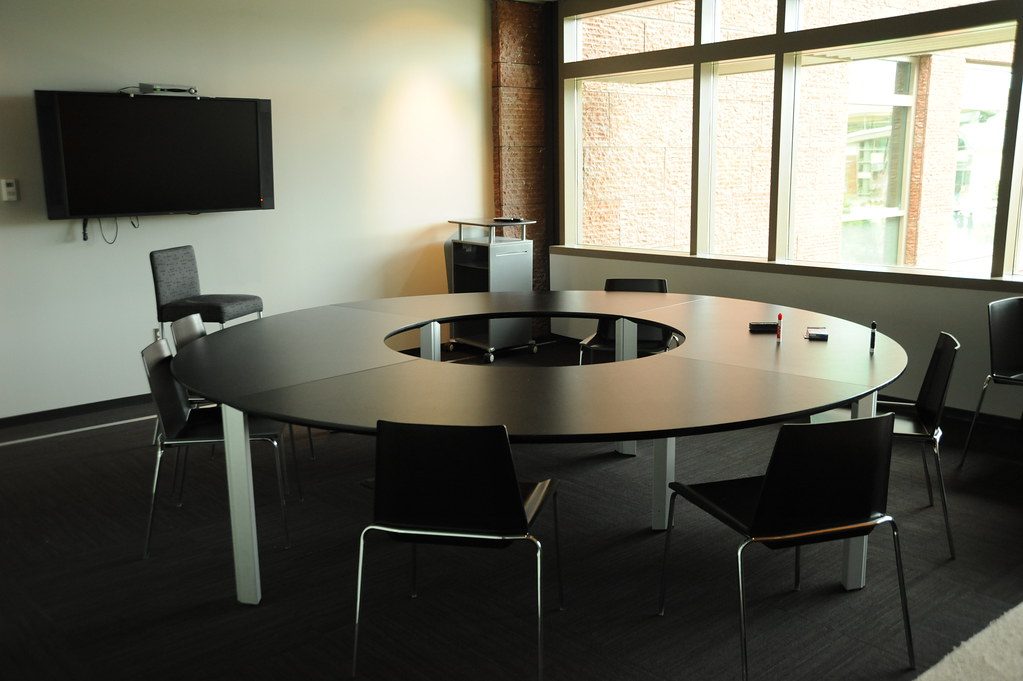
A business may have several rooms with different sizes, furniture and meeting purposes. That does not mean every room should feel unrelated to the next one.
Consistent naming, control behaviour and documentation help staff move between rooms without relearning the entire system.
The equipment can vary
A training room may need a presenter connection and several viewing positions. A small meeting room may suit an all-in-one collaboration device. An executive boardroom may need several microphones, intelligent video and more detailed control.
The hardware can follow the room. The language used by the system should remain familiar.
Standardise the user actions
Across a multi-room project, it helps when users can recognise actions such as:
- start the room
- present content
- select a source
- adjust volume
- join a meeting
- end the room
The exact interface can vary, but the logic should be predictable.
Standardise the support record
Room names, cable labels, network records and equipment schedules should use a consistent format. This saves time when a technician supports several rooms or when the client’s IT team needs to identify a device.
Earlier commercial work involving several meeting and training spaces reinforced how much coordination is needed before equipment arrives. A common design language makes that coordination easier.
For commercial boardroom AV installation, DG Technologies can plan individual rooms while keeping the wider workplace understandable.