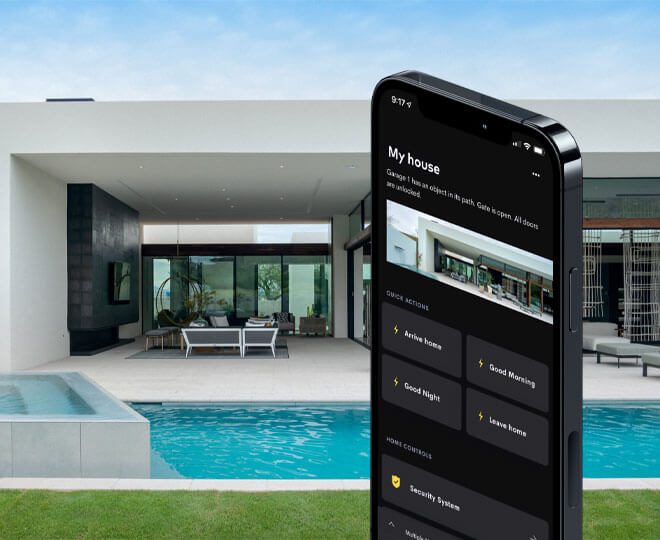
In many private homes, the owner is not the only person who uses the technology.
There may be house managers, domestic staff, security staff, guests, family members, maintenance contractors, rental managers or visiting relatives. Each person may need to use part of the system, but not all of it.
That changes the handover.
A proper smart-home handover should not only prove that the owner can use the app. It should also make sure the home can function calmly when other people are involved.
Different people need different control
The owner may need full control.
A house manager may need lighting, cameras, gate access, audio basics and fault reporting. Domestic staff may need cleaning lights, basic room control and gate procedures. Security staff may need camera and access-control workflows. Guests may need simple bedroom, Wi-Fi and entertainment control without seeing the technical depth of the home.
Those are different needs.
If everyone is given the same control, the system may become confusing or risky. If nobody except the owner understands the system, the home may become frustrating when the owner is away.
Good design sits between those extremes.
Handover should match real routines
A useful handover should be based on how the home actually runs.
Who opens the gate for deliveries? Who checks if exterior lights are on? Who switches the entertainment area into evening mode? Who helps guests with Wi-Fi? Who reports if cameras are offline? Who knows what to do after a power interruption?
Those questions are practical.
They matter more than showing every possible feature.
DG Technologies believes a smart-home handover should prove the system is simple. Simplicity is tested when real people use it without the installer standing beside them.
Staff control should be clear and limited
In private homes, discretion and boundaries matter.
Staff may need access to certain functions, but not personal spaces, private camera views, admin settings or owner-only scenes. The system should respect those boundaries.
This is not about mistrust.
It is about professional design.
Clear user roles reduce confusion and protect privacy. They also make the system easier to support because each person knows what they are expected to use.
This connects to our wider view that private-home technology should be discreet by design.
The handover should include what to do when something changes
Homes change.
Phones are replaced. Wi-Fi passwords change. Staff members leave. Guests arrive. Fibre providers swap routers. Power interruptions happen. A camera app updates. A music service signs out.
If the handover only covers perfect daily use, it is incomplete.
The client and key staff should know how to report an issue clearly, what information helps support, what can be checked safely, and when to call DG Technologies rather than trying random fixes.
That is why supportability matters long after handover.
A good system reduces explanations
The best private-home systems do not require the owner to explain the house constantly.
Guests can use what they need. Staff can perform daily routines. The house manager understands the basic workflows. The owner has deeper control when needed. The support team has enough documentation to help when something changes.
That is a quiet kind of luxury.
It is not about showing off technology.
It is about making the home easier to live in.
DG Technologies designs home automation, lighting control, access control and CCTV with the people around the home in mind, not only the equipment in the rack.