Geyser control is one of those smart-home features that sounds simple until the wiring is opened.
Turn geyser on. Turn geyser off. Save power. Manage load.
In practice, geysers are high-load electrical circuits, and they must be treated with respect. If geyser control is added to a smart home, the electrical and automation planning need to happen together.
A geyser is not a lighting circuit
Lighting circuits and geyser circuits are not the same kind of load.
A geyser draws significant current. It needs proper protection, suitable switching equipment, safe isolation and clear labelling. In many cases, the smart-home system should not switch the geyser directly through a small control relay.
The relay may control a contactor or another suitable electrical arrangement.
That distinction matters.
The electrical DB and automation DB must agree
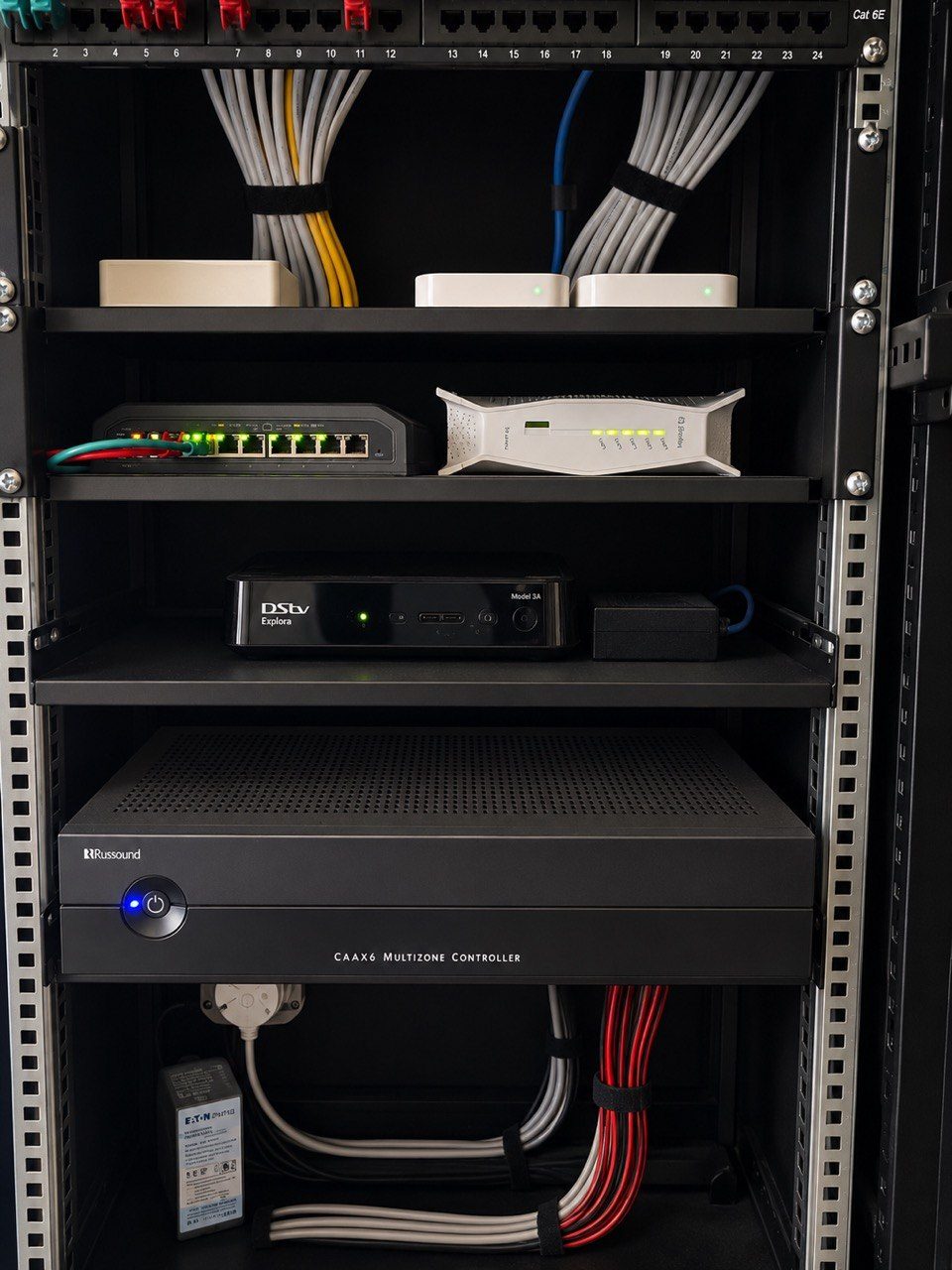
Smart-home control often lives in an automation DB or rack.
Geyser circuits usually live in the electrical DB. If the two systems are not coordinated, the automation team may not know which geyser is which, where the return is, whether a pump is involved or how the circuit should be safely isolated.
This is why clear circuit schedules matter.
The app label should match the real electrical load.
Load shedding makes the conversation more important
In South Africa, geyser control often connects to inverter and solar planning.
Clients may want heavy loads to be disabled during battery operation. They may want schedules. They may want manual override. They may want different behaviour for upstairs and downstairs geysers. Those decisions affect comfort and power resilience.
The system should be designed around the household, not only around the equipment.
Manual override must be clear
Any automated utility load should have a clear fallback.
If the client needs hot water, they should know how the system behaves. If a technician needs to work on the geyser, they should know how to isolate it. If the automation system is offline, the electrical installation should still make sense.
Smart control should not remove basic electrical clarity.
Documentation prevents future confusion
Geyser control should be documented carefully.
The record should show:
- which geyser is controlled,
- which relay or module operates it,
- whether a contactor is used,
- where the breaker is,
- what the app label says,
- what the schedule does,
- how override works,
- who is responsible for electrical changes.
Without that, the next service call becomes guesswork.
DG Technologies’ view
DG Technologies sees geyser control as a useful feature when it is engineered properly.
It can support energy management, load-shedding behaviour and daily convenience. But it must be designed with the electrician, the DB layout and the client’s real use in mind.
Good automation does not hide electrical reality.
It respects it.