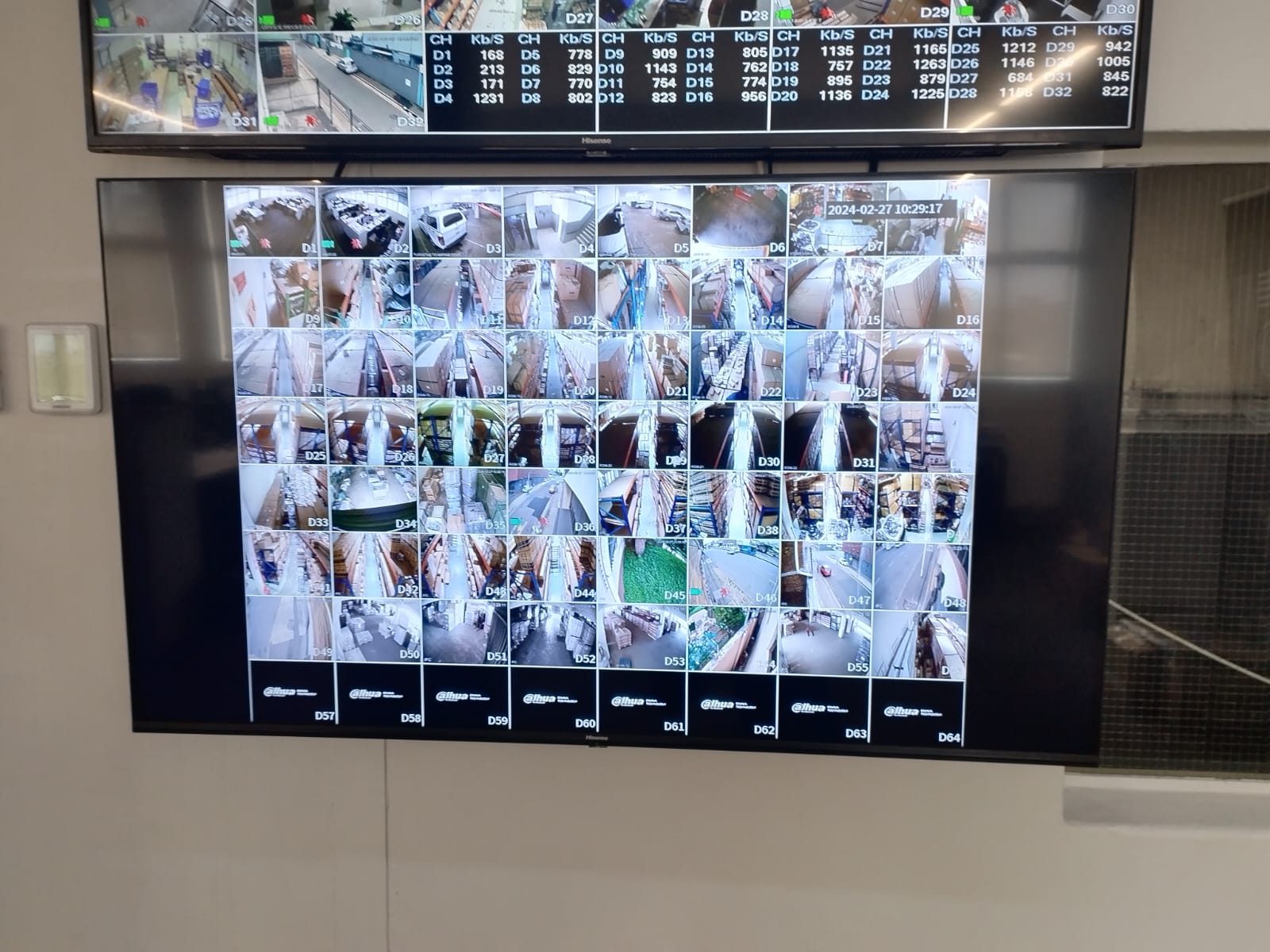
It is easy to say a CCTV recorder has a large hard drive.
That does not automatically mean the system will keep the number of days the client expects.
CCTV storage depends on how much data each camera is recording. That changes with resolution, frame rate, compression, motion, lighting, scene complexity and recording mode.
The hard drive is only one part of the conversation.
A busy scene records more data
A quiet passage and a busy loading bay do not behave the same.
The loading bay may have forklifts, people, trucks, doors, pallets, shadows and changing light throughout the day. That kind of movement can increase the amount of data recorded by the camera.
The same camera pointed at a still storeroom may use far less storage.
This is why storage planning should consider the scene, not only the camera model.
It is the same reason we separate commercial CCTV design from simple camera supply. The site, movement and evidence requirement change the recording design.
Resolution is not free
Higher resolution can be useful, especially where faces, plates or operational detail matter.
But more resolution usually means more data. If every camera is set to maximum quality without a plan, the recorder may hold far fewer days than expected. If quality is reduced too much, the footage may remain available but no longer be useful.
The balance matters.
A professional CCTV design should decide where detail is critical and where a lower setting is acceptable.
Retention must match the client’s real need
Different sites need different recording periods.
A home may only need enough history for typical security events. A commercial site may need longer retention for stock disputes, loading issues, staff incidents or operational claims that only come to light days later.
There is no point designing a recorder around a guessed number if the client actually needs to retrieve footage from two or three weeks ago.
The retention target should be discussed before the recorder is specified.
Motion recording should be used carefully
Motion recording can save space, but it must be configured correctly.
If sensitivity is too low, important movement may not record. If sensitivity is too high, the system may record constantly anyway. Rain, insects, trees, shadows and headlights can all trigger recording.
Motion recording is useful only when the installer has tested the result on the real site.
For broader planning, we also cover what proper CCTV design considers before installation and why CCTV recorder location matters.
DG Technologies’ view
DG Technologies does not treat CCTV storage as a hard-drive size only.
We look at what the client needs the footage for, how long it must remain available, and which cameras need the highest level of detail.
Good CCTV recording is not just about keeping video.
It is about keeping useful evidence.