Interior cabinetry can make technology disappear.
That is often exactly what the client wants.
No visible decoders. No amplifiers on shelves. No cables. No blinking lights. No rack in the living room.
That can be done well.
But hidden equipment still needs to breathe.
Doors change the operating condition
An AV system may be installed and tested while cabinet doors are open.
Then the room is styled, doors are closed, shelves are filled and the house starts being used normally.
That is when heat problems appear.
An amplifier that worked during testing may shut down during a long evening. A decoder may freeze. An HDMI extender may become unstable. A network switch may run hotter than expected. A streaming device may start behaving inconsistently.
The equipment did not suddenly become poor quality.
Its environment changed.
AV heat is cumulative
One warm device may be fine.
Several warm devices in a closed cabinet are different.
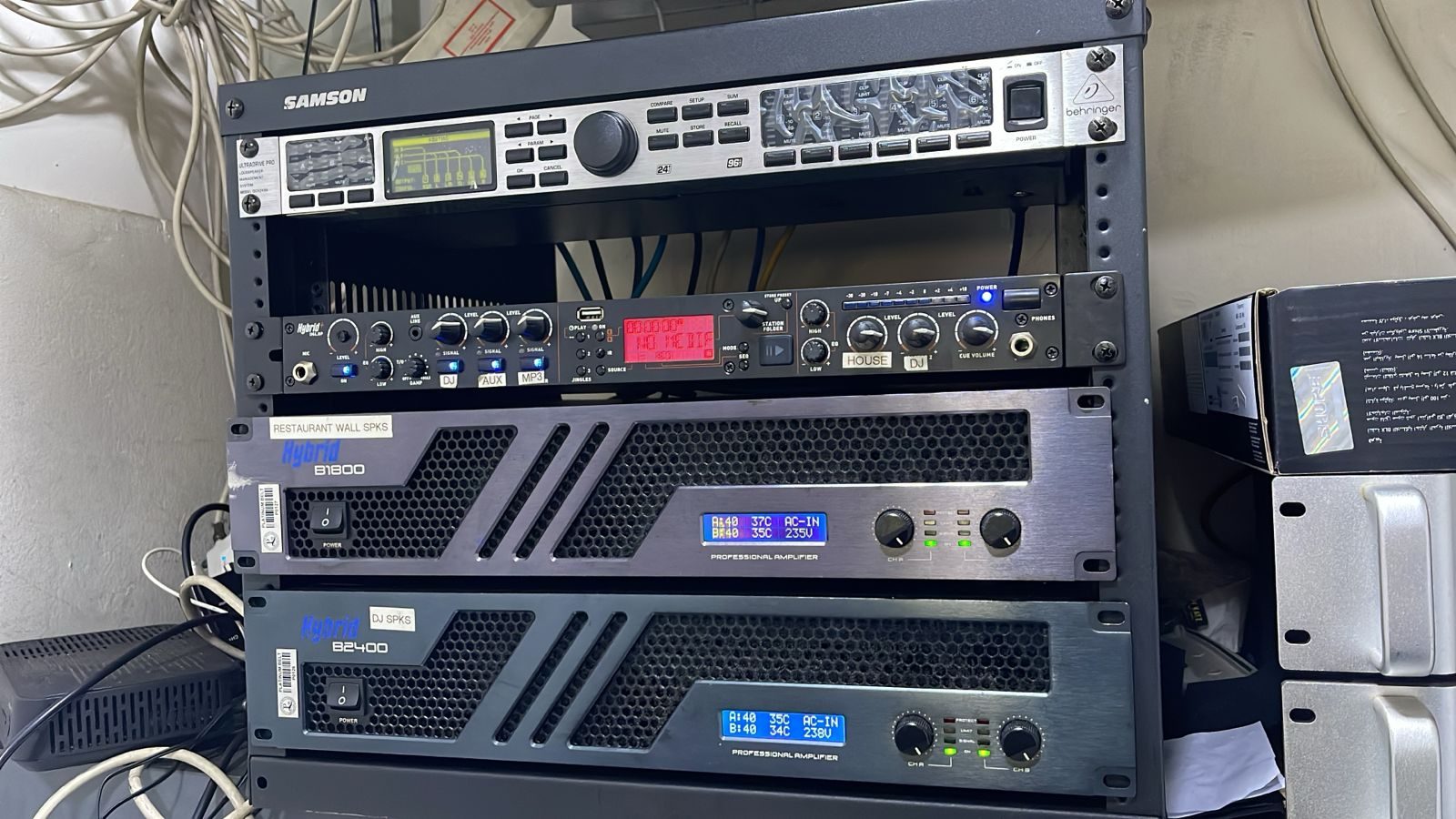
An AV cabinet may contain a decoder, Apple TV, amplifier, HDMI extender, network switch, power supply, fan controller, game console, router, smart-home bridge or small UPS.
Each device adds heat.
If that heat cannot escape, reliability suffers.
This is especially important in KZN, where ambient temperature and humidity can already make equipment work harder.
Ventilation must be designed, not hoped for
A few holes in the back of a cabinet may not be enough.
Good ventilation considers where cool air enters, where warm air exits, whether the cabinet has natural airflow, whether silent fans are needed, and whether the equipment has enough clearance.
It also considers service access.
If a device overheats, fails or needs replacement, the technician must be able to reach it without dismantling half the room.
Hidden technology should be hidden from view, not hidden from maintenance.
Cabinet makers and integrators should coordinate
This is one of the reasons AV planning should happen before the joinery is final.
The cabinet maker may be thinking about finish, symmetry, door gaps and storage.
The integrator is thinking about heat, cable bend radius, power, service access, IR control, Wi-Fi impact and equipment depth.
Both matter.
The best result comes when those decisions are made together.
Warning signs of poor cabinet ventilation
Cabinet heat problems often show up as intermittent faults:
- the system works when first switched on, then fails later,
- the amplifier shuts down during louder use,
- the picture drops after a while,
- the decoder freezes,
- the cabinet feels hot inside,
- fans become noisy,
- or the fault disappears when the door is left open.
Those clues should not be ignored.
They usually point to the environment around the equipment.
Good design protects the finish and the system
DG Technologies is not against hiding AV equipment.
In premium homes, hiding technology is often part of the brief.
But the hidden design must still be engineered.
The client should get the clean interior they want without sacrificing reliability, serviceability or equipment life.
That means the cabinet door, shelf depth, rear panel, ventilation path and access method are not minor details.
They are part of the AV system.