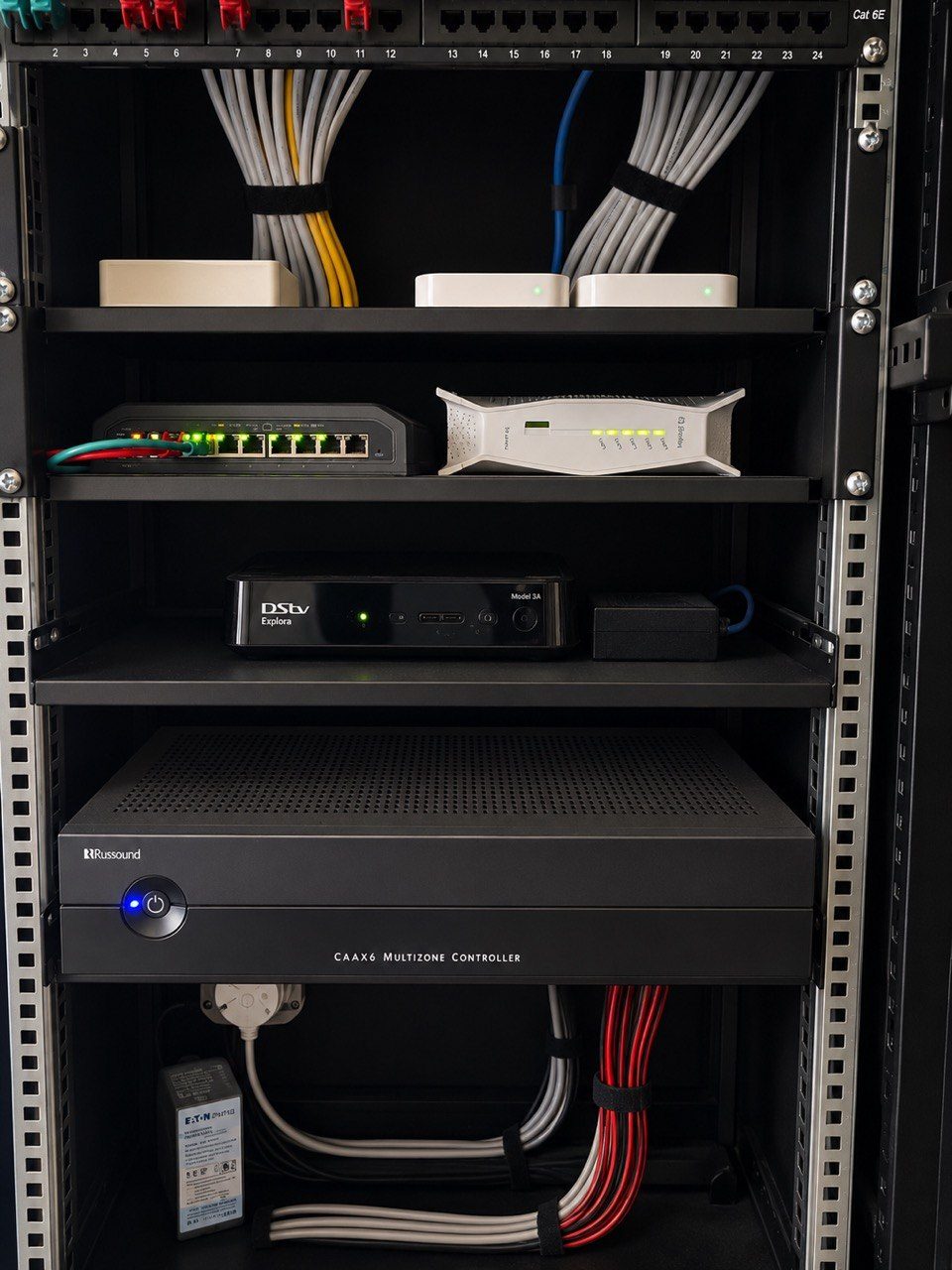
A cabinet can look neat from the front and still be difficult to support.
The real test is what happens when a technician has to open it, trace a fault, replace a device, add a patch lead, restart equipment, read labels or close the door without forcing cables against hardware.
That is why cabinet door clearance, brush panels and service loops matter.
The door must close without pressure
If a cabinet door presses against patch leads, power supplies or cable bundles, the cabinet is not finished properly.
Pressure creates faults.
It can loosen connectors, bend patch leads, stress fibre, restrict airflow and make future servicing unpleasant. Sometimes a door closes on day one, but only because cables have been forced into place.
That is not a long-term solution.
Brush panels control cable entry
Brush panels are simple, but useful.
They allow cables to enter a cabinet neatly while reducing open gaps. They help separate cable bundles, improve appearance and make it easier to understand where services enter. They also reduce the temptation to force cables through awkward holes or leave cabinet entries rough.
In a premium installation, the cabinet should not look like a temporary compromise.
The cable entry should be designed.
Service loops save future labour
A service loop is spare cable length left deliberately for future work.
Too little cable makes servicing painful. Too much cable creates clutter. The correct amount allows a device to be moved, reterminated or replaced without pulling the whole installation apart.
Service loops are especially important for:
- network switches,
- patch panels,
- CCTV recorders,
- control processors,
- fibre equipment,
- audio amplifiers,
- HDMI extenders,
- power management devices.
The loop should be controlled, dressed and labelled.
It should not be a tangled bundle hidden behind equipment.
Cable management is not cosmetic
Good cable management helps reliability.
It keeps airflow paths clear. It prevents connectors from being strained. It makes heat easier to manage. It helps technicians see which cable belongs where. It reduces the chance that one repair breaks three other things.
When a cabinet is badly dressed, support takes longer.
Longer support costs more and creates more disruption for the client.
Future technicians should understand the cabinet
DG Technologies often talks about designing for the next technician.
That mindset matters.
The person opening the cabinet five years later may not be the original installer. They should still be able to understand the system from labels, layout, cable paths and documentation.
That is not just courtesy.
It is professional risk reduction.
DG Technologies’ view
For DG Technologies, a cabinet is part of the product.
If the rack is serviceable, the system is easier to maintain. If the rack is cramped, unlabeled or under-designed, every small change becomes harder.
Door clearance, brush panels and service loops are not glamorous.
They are the details that keep premium systems supportable after the handover photo has been taken.