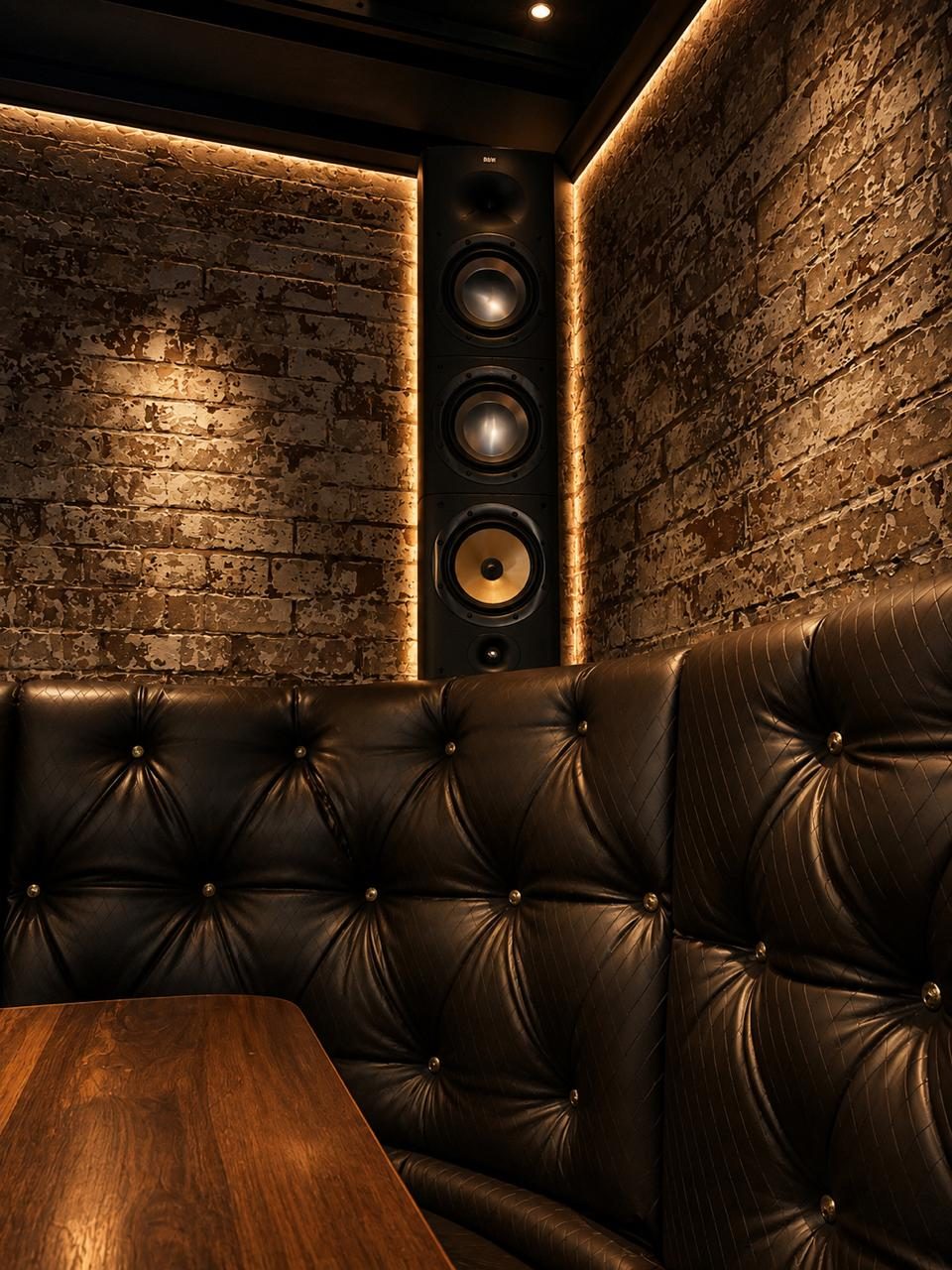
In a premium home, audio equipment has two jobs.
It must sound good.
It must also belong in the room.
That second requirement is often underestimated. A technically good speaker can still feel wrong if it clashes with the interior, sits in the wrong place, exposes cables, vibrates badly or draws attention to itself in a room that was designed to feel calm and refined.
For DG Technologies, audio decisions are not made in isolation. They sit between engineering, interior design and the way the client actually lives.
The soundbar must look intentional
A soundbar can be a practical solution for a TV lounge, bedroom or casual entertainment space. It improves speech clarity and creates a better everyday viewing experience without requiring a full cinema speaker layout.
But the placement matters.
The cleanest result is normally when the soundbar is mounted directly below the TV, aligned properly and cabled invisibly. If the TV is wall-mounted but the soundbar sits on a cabinet with a visible cable path, the room immediately looks unfinished. If the plug points are too low or the conduit was not planned, the installer may be forced into compromises that could have been avoided at first fix.
This is why TV points, power, conduit and soundbar position should be discussed before the wall is finished. It is also why our planning articles for interior designers and architects keep returning to the same point: technology needs a place in the design.
Colour and finish are not small details
Clients notice finishes.
White speakers may disappear against a white ceiling, but they may look wrong against timber, stone or dark cabinetry. Black speakers can look sharper in cinema rooms, but may be too visible in a soft living space. Some rooms need grille colour matching. Some spaces need the audio to be visible and beautiful. Others need it to disappear completely.
This is not vanity.
In a high-end home, visible equipment becomes part of the interior. A speaker that looks slightly wrong will be noticed every day, long after the installation is complete.
Good audio design includes practical questions:
- Should the speaker be visible or hidden?
- Should the grille match the ceiling?
- Will a black soundbar look better against the TV?
- Does the subwoofer finish match the furniture?
- Will the equipment still look correct after the room is furnished?
- Can cable routes remain invisible?
The answer may differ from room to room.
Subwoofers should support the room, not dominate it
A subwoofer is often misunderstood.
Some clients associate subwoofers with aggressive bass, vibration and noise. That can happen when a sub is badly placed or badly configured, but it is not what a proper premium system should feel like.
In a living area, media room or outdoor entertainment space, a subwoofer should usually be subtle. Its job is to fill in the low frequencies that smaller speakers cannot reproduce naturally. It should give music and films body without taking over the room.
If the client notices only the bass, the system is probably not balanced correctly.
The goal is not impact for the sake of impact. The goal is comfort, control and fullness.
The room decides the system
A dedicated home cinema can justify larger speakers, carefully positioned subwoofers, acoustic treatment and a darker aesthetic. A family lounge may need a cleaner setup with a TV, soundbar and discreet surround speakers. A veranda may need weather-resistant speakers and a subtle outdoor sub. A bedroom may need simple, low-visual-impact audio.
Each room has a different purpose.
That is why DG Technologies does not treat audio as a generic package. The correct design depends on:
- Room size.
- Ceiling construction.
- Seating position.
- Light conditions.
- Interior finishes.
- Cable routes.
- Whether the room is for music, TV, cinema or entertaining.
The equipment follows the room.
Poor planning creates visible compromises
Many visible AV problems are caused long before the equipment arrives.
Plug points are placed too low. Conduit is missing. A TV is mounted without considering the soundbar. The cabinet does not have enough height for the equipment. The subwoofer position was never discussed. Speaker locations are selected after the lighting plan is already fixed.
By that stage, every correction is more expensive.
This is why premium audio and cinema planning should happen while the architect, builder, electrician and interior designer can still make clean decisions.
The best audio is heard more than seen
There are rooms where speakers should make a statement.
There are many more rooms where they should quietly serve the space.
The most successful premium audio installations are the ones where the client stops thinking about the equipment. The TV looks clean. The soundbar is aligned. The subwoofer does not boom. The speakers match the finish. The system is easy to use.
That is not luck.
It is the result of small decisions made early enough to matter.