Some of the most expensive smart home problems do not start with bad equipment. They start with small decisions that were never documented.
That is common in older premium homes. A Crestron system may have been installed years ago, then adjusted by different contractors as TVs changed, routers changed, LED lamps replaced older lighting, decoders moved, Wi-Fi expanded and rooms were renovated. Each change may have made sense on the day. Over time, the system becomes difficult to understand.
This is why DG Technologies approaches Crestron repair in Mount Edgecombe Estate as rescue and recommissioning work, not just fault finding.
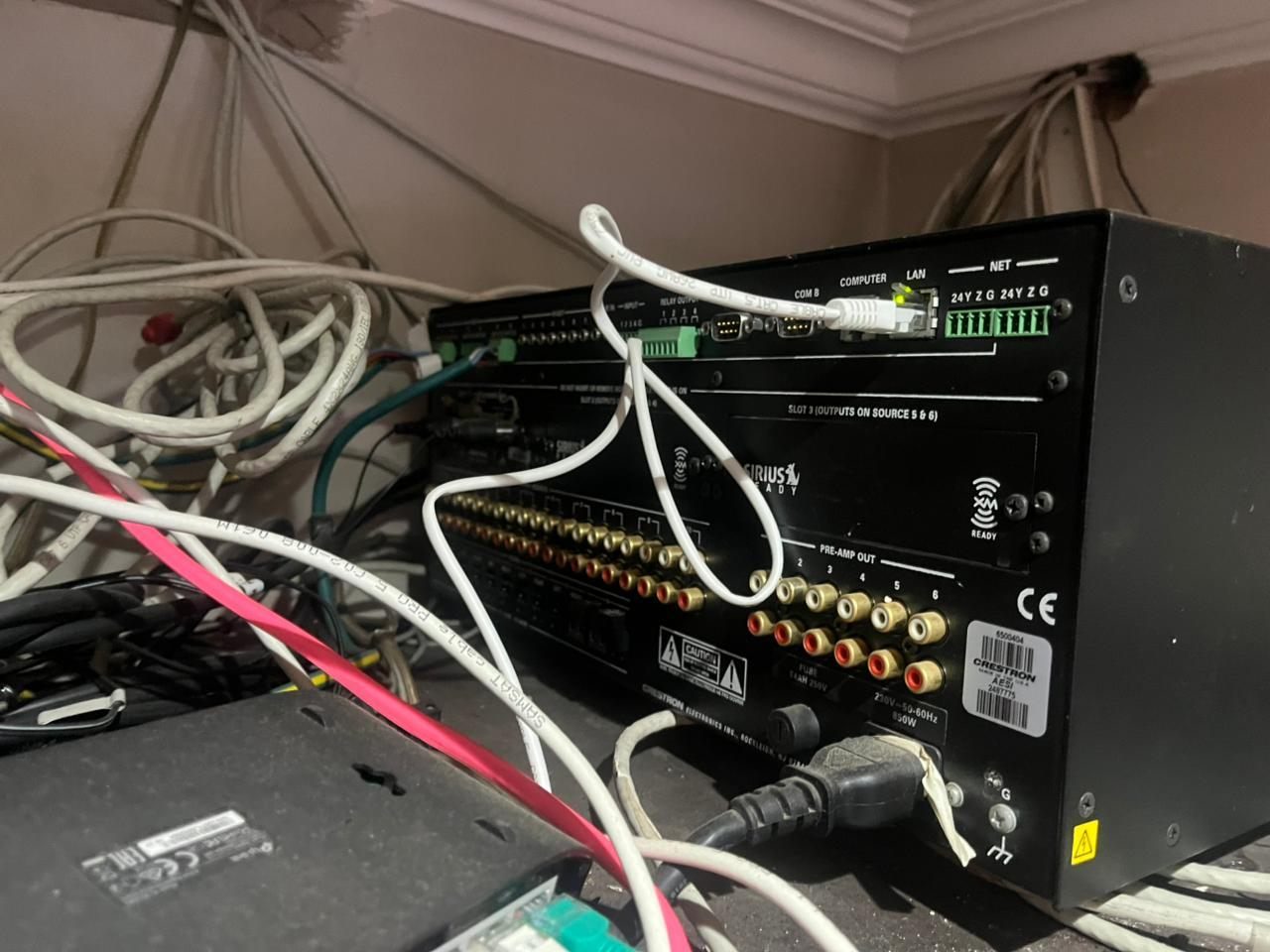
The first problem is usually the rack
The rack or head-end tells a story. If the cables are not labelled, the equipment is stacked without airflow, power supplies are hidden, switches are unmanaged and old devices are still connected “just in case”, the system becomes fragile.
A homeowner may experience this as simple symptoms:
- Rooms that sometimes respond and sometimes do not.
- Audio zones that play the wrong source.
- Touch panels that wake up but do not control anything.
- CCTV that disappears from the app.
- Wi-Fi that drops in certain rooms.
- Lighting scenes that no longer make sense.
The visible fault is often only the result. The real issue is that the system has lost its structure.
Legacy Crestron can be valuable
An inherited Crestron system should not automatically be thrown away. Some older hardware may still be useful. Some keypads, amplifiers, speakers, cabling and lighting infrastructure may still have value if they are working properly and can be supported sensibly.
The important question is not “Can we replace everything?” It is “What should be kept, what should be repaired, and what should be modernised?”
DG Technologies normally separates the system into practical categories:
- Stable equipment worth keeping.
- Equipment that can be recommissioned.
- Equipment that is obsolete but not urgent.
- Equipment that is causing reliability problems.
- Equipment that should be replaced because support is no longer sensible.
This avoids unnecessary spending while still giving the client a clear path forward.
LED lighting often exposes old design choices
Lighting control is one of the most common weak points in older estate homes. Many homes were originally designed around incandescent or older lighting loads. When modern LED lamps and drivers are fitted later, old dimming circuits may begin to flicker, buzz, fail early or dim badly.
That is not always a Crestron problem. It is often a load compatibility problem.
In some cases, a relay module is a better engineering answer than a dimmer. If the circuit does not need smooth dimming, switching it reliably may be more stable, simpler and more compatible with modern LEDs. This is why lighting control needs proper load assessment before parts are replaced.
The network is now part of the automation system
Older automation systems were often installed before homes depended heavily on Wi-Fi, apps, streaming, cloud services and remote access. Today, the network is not separate from the smart home. It is the foundation.
If the router has been replaced several times, access points were added casually, IP addresses were not planned and switches were never documented, the automation system can appear faulty even when the processor is healthy.
For Mount Edgecombe homes, network infrastructure is often part of the rescue process. Stabilising the network can restore confidence in CCTV, app control, streaming, touch panels and support access.
If the system also distributes audio or television signals, the related Mount Edgecombe multiroom audio and AV service covers the source, distribution, display, control and cabling layers that may need to be traced during a takeover.
Touch panels and apps need sensible decisions
It is tempting to replace every old touch panel with a modern equivalent, but that is not always the best value. In many rooms, a phone app, keypad or remote may provide the same everyday control at far lower cost.
Touch panels still make sense in certain areas, especially entrances, kitchens, main living spaces, cinemas or control-heavy zones. But they should be specified because they improve daily use, not because the old system had one in every room.
This is part of the DG Technologies approach described in working with DG Technologies: the client is buying judgement, not just equipment.
A rescue report should come before a replacement quote
A proper smart home rescue should produce more than a repair bill. It should give the homeowner clarity.
The report should identify:
- What equipment is installed.
- What still works.
- What is unsupported or risky.
- Which faults are network-related.
- Which faults are lighting-load related.
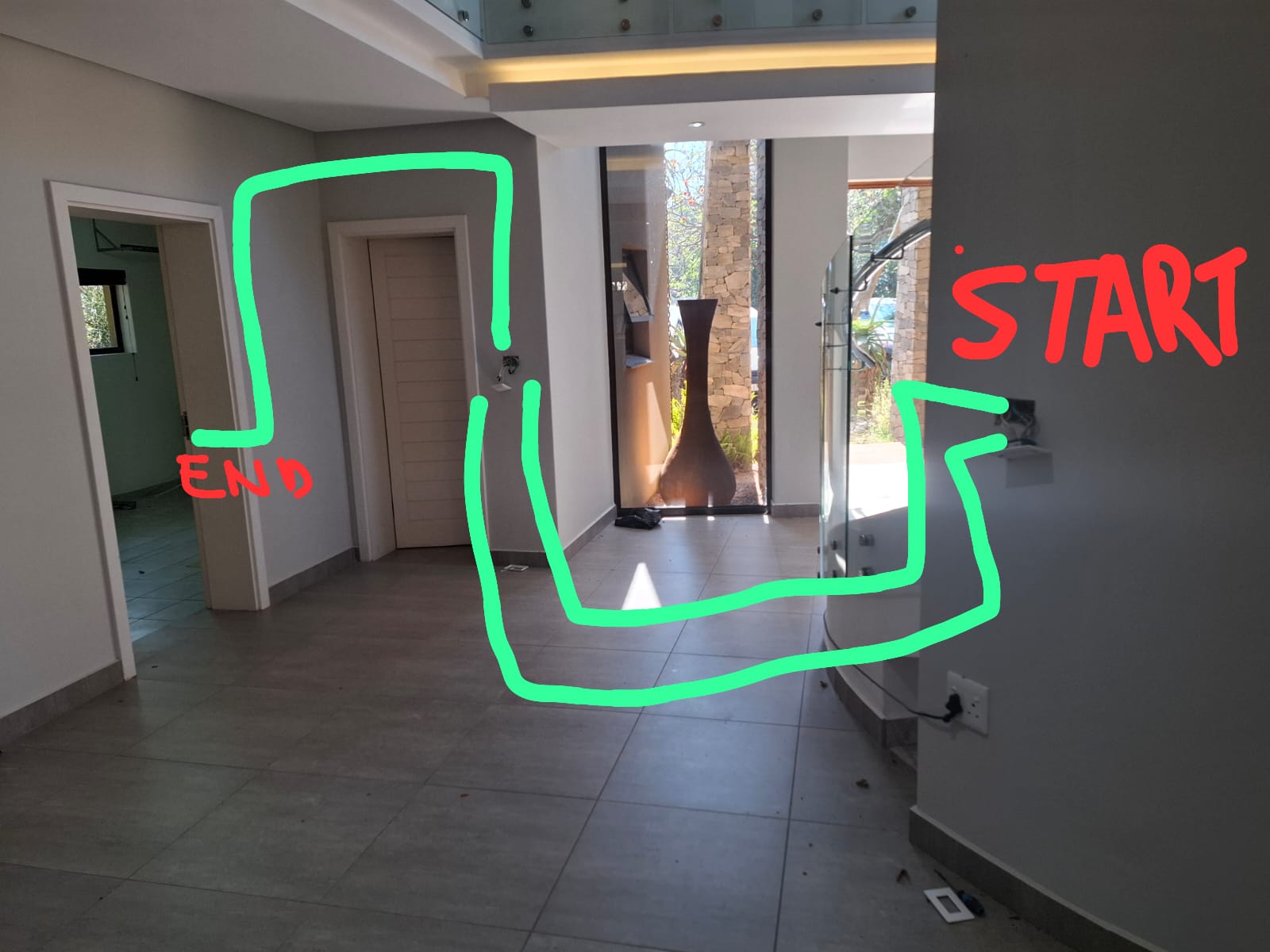
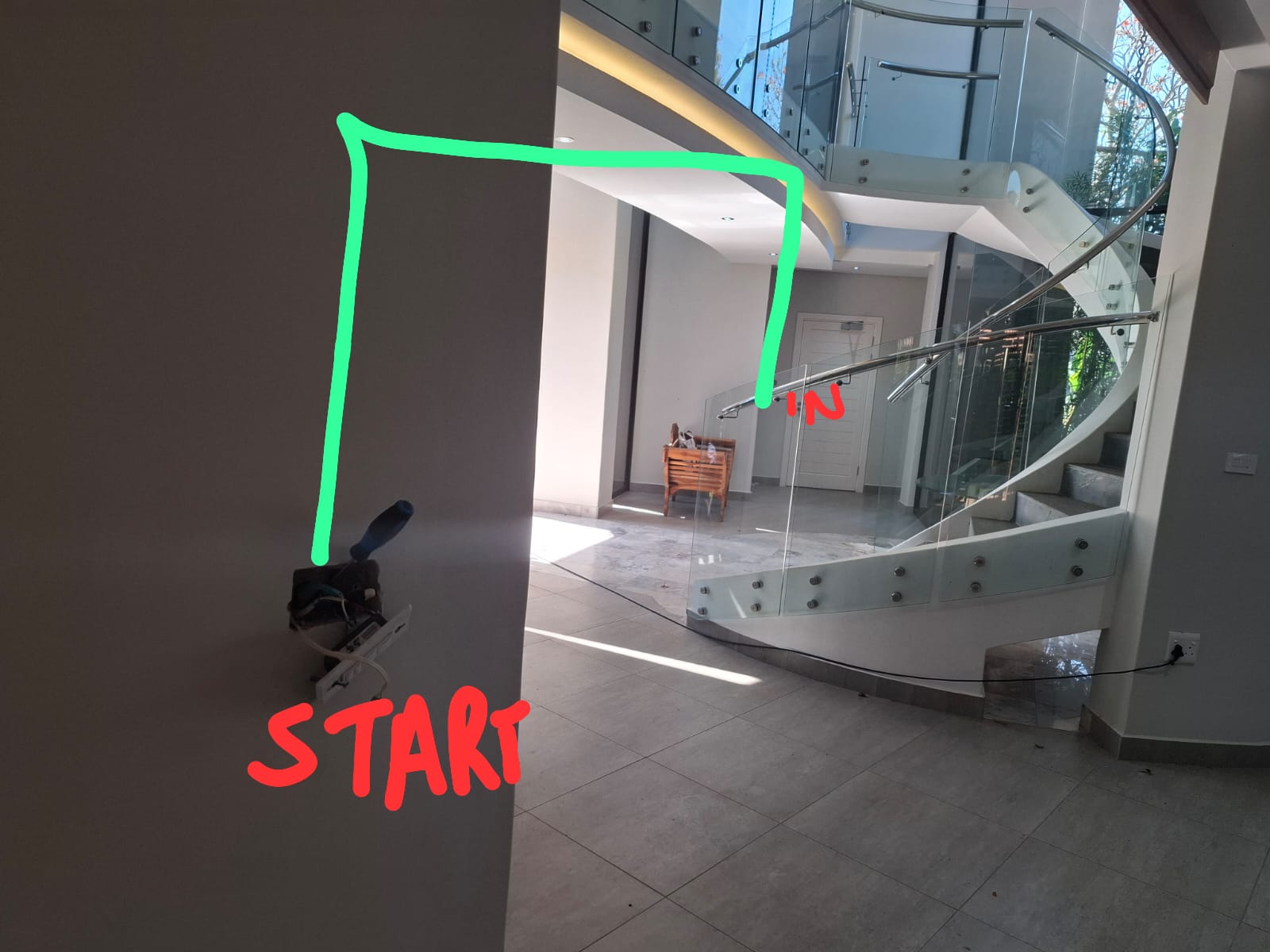
- Which cables and circuits are unknown.
- Which parts can be reused.
- Which upgrades should happen first.
This is especially important in estate homes where the value of the property deserves a system that is calm, stable and supportable.
Good products still need good engineering
Crestron is a serious platform, but even a serious platform can feel unreliable when the installation around it is undocumented, overheated, poorly powered or badly networked.
The goal of smart home rescue is not to criticise the original work for the sake of it. The goal is to restore order. Once the system is understood, the homeowner can make proper decisions.
For Mount Edgecombe Estate, Kindlewood, Umhlanga, La Lucia, Durban North and nearby KZN estates, DG Technologies can assess legacy Crestron systems, explain the options and recommend a phased repair or upgrade plan. For broader advice, see our guide to legacy Crestron smart home rescue in KZN.