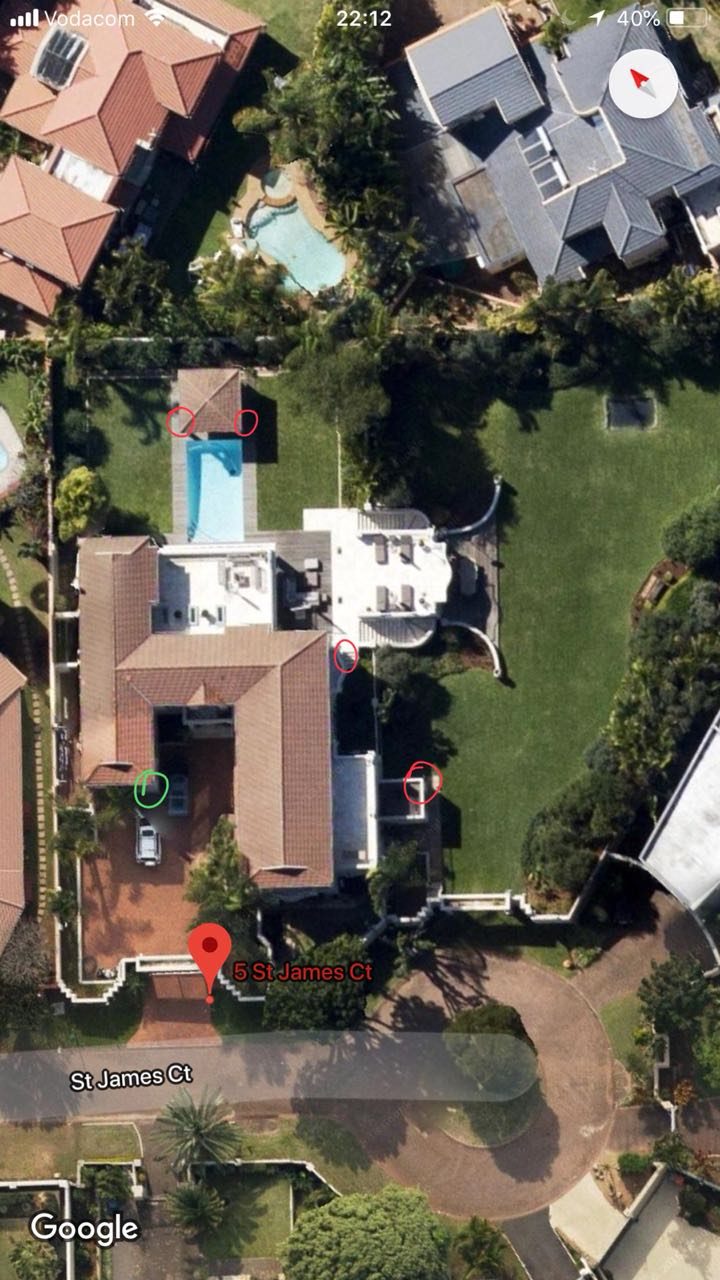
CCTV camera installation for a large home is not the same as installing cameras on a small house.
The property may have multiple levels, long driveways, boundary walls, gatehouses, garages, staff areas, outbuildings, entertainment spaces, gardens, service yards, swimming pools, guest suites and several access routes. In KZN estates, the architecture can also be complicated by slopes, coastal exposure, golf-course edges, landscaping, neighbouring properties and estate rules.
That means the installer needs to think like a designer, not just a technician with a ladder.
DG Technologies works across premium homes and estates in Durban, Mount Edgecombe, Zimbali, Simbithi, Umhlanga, Ballito and the KZN coast. In these properties, CCTV installation has to be planned as part of the wider technology infrastructure.
Large homes need layered visibility
A large home is not protected by one wide view.
It usually needs layered visibility:
- road or estate approach
- driveway and vehicle gate
- pedestrian gate
- front door
- garage doors
- side passages
- service yard
- staff entrance
- garden and pool areas
- outbuildings
- internal circulation where appropriate
Each layer answers a different question.
Did a vehicle arrive? Did someone enter the gate? Which route did they take? Did they approach the garage, staff area or front door? Was the person known to the home? Did an alarm event correspond with real movement?
A camera system that only gives general views may not answer those questions.
Awareness cameras and evidence cameras are different
One of the most important CCTV design decisions is whether a camera is for awareness or evidence.
An awareness camera helps the owner see what is happening. It may cover a patio, garden, driveway or large open area. A wide lens can be useful here because the client wants context.
An evidence camera needs tighter thinking. It may watch a gate, door, driveway choke point, staff entrance or intercom area. The camera needs to capture useful detail, not just movement.
This is why more cameras do not automatically mean a better system. A carefully placed identification view can be more valuable than several broad cameras that show activity without detail.
We have written more on this in why camera placement matters more than camera count.
Camera height affects identification
Large homes often have high eaves and beautiful exterior finishes.
It is tempting to mount cameras high so they are out of reach and less visible. That can be useful for overview, but it can be poor for identification. A camera mounted too high may show the top of a head instead of a face, or the roof of a vehicle instead of the driver area.
The correct height depends on the camera’s job.
For broad awareness, higher positions can make sense. For identification, the camera may need to be lower, tighter or aimed across a route where the subject naturally passes through the frame.
The best installation balances security, aesthetics and useful footage.
Driveways and gates need special planning
Gate and driveway cameras are often the most important cameras on a large property.
They also create some of the hardest views.
Headlights, reflections, gate motors, long distances, sloped driveways and vehicle speed can all affect the result. A wide camera may show that a car arrived, but not give enough detail to identify it. A tighter camera may give better detail, but only if it is aimed at the right point.
Where access control or an intercom is installed, the CCTV design should support it. Gate events, pedestrian calls, staff access and deliveries should be visible in a way the homeowner can review later.
The network must be designed for the property
Modern CCTV camera installation is usually IP-based.
Each camera needs cabling, PoE power, switching, network addressing and a recording path back to the NVR. In a large home, the distances and building layout may make that more complex.
Some properties can bring all camera cables back to one rack. Others may need a local cabinet near a gate, garage or outbuilding. Some may need fibre links between areas. Some may need outdoor-rated containment or carefully planned conduit.
This is why a CCTV installer should understand network infrastructure, not only cameras.
If the network is poorly planned, the client may experience cameras dropping offline, slow playback, app issues or unreliable remote viewing.
Recording should match the way the home is used
Large homes often have staff, contractors, gardeners, maintenance teams, deliveries, guests and periods when the owner is away.
That affects recording needs.
The system may need enough retention to review an event days or weeks later. It may need sensible camera names so footage can be found quickly. It may need app access for the owner, house manager or security staff. It may need backup power so the system keeps recording during power interruptions.
The NVR should not be hidden in a hot cupboard with no ventilation, no labels and no support access.
It should be installed as part of the equipment infrastructure.
Maintenance access matters
Large homes are often built with careful finishes. Once the walls, ceilings, joinery and exterior cladding are complete, changes become expensive.
CCTV camera positions should be chosen with future maintenance in mind:
- Can the lens be cleaned?
- Can the camera be reached safely?
- Can the cable route be inspected?
- Can the camera be replaced without damaging finishes?
- Is there a known route back to the rack?
- Is the camera protected from weather exposure?
In coastal areas, this matters even more. Salt air, humidity, wind and rain can affect brackets, housings and exposed routes. A camera that is impossible to maintain will eventually become a problem.
The DG Technologies approach
For DG Technologies, CCTV camera installation in a large home starts with how the property is lived in.
Where does the family enter? Where do guests arrive? Where do staff move? Where are the vulnerable routes? Which views need identification? How will footage be reviewed? Who needs app access? What happens when the owner is away?
The answer is rarely just “add more cameras.”
The answer is a properly designed CCTV system with useful views, clean cabling, stable networking, reliable recording and supportable documentation.