Zimbali’s own May 2017 Bush Telegraph confirmed that Vodacom had completed the estate-wide FTTH installation and that residents were connecting. That is useful history, but it does not prove that the router, cabling, switches or Wi-Fi access points inside a particular home are healthy today.
The estate also has a documented Architectural Code with several dated revisions. For a new build or renovation, Wi-Fi access points, CCTV cameras, speakers, TV cabling, lighting control and automation equipment should therefore be planned early enough to coordinate with the actual property, current estate requirements and the finishes around it.
DG Technologies supports estate homes across the KZN North Coast, including Zimbali Estate, with smart-home, networking, CCTV and AV infrastructure. Our Zimbali evidence archive explains the public fibre and governance record without treating it as a technical specification for every home.
Why one router may not cover the whole home
A single router may not deliver reliable coverage when the building has separated rooms, multiple floors, entertainment areas or outdoor spaces. The exact limitation depends on the construction, layout, equipment and cable routes of the individual home.
Good Wi-Fi planning starts with a proper access point layout. Access points should be positioned where people actually use the home, not hidden wherever cabling happens to be convenient. They should be wired back to the head-end, powered cleanly and placed where they can still be reached for future service.
For homes of this level, DG Technologies normally prefers managed network equipment such as enterprise Wi-Fi and structured networking. The goal is not only stronger signal. It is stability across phones, tablets, TVs, cameras, automation processors, gate systems, staff devices and guest networks.
CCTV must protect without spoiling the architecture
Security is important in estate homes, but external cameras should still be placed with care. A camera that protects an entrance, driveway or perimeter can be useful. A badly positioned camera can look messy, create blind spots, annoy neighbours or fail because it was mounted without proper cable protection.
For CCTV installation in Zimbali-style homes, the planning should consider:
- Gate and driveway approach views.
- Main entrance visibility.
- Garage and service entrances.
- Outdoor entertainment areas where appropriate.
- Camera height and lens choice.
- Night-time lighting conditions.
- Weather exposure and corrosion risk.
- Conduit and cable routes that remain serviceable.
Estate rules and contractor requirements can change, so homeowners and project teams should always confirm current estate guidelines with the estate management body before work starts. The technology plan should support compliance rather than create last-minute problems at access-control or approval stage.
Coastal conditions matter
The North Coast environment is beautiful, but it is not gentle on equipment. Salt air, humidity and heat can shorten the life of badly selected or badly placed devices. External equipment needs suitable weather ratings, good cable entry, proper mounting and sensible maintenance access.
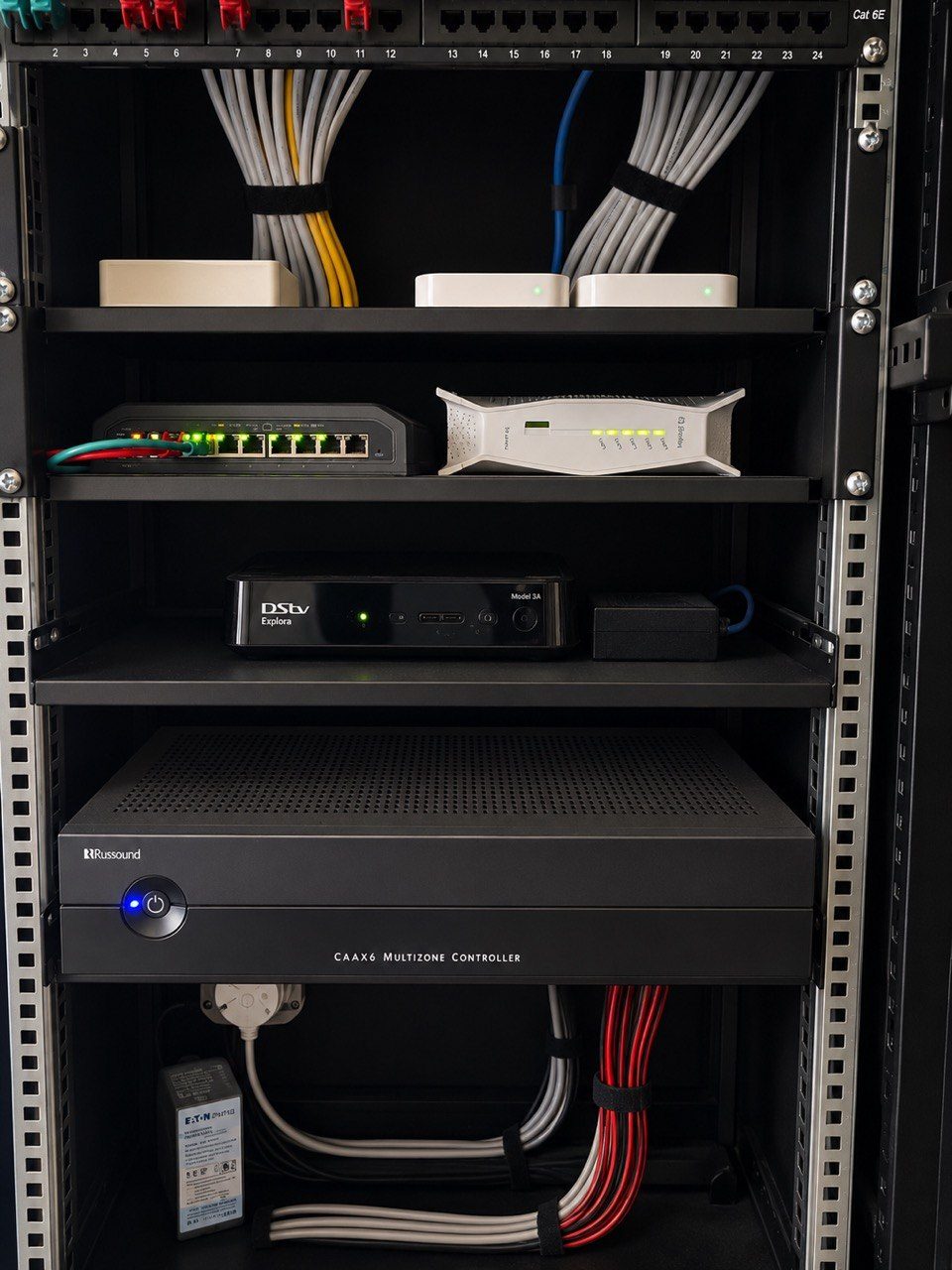
The same applies indoors. Racks and cabinets need ventilation. Automation processors, switches, NVRs, amplifiers and power supplies should not be trapped in hot cupboards with no airflow. A neat rack is not just about appearance. It affects reliability.
Remote owners need clear control
Many premium coastal homes are not occupied in exactly the same way every week. Some are primary residences. Some are holiday homes. Some have staff, house managers, guests or family members coming and going.
That affects the technology design.
A good system should make it simple to:
- Check key CCTV views remotely.
- Manage guest Wi-Fi separately.
- Control lighting scenes without confusion.
- Switch audio zones on and off easily.
- Understand which systems remain active during load shedding.
- Support the property without needing the owner on site every time.
Crestron Home is useful in this environment because the app, touchscreens, remotes and keypads can be made consistent. The owner should not need a different experience in every room.
The head-end should be designed, not discovered
The head-end is where the home’s technology becomes maintainable or painful. For a Zimbali home, it should be planned as part of the build.
It needs enough space for networking, CCTV recording, automation, audio equipment, UPS or power conditioning and future expansion. It also needs proper cable routes from TV points, Wi-Fi access points, speakers, cameras, gates, fibre and dish points.
When the rack is treated properly, the finished home feels clean. When it is treated as an afterthought, the owner usually pays for it later through faults, heat problems, messy cabling and difficult upgrades.
Good estate technology is quiet
The best Zimbali smart home installations do not shout. The Wi-Fi just works. Cameras cover the right areas. The music plays where it should. The lighting scenes make sense. The rack is neat. The documentation exists. The system can be supported years later.
That is the difference between adding technology to a home and designing technology into a home.
For Zimbali, Ballito, Sheffield Beach, Salt Rock and nearby North Coast estates, DG Technologies can assist with early planning, system design, first-fix coordination, installation and long-term support. Start with our estate technology installation guide or speak to us about a project review.