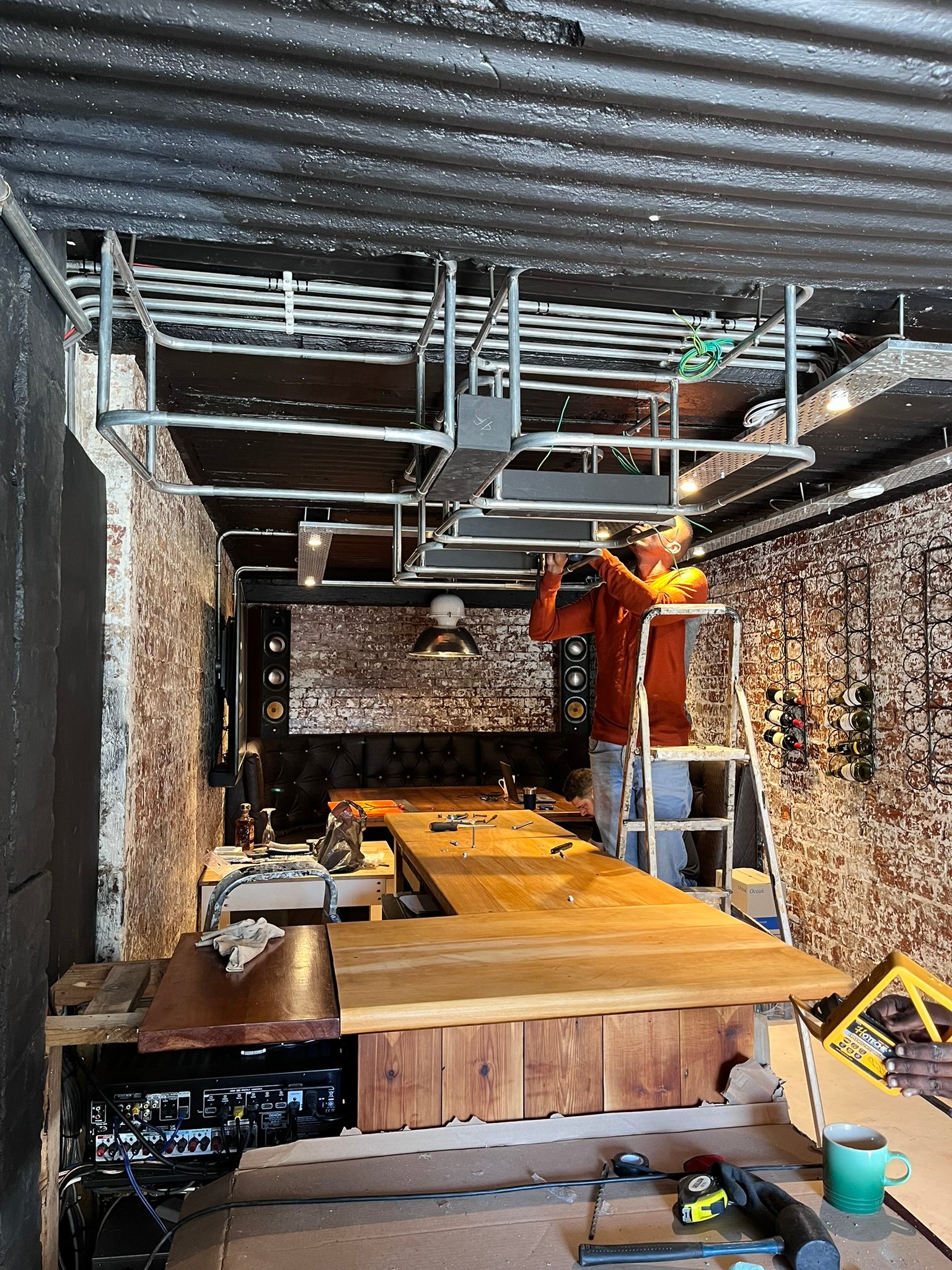
A working system can still be vulnerable.
During renovation, trades open ceilings, move cabinets, isolate circuits, create dust, shift furniture, remove wall plates and work around equipment they may not understand.
If the home already has AV, CCTV, Wi-Fi or automation, that system needs protection before work starts.
Dust is only one risk
Construction dust is serious, but it is not the only issue.
Cables can be pulled tight. Connectors can be damaged. A router can be unplugged. A UPS can be bypassed. A camera cable can be cut. A speaker route can be blocked by new joinery. A network point can disappear behind a cupboard.
The system may have been working perfectly before the renovation.
That does not mean it will survive careless work.
Live systems need boundaries
The builder should know what can be moved and what cannot.
The electrician should know which low-voltage routes must not be borrowed. The cabinetmaker should know where ventilation and cable bend space are needed. The painter should know what not to cover. The cleaning team should know what not to unplug.
Those boundaries should be discussed, not assumed.
Temporary power can create problems
Renovations often involve temporary power, isolated circuits, changed DB work and equipment being moved out of the way.
That can affect routers, switches, processors, CCTV recorders, access points and source devices. If the network goes down, several systems can appear unreliable at the same time.
A protection plan should include power and restart expectations.
The system should be checked after each risky phase
Waiting until the end can hide when the damage happened.
If ceilings were opened, test relevant cables. If joinery changed, test ventilation and access. If electrical work occurred, test rack power. If cameras were moved, confirm recording. If a network cabinet was disturbed, confirm device status.
Small staged checks reduce blame and confusion.
DG Technologies protects what still has value
Renovation does not automatically mean replacing everything.
Often the correct decision is to protect the parts that still work, replace what no longer makes sense and document what changed.
That is engineering, not guesswork.